*This page contains affiliate links
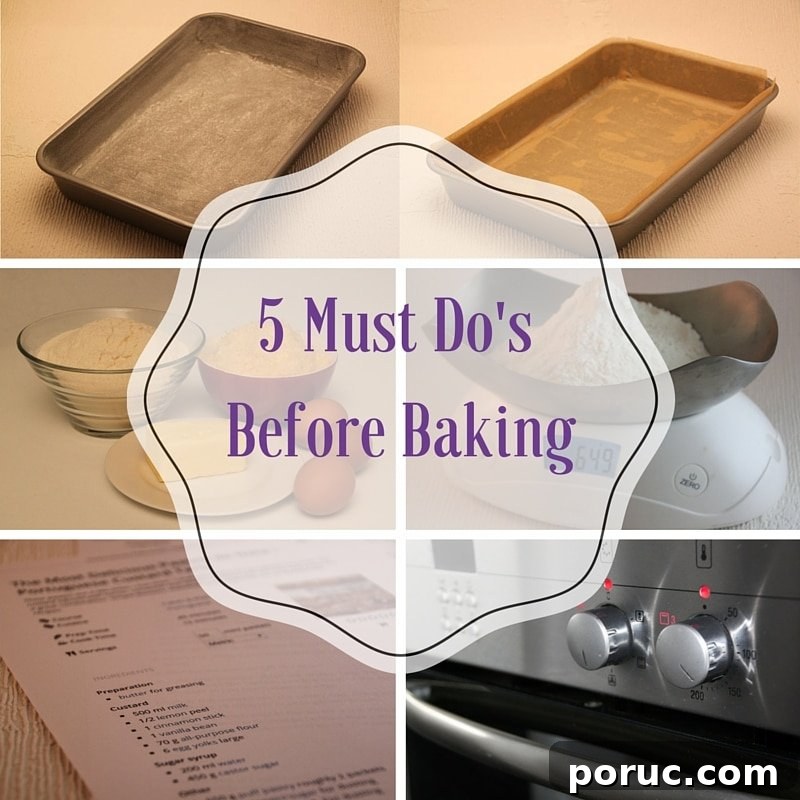
Good preparation makes all the difference in baking. Before you begin mixing ingredients or preheating the oven, follow a few simple steps to ensure your finished goods turn out light, even, and flavorful.
1. Read the recipe
Always read the entire recipe before you start. Gather all the tools and ingredients the recipe calls for so you won’t be interrupted mid-process. Reading ahead helps you spot any special steps, timing issues, or equipment you might not already have.
2. Bring ingredients to room temperature
Unless the recipe specifies otherwise, take butter, eggs, and dairy out of the fridge ahead of time so they reach room temperature. Ingredients at room temperature blend more smoothly, creating a stable emulsion that traps air. That trapped air expands during baking, contributing to a light, tender crumb. Cold ingredients are harder to combine and can yield dense or uneven results.
3. Measure ingredients accurately
Baking is a precise science, so accurate measurement is important. A kitchen scale gives the most consistent results and is recommended for reliable outcomes. If you prefer to use measuring cups, avoid packing the flour. Fluff the flour with a spoon, spoon it into the cup until slightly overfilled, then level it off with the back of a knife. This technique prevents adding too much flour, which can dry out and toughen baked goods. For best consistency, invest in a kitchen scale when you can.
4. Preheat the oven and know your oven’s behavior
Always preheat your oven before you mix or assemble batter so it’s ready when you need it. Ovens can vary in actual temperature, so an oven thermometer helps ensure accuracy and prevents under- or over-baking. If you notice inconsistent results, checking the oven temperature is a good troubleshooting step.
5. Choose and prepare the right pan
Use the pan size the recipe specifies. Recipes are developed with a particular pan volume in mind; using a smaller pan can cause batter to overflow, and a larger pan can change baking time and texture. Prepare the pan before adding batter: either spray it with baking spray or grease it with butter, then dust with flour and tap out the excess to ensure an even release. Be sure to coat the bottom and sides thoroughly.
Follow these five straightforward tips before you start baking, and you’ll be well prepared to create a fluffy, delicious cake.