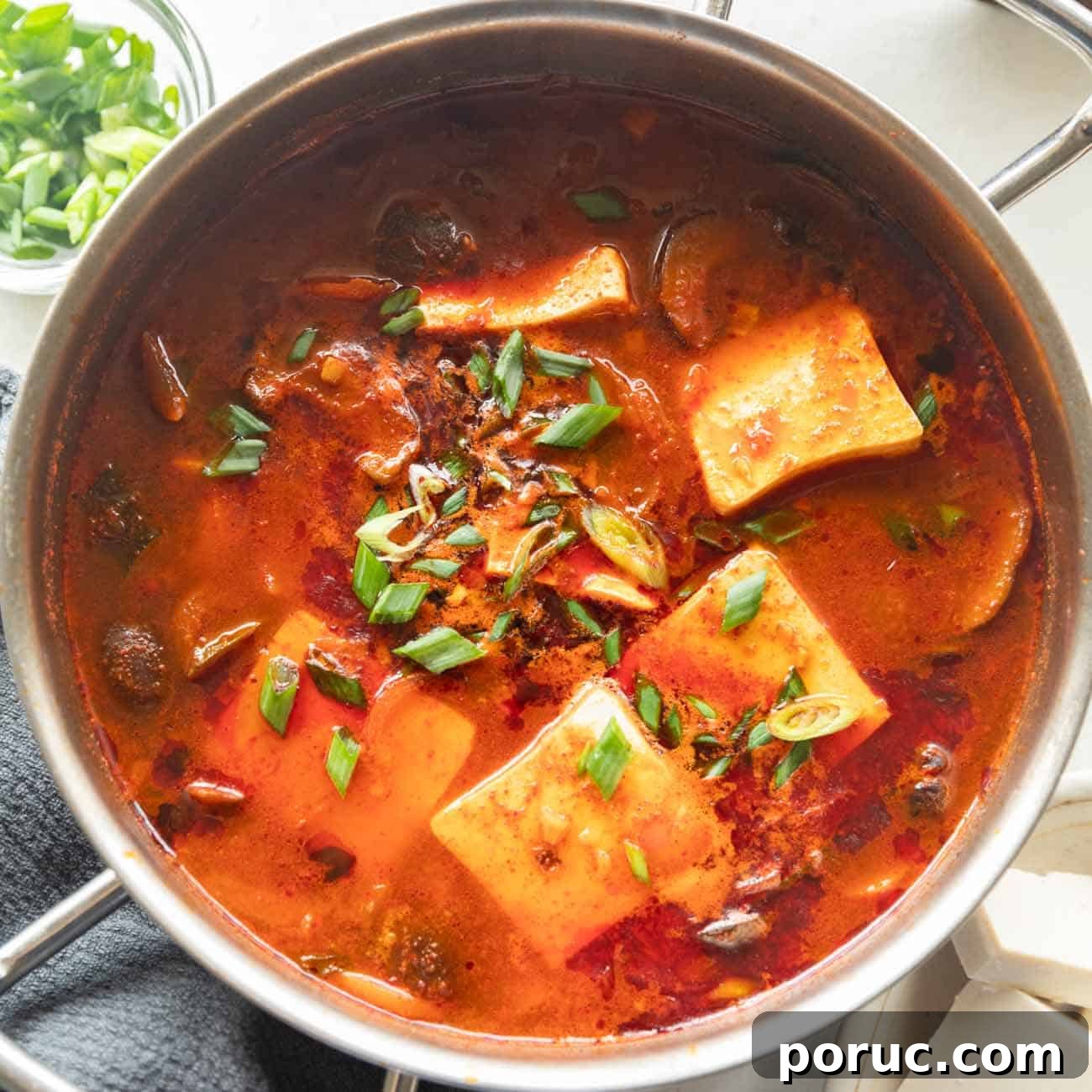
This Korean Soft Tofu Soup, or Soondubu Jjigae, is an umami-rich, spicy and savory stew filled with vegetables and silky soft tofu. It pairs wonderfully with steamed jasmine rice or noodles. You may know it from K‑BBQ menus, but it’s simple to make at home and makes a great weeknight meal.

In Korean, soondubu means soft tofu and jjigae means stew — a perfect description for this dish. Soft tofu is the centerpiece, but you can customize the stew with vegetables, a poached egg, or meat. The recipe below presents a vegan variation with notes on how to make it more traditional if you prefer.
I recommend keeping two Korean pantry staples on hand: gochujang (Korean hot pepper paste) and gochugaru (Korean red chili flakes). They’re versatile and lift many dishes beyond this stew.
How to use Gochujang and Gochugaru in other recipes
Gochujang adds a sweet‑savory heat to marinades for chicken or pork, and works well mixed with soy and oyster sauce as a dumpling dip. Gochugaru gives dishes a bright red color and a clean chili flavor; use it as a seasoning or to finish soups and stews. Both ingredients are useful beyond Korean cooking.
Other ingredients in this recipe are pantry staples; I usually keep a package of silken tofu in the fridge. Read on for ingredient details and step‑by‑step instructions.
Ingredients You’ll Need to make Korean Soft Tofu Stew
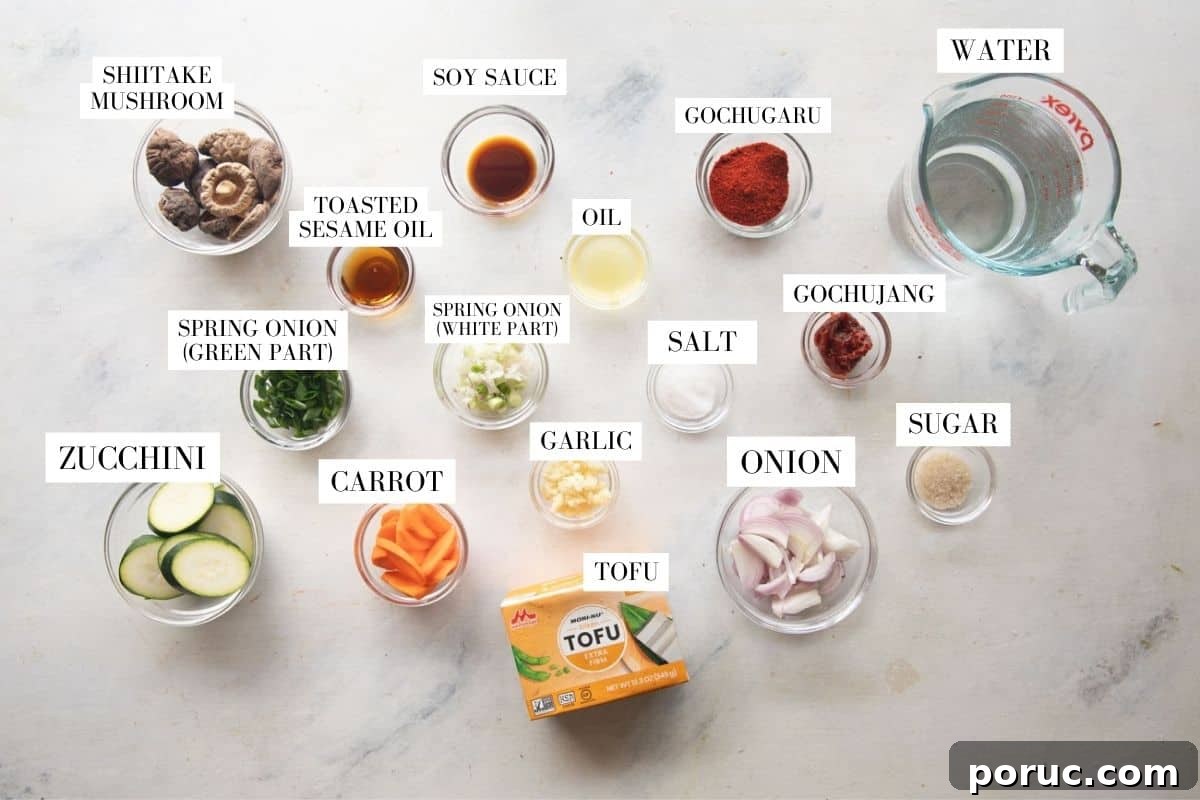
- Soft Tofu: Use silken/soft tofu (Mori‑nu is a good brand). Silken tofu gives the stew its silky texture; avoid firm cheeses like paneer for this recipe.
- Dried Shiitake Mushrooms: These contribute a deep umami. The soaking liquid is used for flavor instead of a kelp/anchovy stock, which keeps this version vegetarian.
- Toasted Sesame Oil: Adds a nutty finish — a little drizzled over rice is delicious.
- Gochujang: Korean fermented red pepper paste that brings sweet, savory, and spicy notes. A little goes a long way.
- Gochugaru: Korean red pepper flakes for color and a bright chili flavor. If unavailable, use your local red chili powder but expect a different color and slightly different flavor.
- Spring Onions: Use whites for sautéing and greens for finishing to add freshness.
How to make Korean Soft Tofu Stew
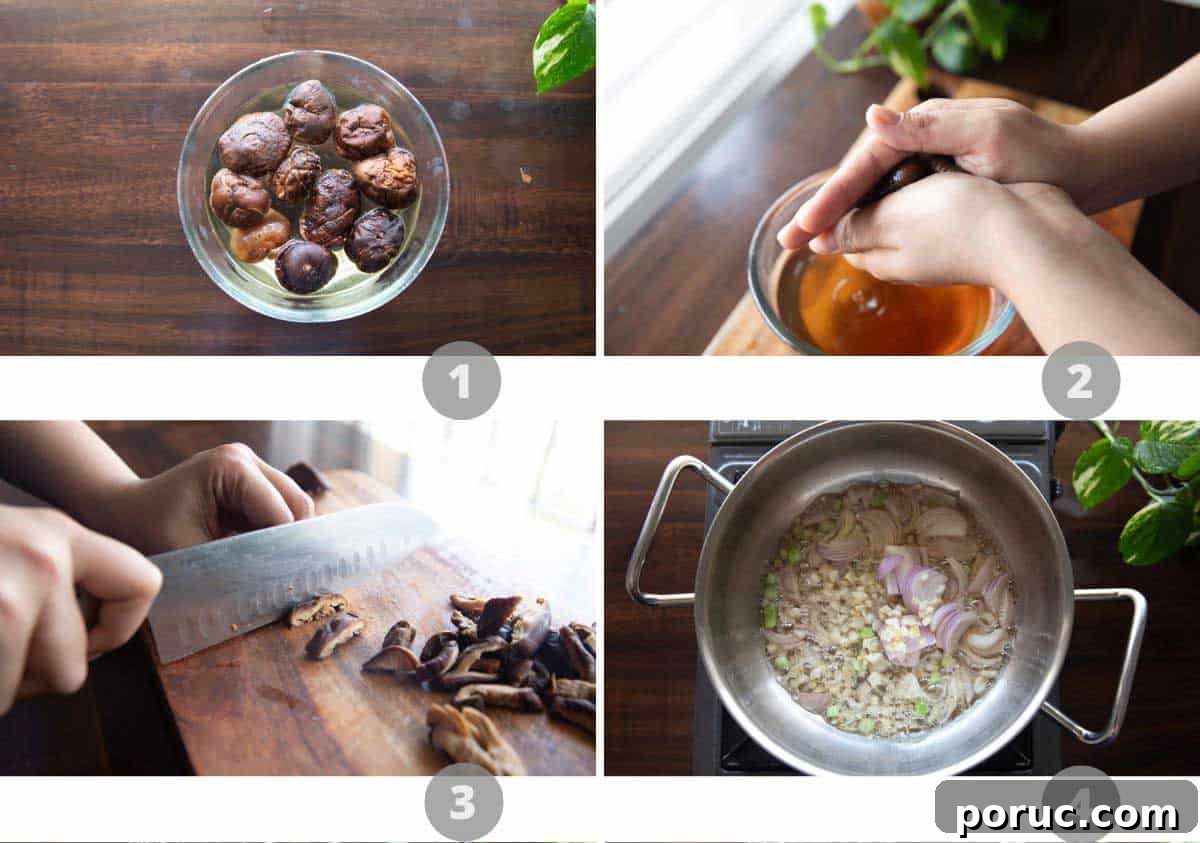
- Soak dried shiitake mushrooms in 1 cup of hot water for 10–15 minutes. Reserve the soaking liquid, squeeze the mushrooms dry and slice them.
- In a pot, heat toasted sesame oil and a neutral oil. Add the white part of the spring onions, sliced onion and garlic. Sauté 1–2 minutes until fragrant.
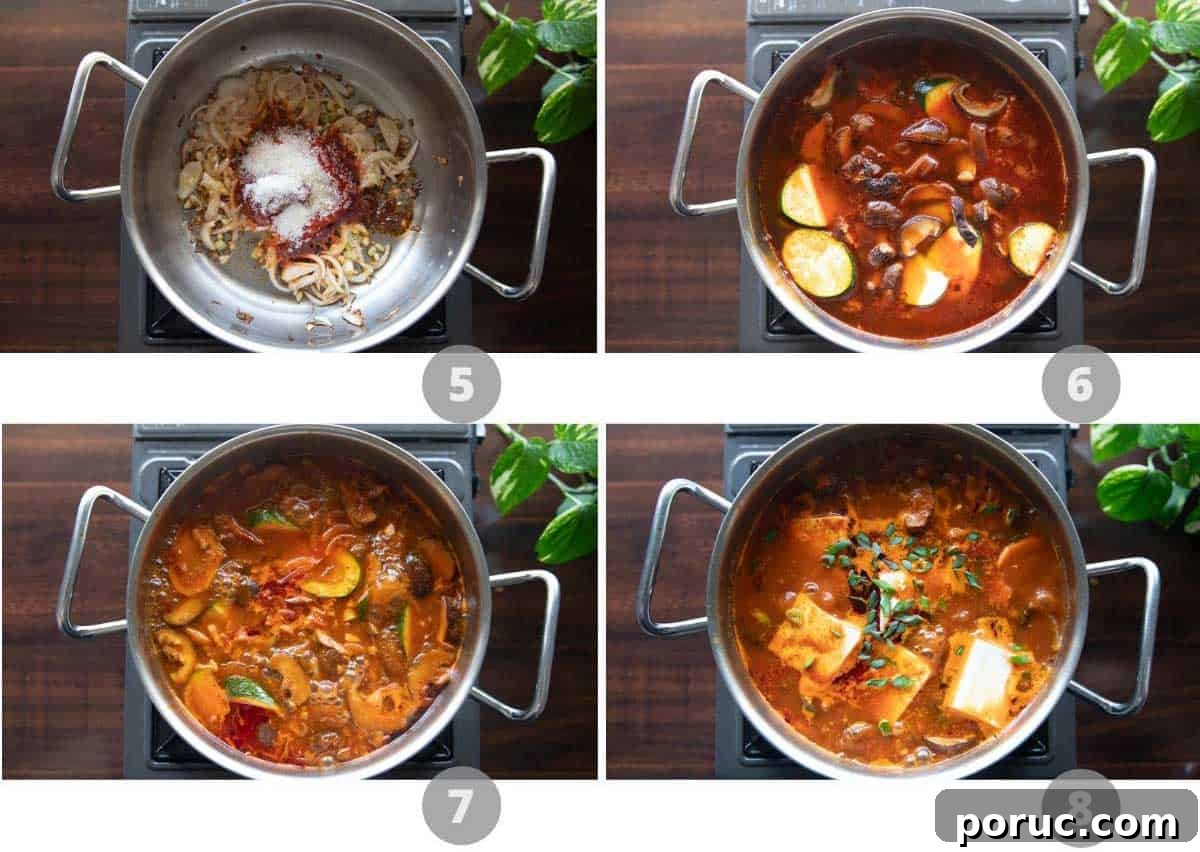
- Stir in gochugaru, gochujang, salt, sugar and soy sauce. Add the mushroom soaking liquid plus 2 cups of water.
- Bring to a quick boil, then add sliced zucchini, carrots and the sliced shiitake. Reduce heat and simmer 10 minutes until the vegetables are tender.
- Spoon in chunks of silken tofu, top with the green part of spring onions, and turn off the heat. Serve hot, ladled over steamed rice or with noodles.
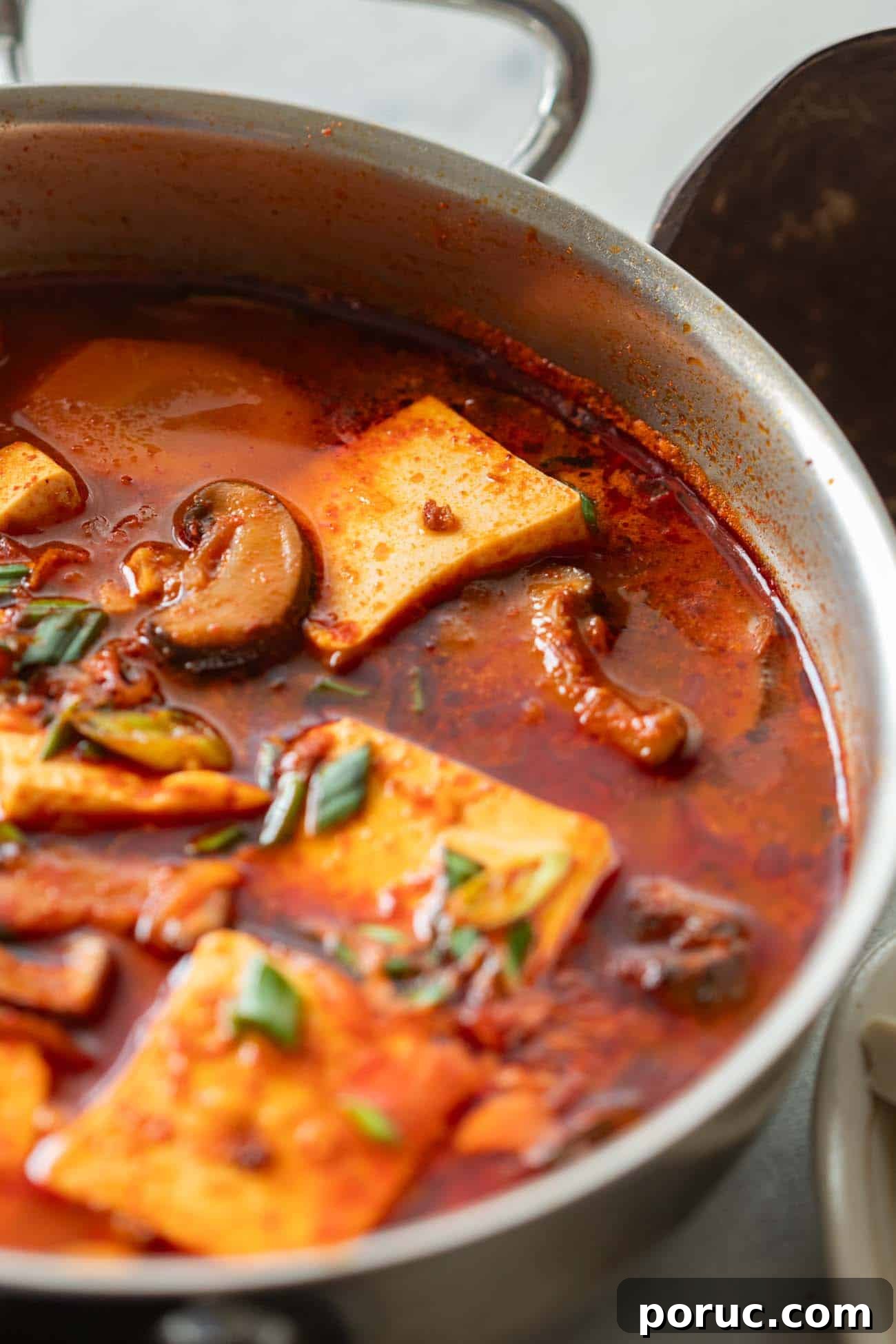
This Soondubu Jjigae is a comforting, flavorful stew that’s forgiving to make and quick enough for a busy evening. It combines protein, vegetables, and satisfying broth for a balanced meal. Customize it with additions below to suit your taste.
Watch the Recipe Video
LOVE THIS RECIPE? Subscribe to the newsletter to get new recipes delivered to your inbox.
Soondubu Jjigae (Korean Soft Tofu Stew)
Ingredients
- 7–8 dried shiitake mushrooms
- 1 tbsp toasted sesame oil
- 1 tbsp vegetable oil
- 2 chopped green onions (keep white and green parts separate)
- 1/2 cup sliced onions
- 1 tbsp chopped garlic
- 2–3 tbsp gochugaru (Korean chili flakes)
- 1 tbsp gochujang
- 1 tsp salt
- 1 tsp sugar
- 2 tsp light soy sauce
- 3 cups water, divided (including mushroom soaking liquid)
- 1/2 zucchini, sliced thickly
- 1 small carrot, sliced thickly
- 150 g tofu, cut into 1‑inch cubes (about 1/2 inch thick)
Instructions
- Soak shiitake mushrooms in 1 cup hot water for 10–15 minutes. Drain, squeeze and reserve the soaking liquid. Slice the mushrooms and set aside.
- Heat sesame oil and vegetable oil in a pot. Add the white part of the green onions, sliced onions and garlic. Sauté 1–2 minutes.
- Add gochugaru, gochujang, salt, sugar, soy sauce and the reserved mushroom liquid plus 2 cups of water.
- Bring to a boil, add zucchini, sliced shiitake and carrot. Reduce heat and simmer 10 minutes until vegetables are tender.
- Top with tofu and the green part of spring onions. Turn off the heat and serve hot over sticky rice or with noodles.
Notes
- Good additions: kelp, wakame, kimchi or an egg make great variations and deepen the flavor.
- Tofu vs paneer: Silken/soft tofu has a melt‑in‑the‑mouth texture ideal for this stew. Paneer is firmer and will not give the same result here.
- How to eat it: Drink the broth like a soup, add noodles to the pot, or serve with steamed jasmine rice — rice is my favorite.
Nutrition
More Korean Recipes
- Crunchy Korean Popcorn
- Slow Cooker Korean Pork Bulgogi
- Baked Gochujang Chicken Wings
- Korean Chicken Thighs
Additions you can make to Korean Tofu Stew
- Kelp: Add a strip of kelp to the broth while it simmers for extra umami. Anchovies can also be used to build a traditional stock.
- Wakame: Dried wakame rehydrated and added to the stew gives a silky texture and more nutrients.
- Kimchi: Add chopped kimchi and its juice while sautéing the aromatics to bring a tangy depth — this moves the stew toward kimchi jjigae territory.
- Egg or protein additions: Crack an egg into boiling broth for a poached egg, or add cooked seafood, meat or noodles as desired.
Frequently Asked Questions:
Enjoy it as a soup, add noodles to the broth, or serve it with steamed rice. Rice is a classic and comforting pairing.
Kimchi stew centers on kimchi and its tangy, fermented flavor. Soft tofu stew focuses on silken tofu and can be made with or without kimchi.
Soon = soft, dubu = tofu.
Silken tofu is not cooked when packaged but is safe to eat. In this recipe it’s added to a boiling broth so it’s served warm rather than raw.
Paneer is firmer and will not give the silky texture silken tofu provides, so it’s not recommended for this stew.