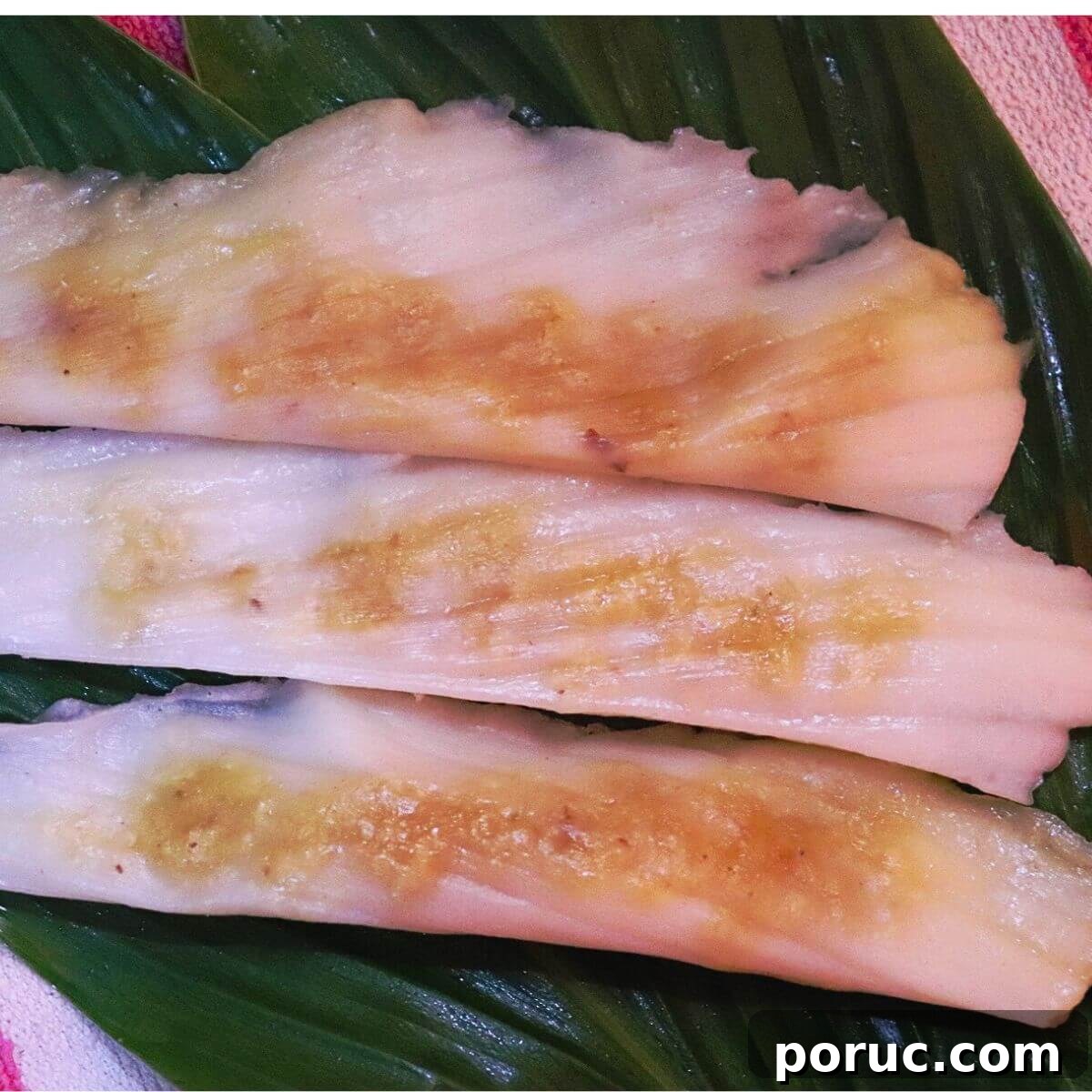
Patoli, also known as Konkani Patoleo, is a traditional steamed sweet from the western coast of India. Popular in Maharashtra, Goa and Karnataka during the Shravan month, Patoli are rice dumplings filled with grated coconut and jaggery and wrapped in fragrant turmeric leaves. Below is a clear, step-by-step guide to prepare Patoli at home, including photos and a video demonstration.
What is Patoli?
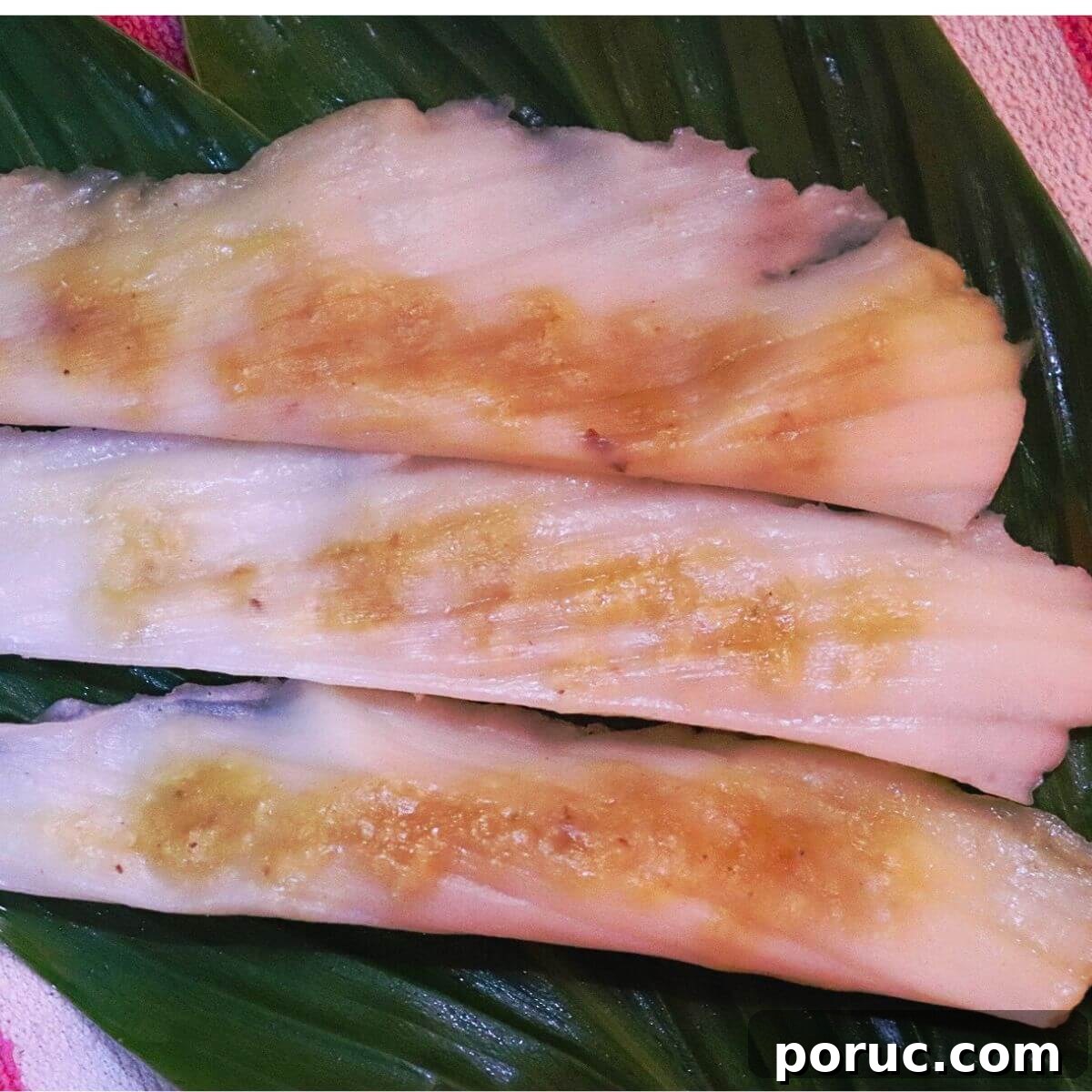
In Konkani, Patoli (plural: Patoleo) are steamed rice parcels. The outer layer is a soft rice batter and the filling is a sweet mixture of grated coconut and jaggery. The parcels are traditionally wrapped in turmeric leaves which impart a unique aroma and mild flavor when steamed. The filling is similar to other Indian festive sweets like nevri.
The scent of fresh turmeric leaf is what makes Patoli distinct: during steaming, the leaf’s fragrance infuses the rice and coconut-jaggery filling, creating a memorable flavor profile.
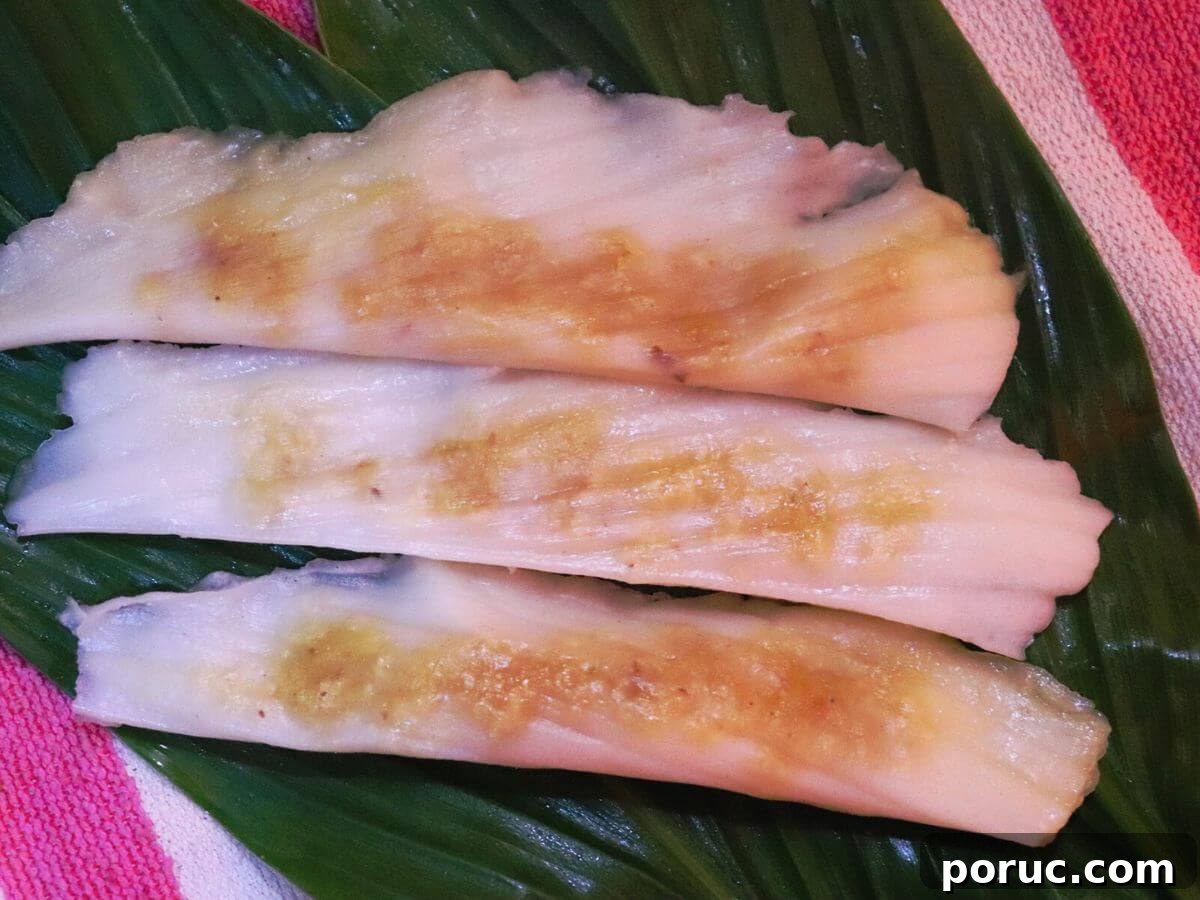
Patoli are soft steamed rice dumplings enclosing a sweet core of coconut and melted jaggery, wrapped in turmeric leaves. They are commonly prepared on the west coast of India during Shravan and made for occasions such as Nagpanchami and Hartalika. In Goa, the Christian community also prepares Patoleo for the Assumption feast (August 15) and on São João (June 24) as a part of harvest celebrations.
About this Patoli Recipe
This recipe follows my mother-in-law’s traditional method of soaking and grinding rice. The batter here is adjusted to be slightly thicker so it spreads easily on the leaf. I also include flattened rice (poha) when grinding the rice — a tip learned from a Goan neighbor. Poha helps thicken the batter and gives a soft, crack-free texture to the steamed Patoli.
If you enjoy this recipe, you may also like other Indian sweet recipes like puran poli, gajar halwa, moong dal ladoo, besan ladoo, and rava ladoo.
Ingredients Notes
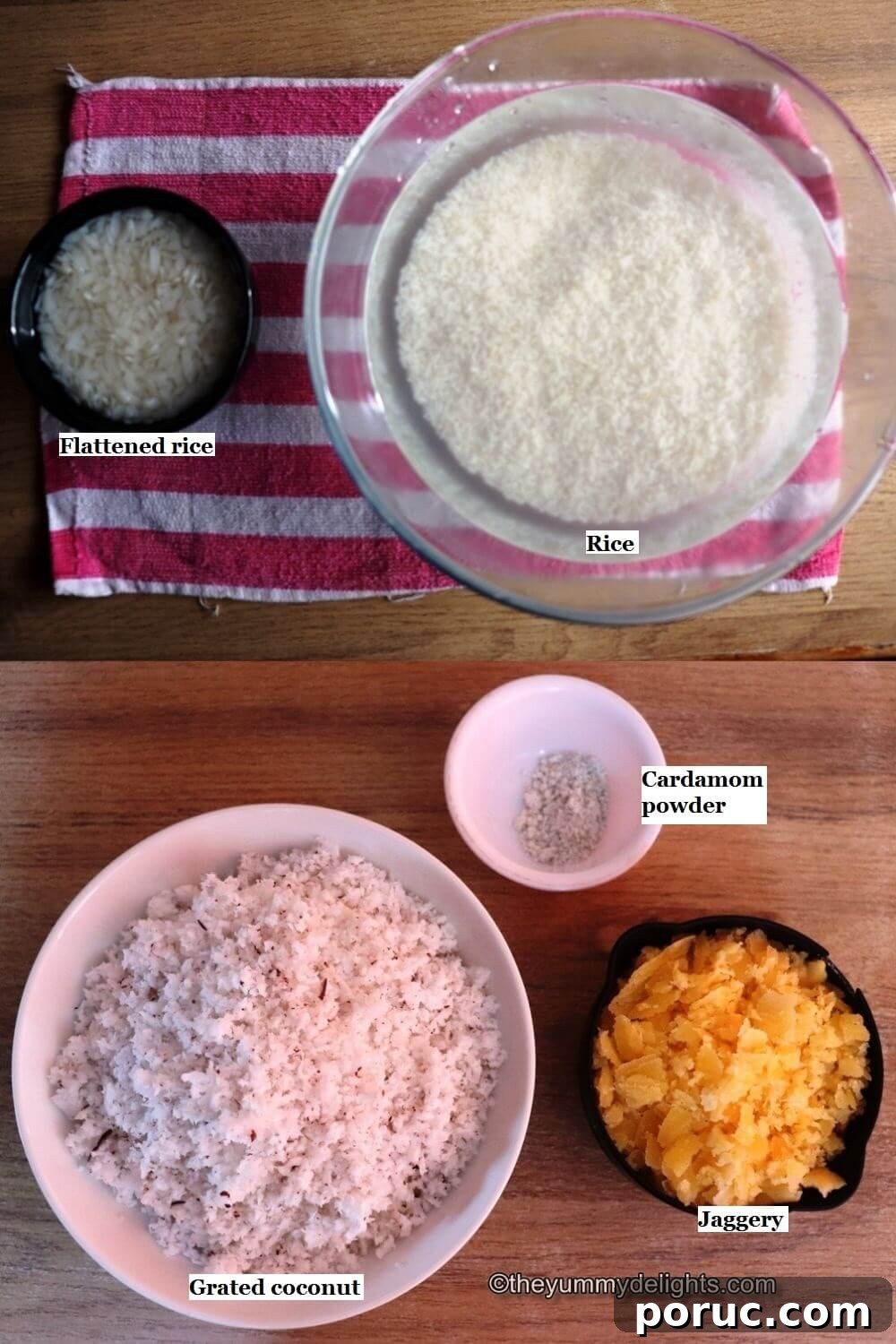
- Rice – Use raw rice (idli/dosa rice) for best texture. Rice flour can be used as an alternative.
- Flattened rice (poha) – Optional but recommended to get a soft, crack-free outer layer.
- Coconut – Freshly grated coconut gives the best flavor for the filling.
- Jaggery – Cane jaggery works well; palm jaggery (maddachen godd) is traditional in Goa and adds a deeper flavor.
- Fresh turmeric leaves – Available seasonally (July–September) and essential for authentic aroma. Banana leaves can substitute in a pinch but lack the turmeric fragrance.
- Ghee (clarified butter) – Optional, a small amount enriches the filling.
For exact ingredient quantities and measurements, see the recipe card below.
How to make Goan Patoleo with step-by-step photos
Preparations for making Patoli
- Soak rice overnight, then drain and set aside.
- Soak flattened rice (poha) for 15 minutes with water about ½ inch above. Squeeze out excess water and set aside.
- Grate fresh coconut and cut or grate jaggery into small pieces.
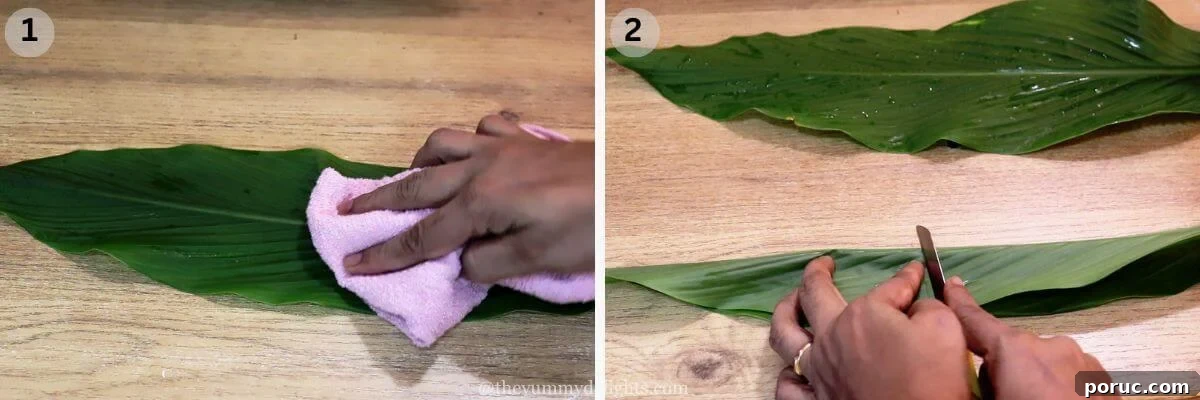
- Rinse turmeric leaves, pat dry, and cut larger leaves in half to fit the steamer. Keep aside.
Making the coconut-jaggery stuffing
- Heat 1 teaspoon ghee in a pan over medium heat (optional).
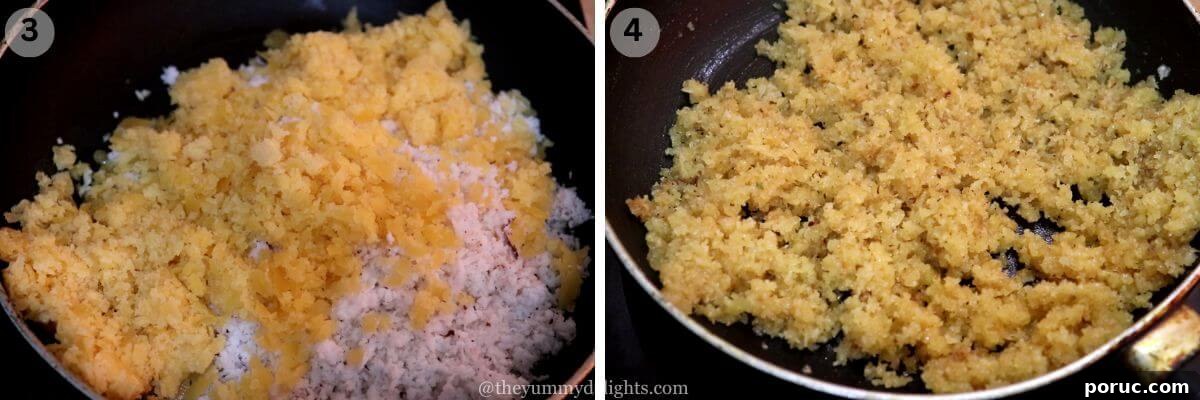
- Add grated coconut and jaggery, stirring to combine.
- When jaggery melts, stir and cook 3–4 minutes until the mixture is semi-dry. Avoid overcooking or the jaggery will harden.
- Add cardamom powder, mix, and transfer to a plate to cool.
Batter for the outer cover
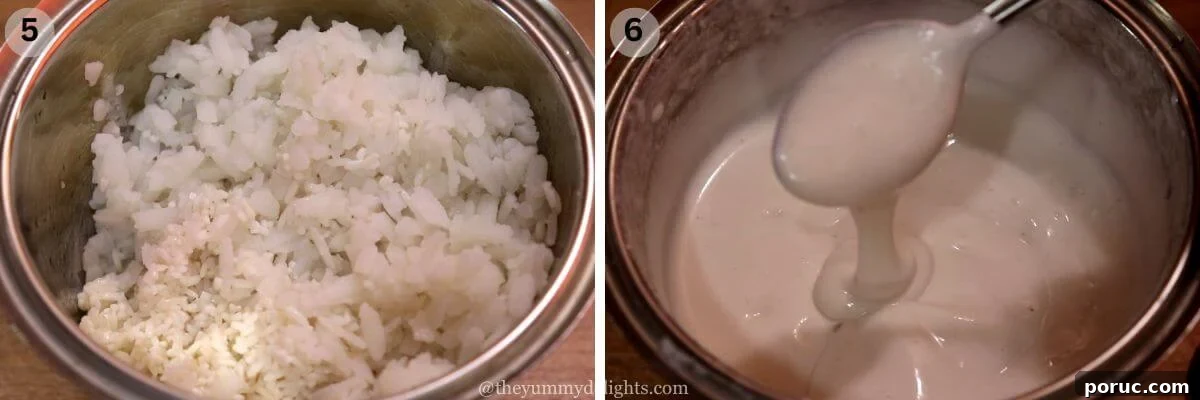
- Grind soaked rice and soaked flattened rice together into a thick, spreadable paste. Use water sparingly while grinding. The batter should be thick yet spreadable; you may need multiple batches depending on your grinder.
- Optionally add ¼ teaspoon salt to enhance the flavor and mix well. Set the batter aside.
Making the Konkani Patoleo
1) Add water to the steamer base and bring it to a gentle heat.
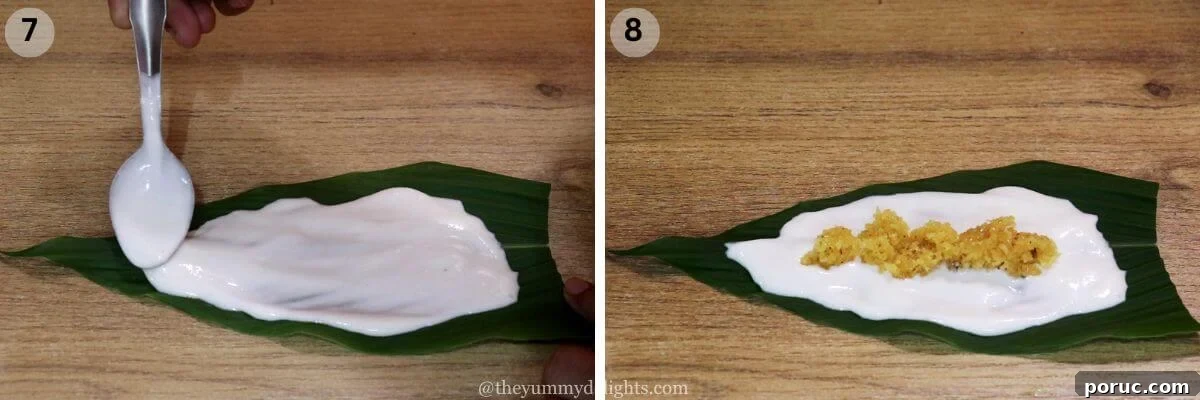
2) Using a spoon, spread a thin, even layer of the rice batter on the turmeric leaf, leaving the edges clear so the leaf can be folded without batter spilling out.
3) Place a spoonful of coconut-jaggery stuffing in the center of the batter.
4) Fold one side of the leaf over the other to enclose the filling and gently press the edges to seal.
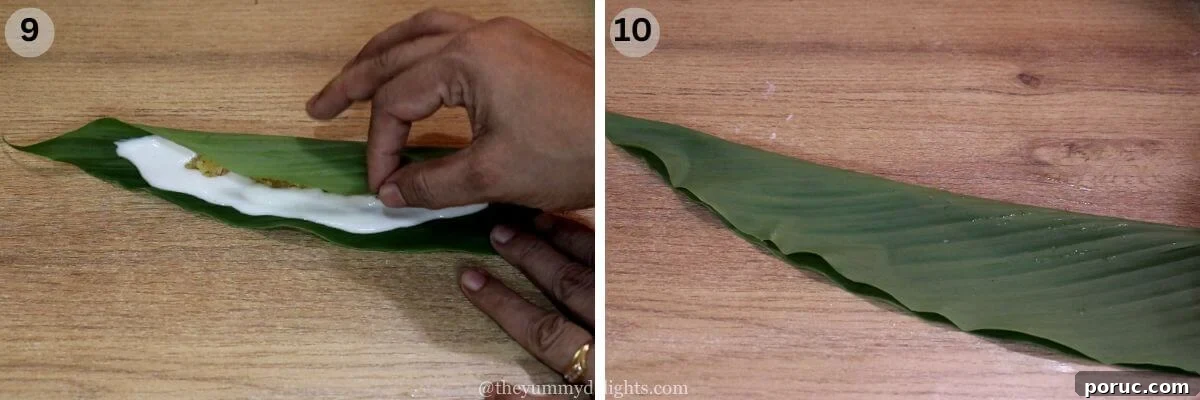
5) Place prepared Patoleo on a clean kitchen towel—do not stack them directly on top of each other. Repeat for remaining leaves.
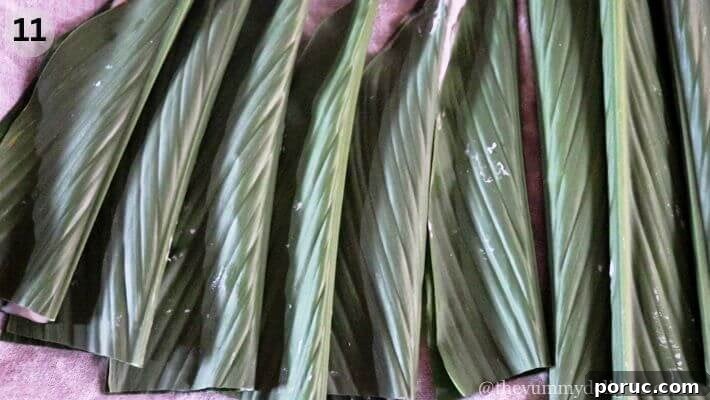
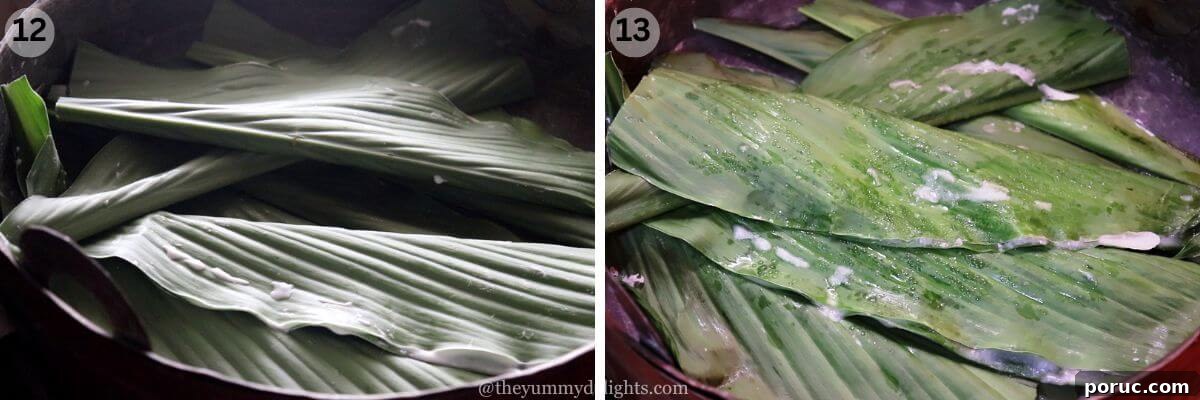
6) Arrange the parcels in the preheated steamer without stacking and steam on medium heat for 20 minutes.
7) After steaming, the turmeric leaves will darken and the aroma will indicate that the Patoleo are cooked.
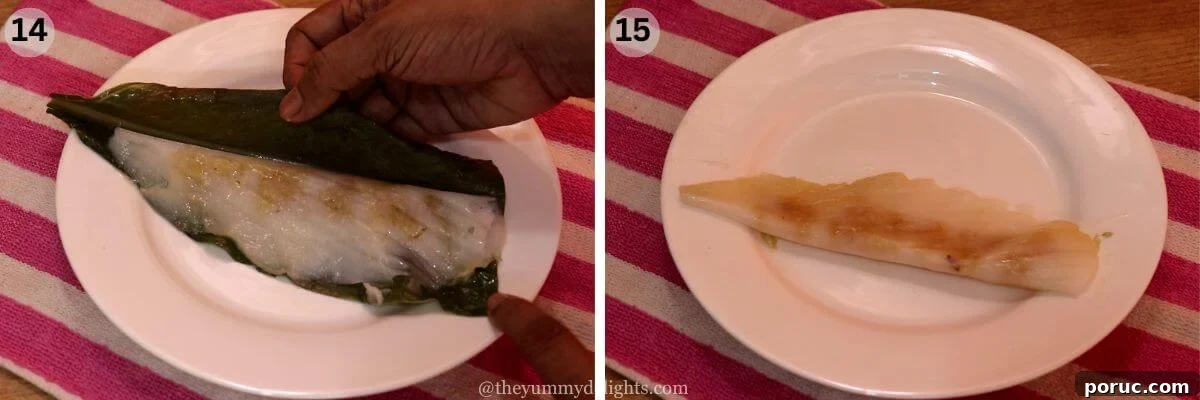
8) Immediately remove the cooked Patoleo from the steamer and transfer to a plate to prevent sogginess.
9) Peel away the turmeric leaf and serve the Patoli warm for the best taste.
Tips to make soft Patoli
- Get the batter right: Add water gradually while grinding—one tablespoon at a time—until the batter is thick and spreadable.
- Leave leaf edges clear: Avoid spreading batter to the edges so that folding the leaf is easy and no batter leaks out.
- Place stuffing centrally: Keep the filling in the middle to prevent it from spilling when folding.
- Remove immediately after steaming: Transfer Patoli to a plate right away to avoid extra steam making them soggy.
Benefits of turmeric leaves
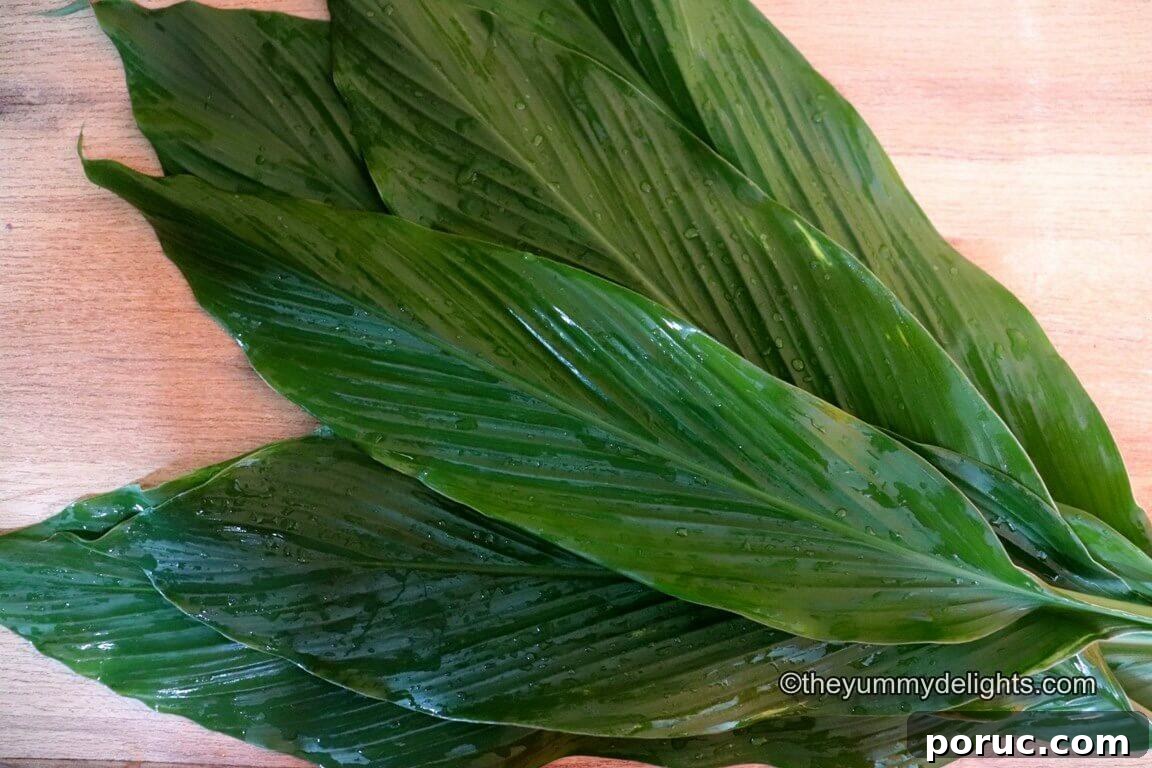
Turmeric leaves add a fresh, citrus-like fragrance and a mild flavor to steamed foods. They are commonly used when steaming sweets, rice, idlis or modaks and fill the kitchen with an irresistible aroma.
FAQs
Fresh turmeric leaves provide a unique aroma that is hard to replace. If unavailable, banana leaves can be used, but the turmeric fragrance will be missing.
No special steamer is required. Traditional large steamers work well, but you can also use an idli or momo steamer. Ensure you avoid stacking the parcels directly on top of each other.
Yes. However, using only soaked and ground rice may sometimes cause the outer layer to crack or turn slightly hard. Adding flattened rice helps keep the outer cover soft and crack-free.
Patoleo variations
- You can prepare Patoleo using wheat flour as an alternative base.
- Omit ghee to make vegan Patoli.
If you try this recipe, please leave a comment and rating — feedback is appreciated.
Consider following the author on social media for more recipes.
Recipe Card
Patoli recipe (Konkani Patoleo recipe)
Print
Pin
Rate
Video
Equipment
-
Kadhai/Pan
-
Steamer
Ingredients
For coconut-jaggery stuffing
- 1 teaspoon ghee/clarified butter optional
- 2 cups grated coconut
- 1 and ¾ cup grated jaggery
- 1 teaspoon cardamom powder
For the outer-cover of patoli
- 2 cups rice soaked in water for 6 hours /overnight
- ½ cup flattened rice soaked in water for 15 minutes
- ¼ teaspoon salt
Other ingredients
- 20 turmeric leaves
Instructions
Preparations for making patoli
-
Soak the rice overnight. Drain off the water. Keep it aside.
-
Next day, soak the flattened rice (poha) for 15 minutes. The level of water should be just ½ inch above poha. Squeeze to drain off the excess water. Set this aside.
-
Grate the coconut and jaggery.
-
Rinse the turmeric leaves and pat dry. Cut larger leaves in half to fit the steamer.
Making the coconut-jaggery stuffing
-
Heat 1 tsp ghee in a pan.
-
Add grated coconut and jaggery and stir to combine.
-
Cook until semi-dry, 3–4 minutes, stirring constantly to avoid hardening.
-
Add cardamom powder, mix and cool.
Batter to make outer cover
-
Grind rice and flattened rice into a thick, spreadable paste using minimal water. The batter should be thick yet spreadable.
-
Add ¼ teaspoon salt if using, mix and set aside.
Making the Konkani Patoleo
-
Heat water in the steamer base on low heat.
-
Spread batter on turmeric leaf leaving edges clear.
-
Add coconut-jaggery stuffing in the center.
-
Fold the leaf to enclose and press edges gently.
-
Place parcels on a towel; do not stack.
-
Steam on medium for 20 minutes without stacking.
-
After steaming, remove immediately from the steamer.
-
Peel the turmeric leaf and serve warm.
Notes
- Consistency: Keep the batter thick and spreadable; thin batter is hard to work with.
- Edge clearance: Leave leaf edges free from batter so folding is easy and leak-free.
- Sweetness: Adjust jaggery to taste; the amount in this recipe suits those who prefer a sweeter filling.
- Do not overcook stuffing: Overcooked coconut-jaggery becomes hard.
- Serve warm: Remove Patoli immediately after steaming and serve warm for best texture.
Nutrition
Nutrition information is an approximation.