We worked on this project for about a month, and now I’m sharing clear instructions for building a root cellar beneath a garden house or shed. Below is a step-by-step account of how we built our root cellar, including choices we made and problems we encountered.
Why Root Cellars Are Ideal
I believe being prepared reduces fear in uncertain times. I was raised to live frugally, grow a garden, preserve the harvest, and be as self-reliant as possible. Root cellars are a time-tested way to store food without relying on electricity.
Traditionally, many farmhouses had root cellars or basements used for long-term storage. Over time, canning and refrigeration became more common and root cellars fell out of fashion, but they remain excellent for preserving fresh produce without processing.
Because root cellars are underground, they stay cool in summer and cold (but not freezing) in winter. This natural temperature regulation is perfect for keeping vegetables and fruits for months with no electrical cost. A properly designed root cellar is also dark, which prevents sprouting and decay in potatoes, onions, garlic, apples, cabbage, and winter squash.
Humidity is another advantage. Many traditional root cellars had dirt or stone floors rather than concrete, allowing just enough moisture to maintain produce quality. The combination of cool temperature, darkness, and appropriate humidity makes root cellars one of the best places to store fresh garden harvests.
Choosing a Location
I became fascinated with root cellars after watching tours on YouTube, but our high water table ruled out building under the house. My husband, who has experience with flood cleanup and mold remediation, was also reluctant to risk a basement under our home.
We decided instead to build a garden house for potting and tools, with a shallow root cellar underneath. A shed with a root cellar works on small lots—our garden house is 12 by 16 feet, but the size can vary.
Pick a spot that won’t collect runoff from neighboring properties or sprinkler systems. We located ours where surface water was less likely to pool.
Excavation
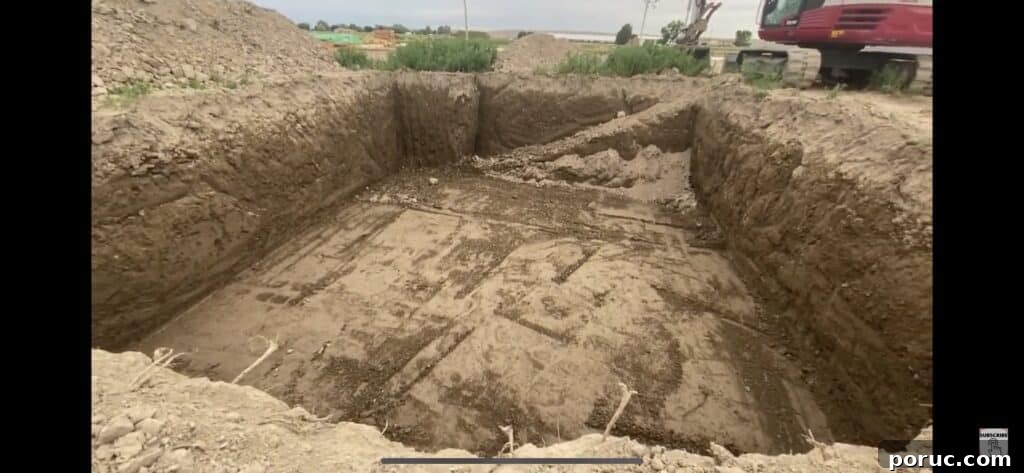
We hired a local excavator to dig the cellar. Because our water table is high (our well is only 26 feet deep), we dug to just six feet. Excavators usually need to make the hole several feet wider than the finished cellar so concrete crews can work and set forms; ours dug 2–3 feet wider on each side.
Pouring Concrete Footers
After excavation, pour concrete footings to support the cellar walls and the structure above. Footers should be stout and reinforced with rebar—these carry the load of the walls and the garden house.
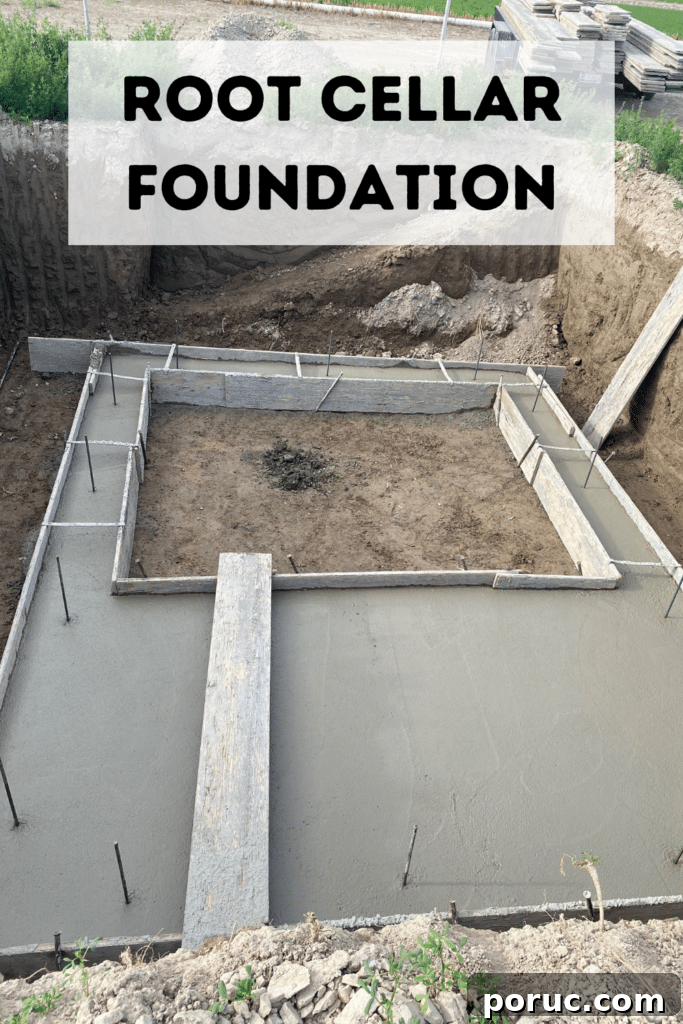
Our footers are approximately 1 foot thick and 18 inches wide with two rebar rods running the length, and rebar extending upward to tie into the poured walls.
Floor Base
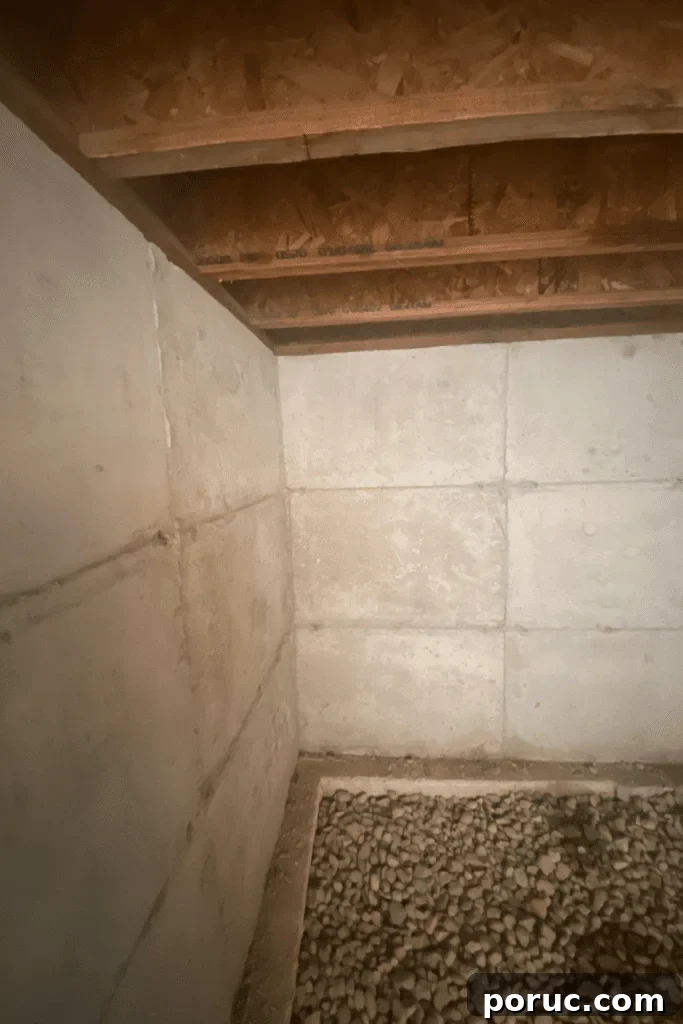
For the floor, we added about 4 inches of washed rock over the compacted dirt. You can leave a dirt floor if preferred, but a rock base helps with drainage and moisture control.
Pouring Concrete Walls
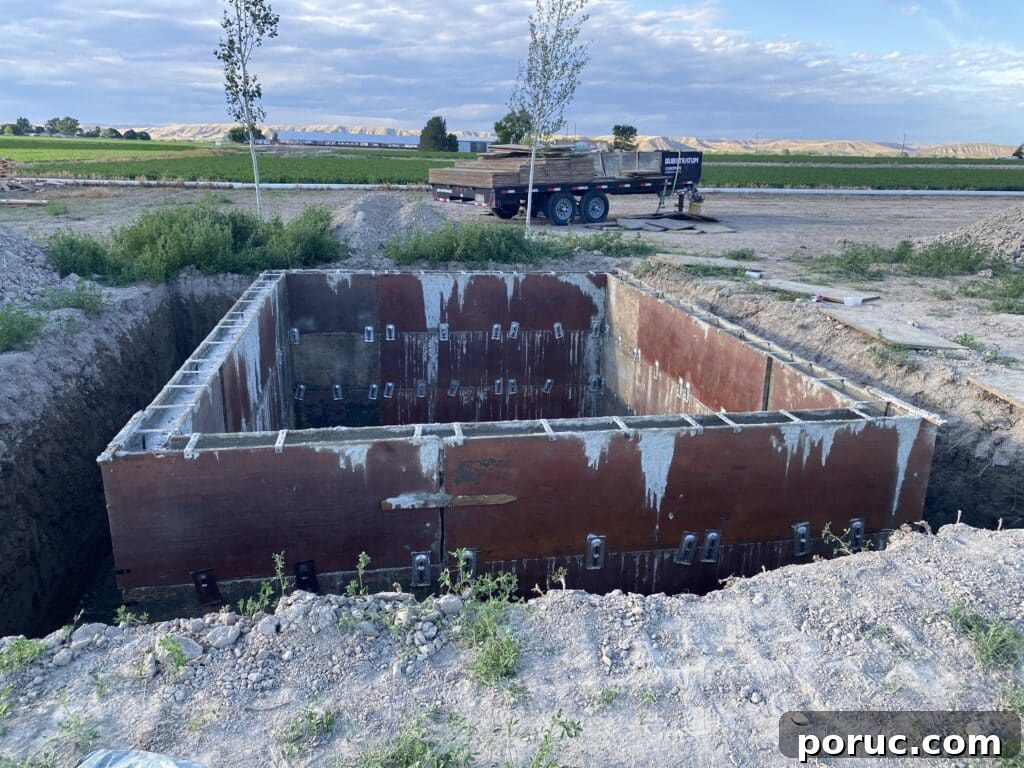
We used ready-mix truck concrete for the walls since the volume was too large for bagged concrete. Our walls are 5 1/2 feet tall above the footers, 8 inches thick, and fully reinforced with vertical and horizontal rebar. Rebar also extends through the top of the walls at intervals to secure the shed’s base plate.
Backfilling
Once the walls cured, we backfilled around the foundation. This is heavy work and worth hiring an excavator for. After backfilling, you can install floor joists or I-joists across the top of the walls to support the garden shed floor.
Water Issue and Update
We left the cellar open over the summer while finishing the house. During that time we discovered a problem: water infiltrated the cellar when nearby fields were irrigated. At first it was a few inches, but after flood irrigation next door it rose several feet.
Stairs to the Root Cellar
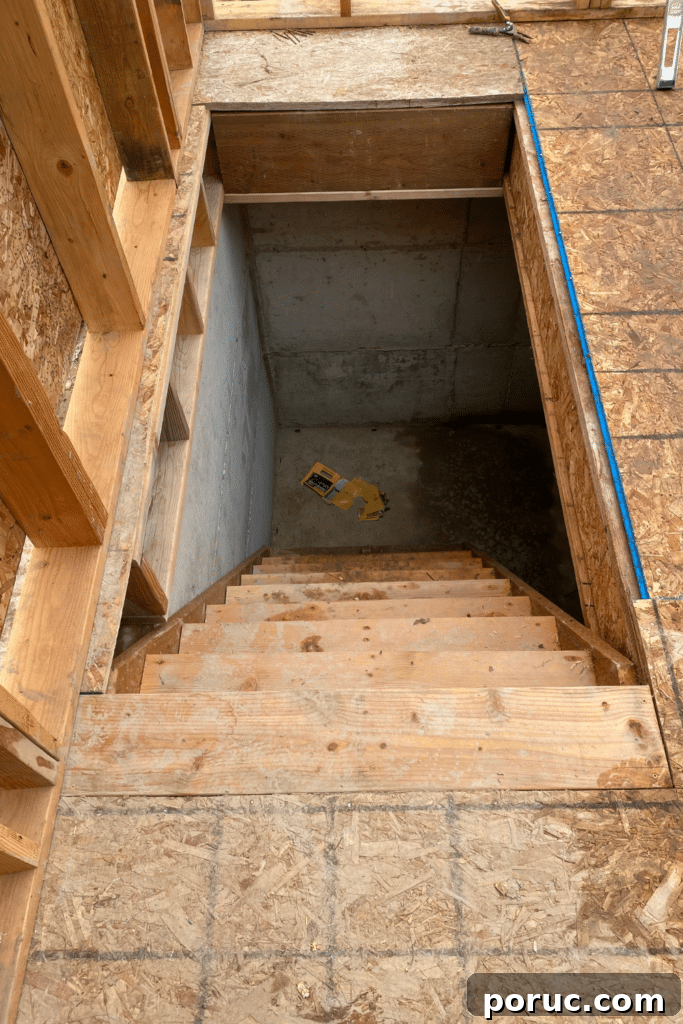
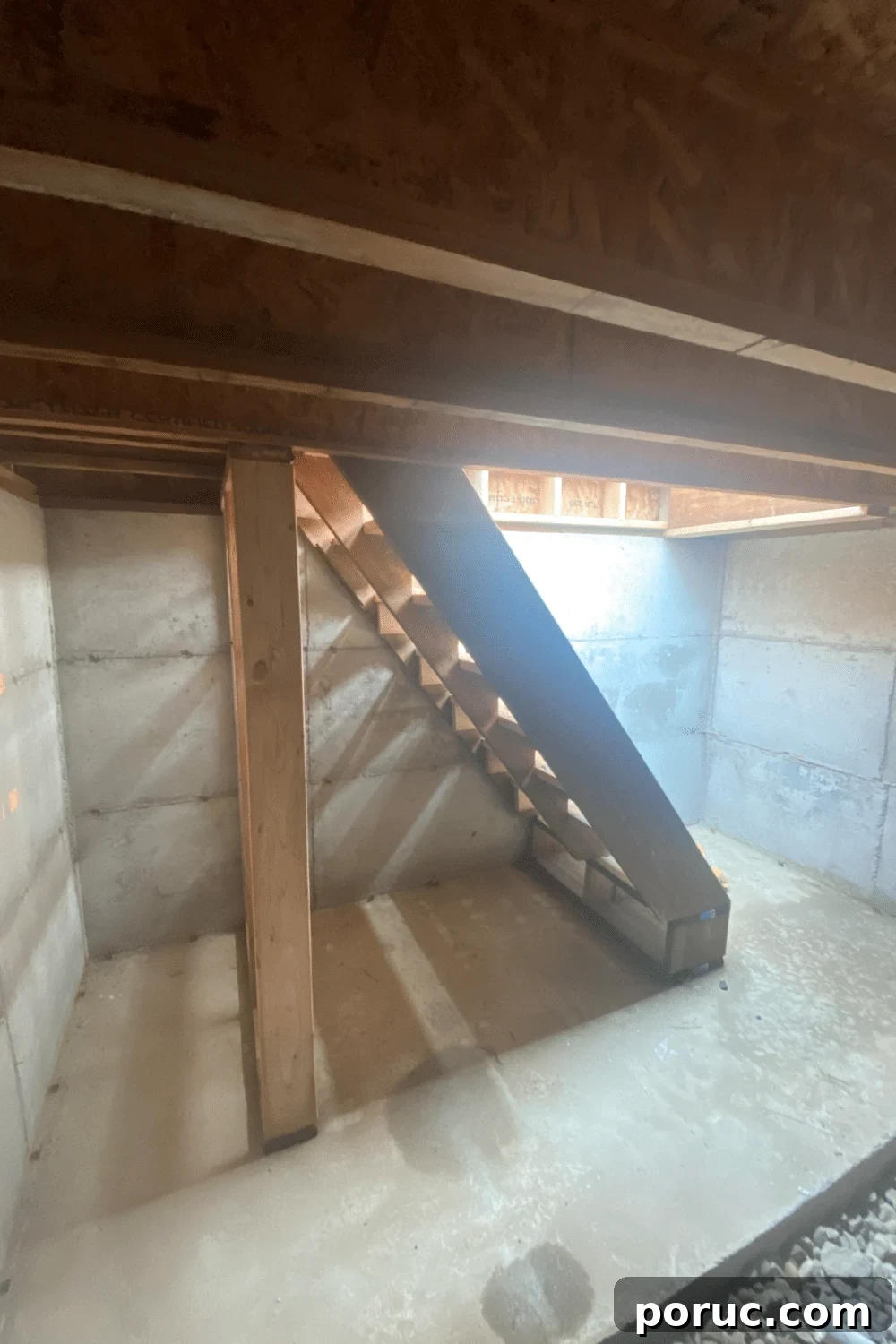
Our stair run could only be six feet long, so the stairs are steeper than usual—almost like a ladder. We’ll add storage under the stairs and build a partition wall with a door to block light and drafts from entering the root cellar.
Handling High Water Table: French Drain and Sump Pump
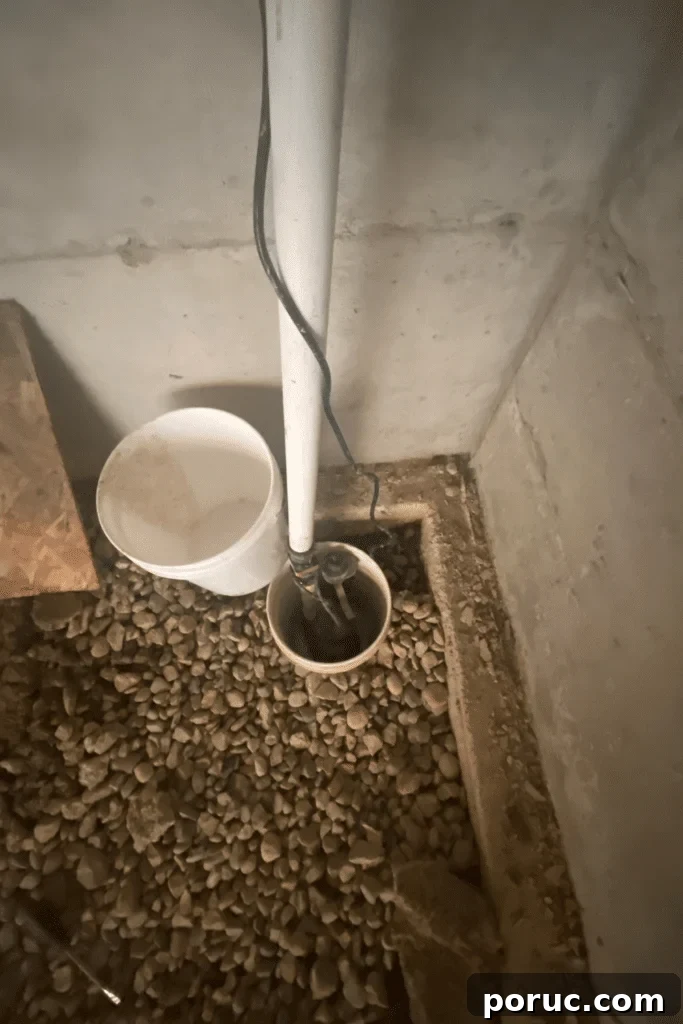
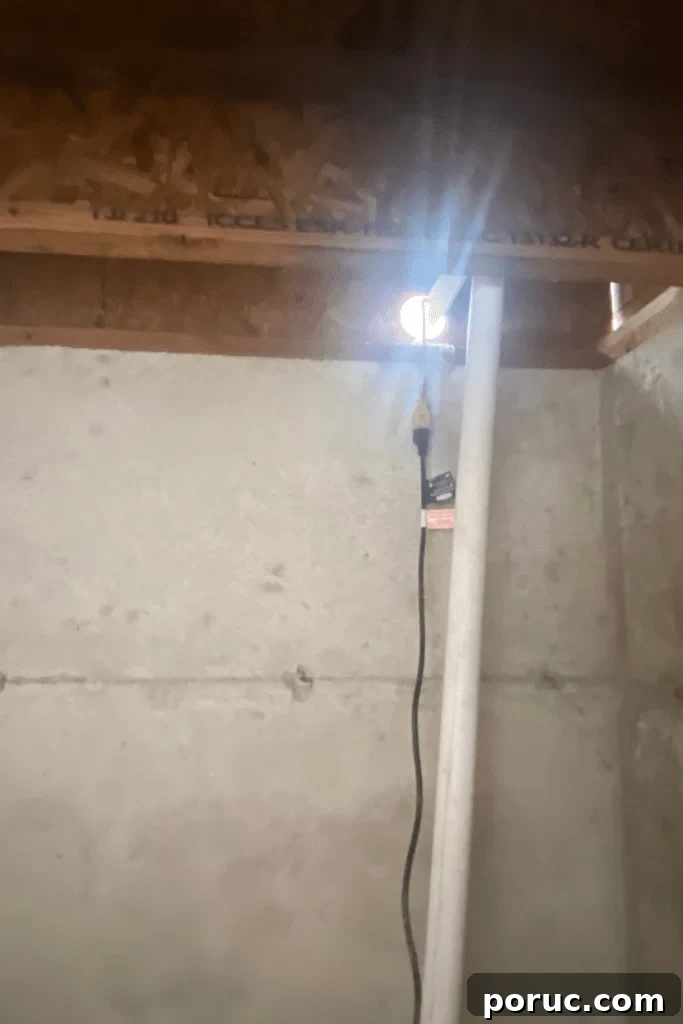
Because of persistent water intrusion, we decided a sump pump was necessary and plan to add a solar panel later for power. We’ll also install a French drain in spring to divert subsurface water away from the foundation. Installing a French drain involves digging a trench around the foundation, filling it with rock and perforated pipe, and then covering it so water is directed away from the cellar.
Building the Garden House Above
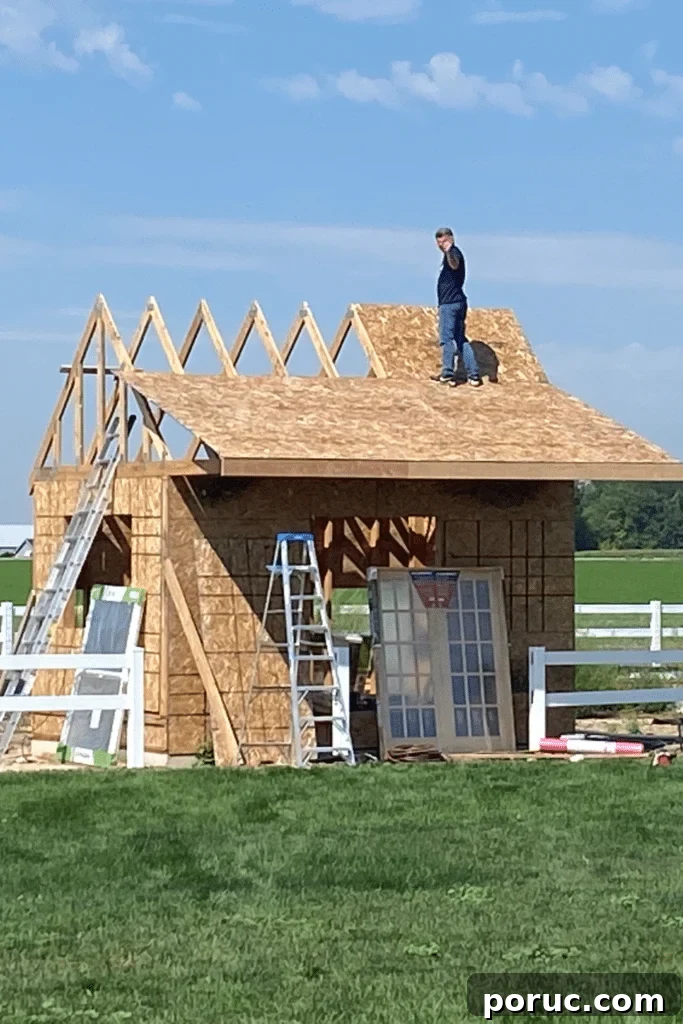
We’ll continue to update this post as we progress with flooring, framing, and finishing the garden house above the cellar. Check back for future updates on completing the shed, adding insulation, and final storage solutions.
Food Storage and Safety
Ideal temperature and humidity ranges for common root cellar crops:
- Root vegetables: 32–40°F (0–4°C) and 70–80% humidity—potatoes, carrots, beets, turnips, parsnips, onions.
- Winter squash: 40–50°F (4–10°C) and 60–70% humidity—butternut, pumpkin, acorn.
- Apples: 32–35°F (0–2°C) and 85–90% humidity.
- Cabbage: 32–35°F (0–2°C) and 90–95% humidity.
- Onions and garlic: 32–40°F (0–4°C) and 60–70% humidity.
Additional tips for optimal storage:
- Preparation: Clean and dry produce before storing.
- Ventilation: Ensure good airflow to control humidity and reduce mold risk.
- Inspection: Check stored items regularly and remove any spoiled produce immediately.
- Monitoring: Use temperature and humidity gauges to track cellar conditions.
- Hygiene: Wash hands and clean surfaces when handling and storing food to avoid cross-contamination.