Before anything else — CLICK HERE to download my FREE guide for picky eaters, which includes a daily schedule and the simple chart I recommend ALL parents of picky eaters fill out to get your little one on the right track.
If your child refuses new foods, drops foods they used to eat, or becomes increasingly difficult to cook for, you’re in the right place. Today I’ll cover practical first steps to take when dealing with a picky eater. It can feel overwhelming and confusing, but small, consistent changes make a big difference.
As both a mom of a picky eater and a registered dietitian who works with families, I’ll guide you toward sensible, realistic actions that support better eating habits without stress or blame.
Step 1: Rule out medical causes
If you’re worried about your child’s eating, schedule a visit with your pediatrician if one isn’t already planned. It’s important to rule out any medical issues that can affect appetite or feeding, and the pediatrician will review your child’s growth chart to ensure weight and height are progressing appropriately.
Even if it seems like your picky eater eats very little, many children—especially between ages 2 and 5—naturally eat less than they did as infants. Their appetites often fluctuate. Still, confirming healthy growth and addressing any medical concerns first gives you a solid foundation for working on feeding strategies.
Step 2: Establish a meal and snack routine
Frequent grazing can blunt appetite at meals and make picky behaviors worse. If children know they can get a preferred snack shortly after refusing a meal, they may hold out for that instead.
Set a consistent routine of meals and snacks so your child has predictable opportunities to be hungry at mealtime. I prefer the word “routine” to “schedule” because daily timing can vary—what matters is the rhythm, not the clock.
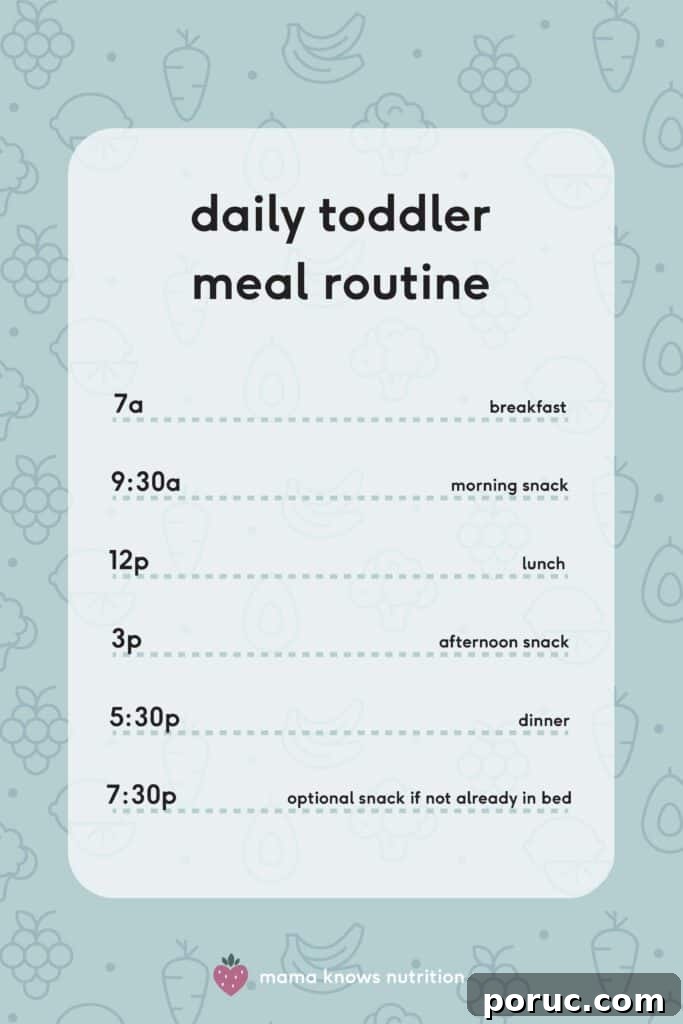
For many young children (ages 1–5), three meals and two snacks work well. If dinner is more than two hours before bedtime, a small bedtime snack can be added.
Here’s an example of a simple day structure:
Step 3: Adopt a policy of variety — don’t repeat the same foods two days in a row
Picky eaters often end up eating a very narrow range of foods. A helpful household rule is to avoid serving the exact same foods two days in a row (milk is an exception). Even young children can understand a simple family rule like “we don’t eat the same thing two days in a row.”
This rule prompts you to keep offering new or different foods, increasing the chance your child will encounter items they’ll accept. Variety also supports a more balanced intake across food groups, which is important for preventing nutrient gaps.
Download the picky eater guide to get the chart I use for tracking variety. Start by making sure there is at least one liked item from each major food group. If a food group is missing, consider discussing this with your pediatrician or a dietitian to address potential nutrient shortfalls.
Step 4: Remember that it’s not your fault
Parents—especially moms—often blame themselves when a child is a picky eater. Feeding young children is challenging and full of ups and downs. You are doing your best, and it’s not a failure when a child refuses a meal you prepared. Let go of unnecessary guilt and focus on steady, compassionate steps forward.
Make sure to grab your copy of the PICKY EATER STARTER GUIDE now!