
My mom and I still laugh about the gingerbread disaster we made when I was in high school. A popular magazine recipe turned our dough into a solid brick that refused to roll. Years later I revisited gingerbread using the reverse creaming method and the dough rolled beautifully without chilling. That success inspired other no-chill cut-out cookies, including dark chocolate gingerbread and Linzer cookies.
This recipe is an updated classic no-chill gingerbread cookie made with the reverse creaming method. It can be rolled out immediately with minimal dusting, or chilled overnight and rolled the next day without cracking. The dough is easy to handle, so it works well for simple shapes and more intricate decorations alike.
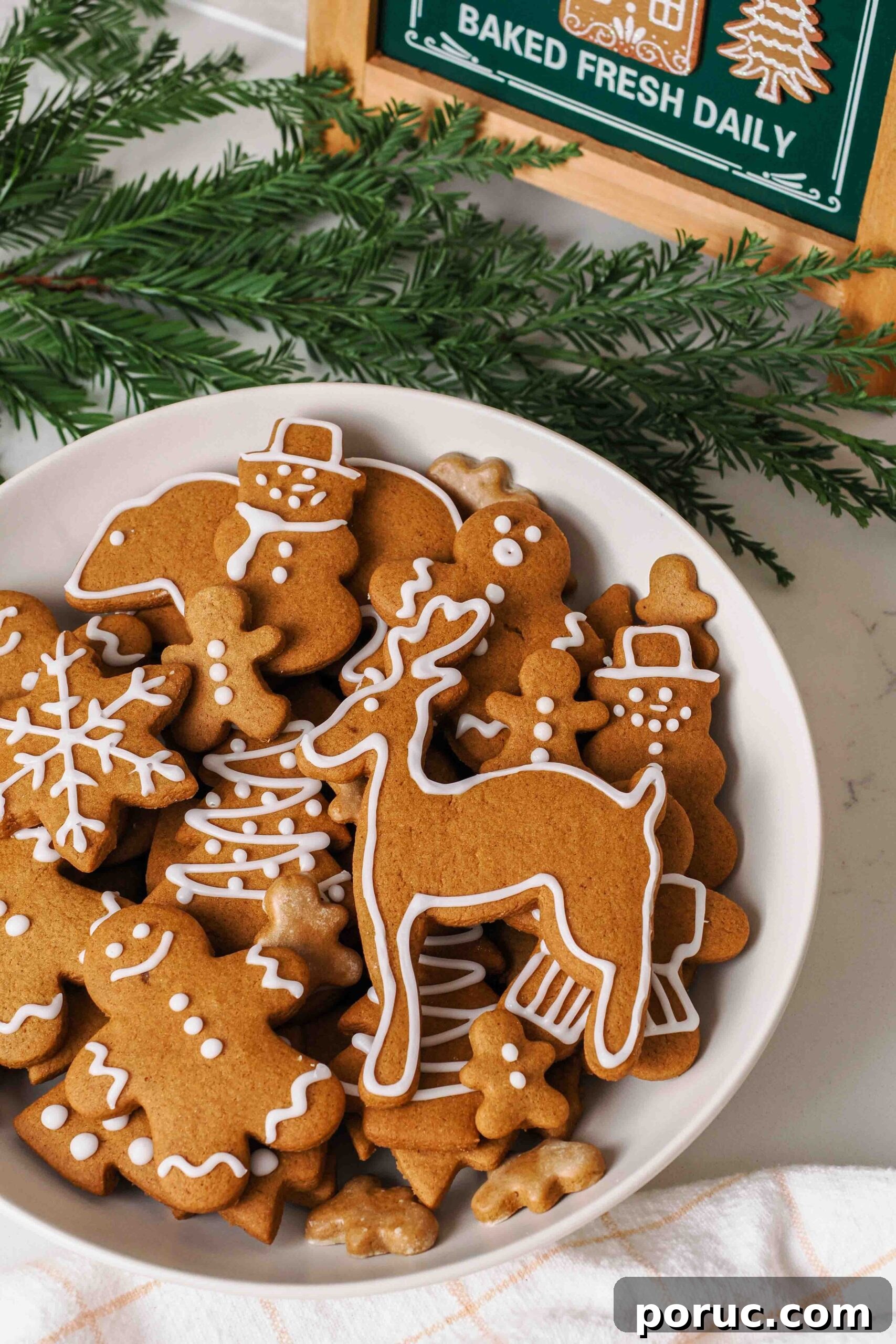
“This recipe 100% works! And it’s delicious! A perfectly soft gingerbread but still has a bit of a crunch and the spice level is perfection!” -757Lemon
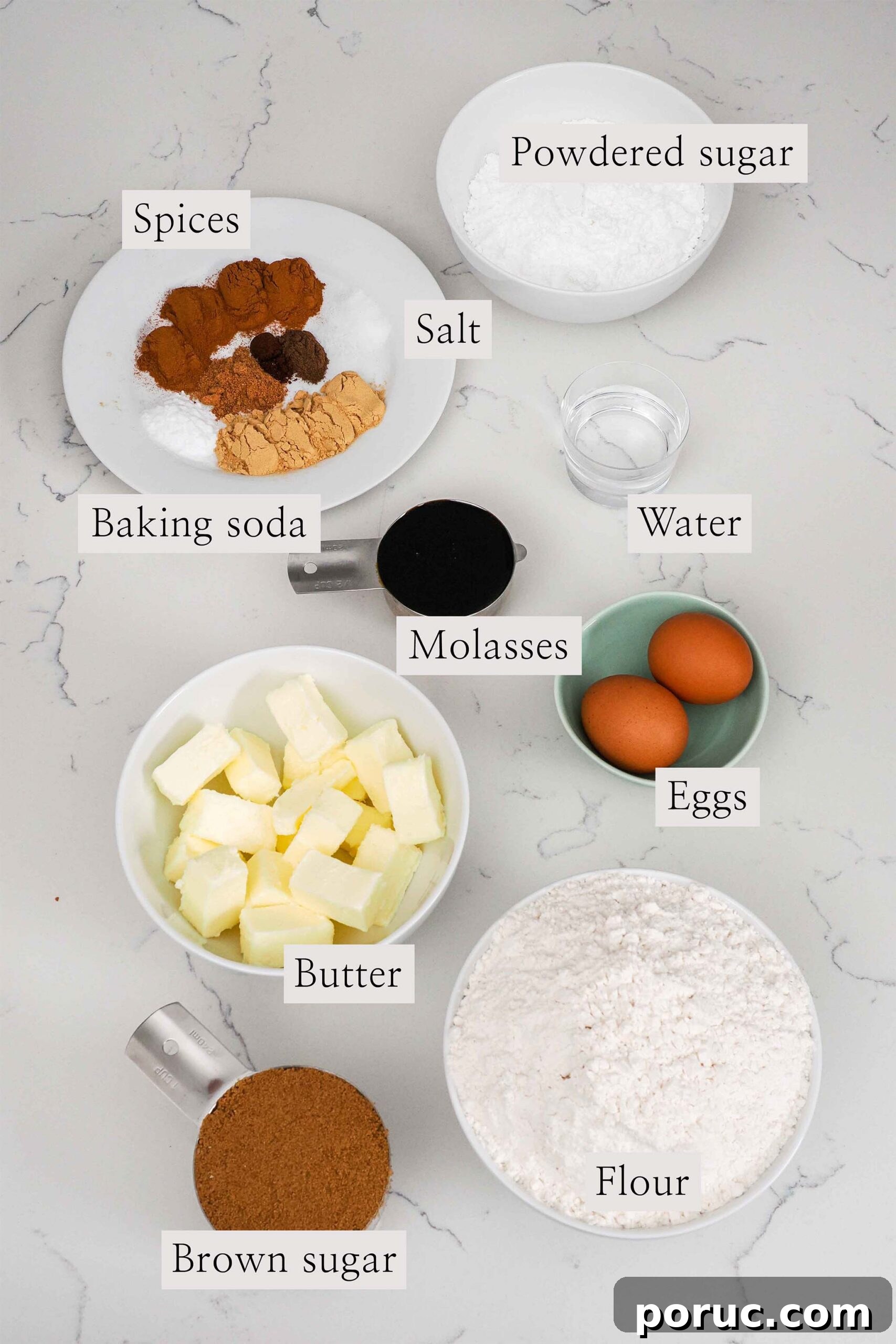
Ingredients for No-Chill Gingerbread
These no-chill gingerbread cookies are soft, thick, and perfectly spiced with minimal spreading thanks to the reverse creaming method. A handful of pantry ingredients—flour, brown sugar, butter, spices, molasses, and eggs—come together to make classic Christmas flavors with easy handling.
- All-purpose flour. Provides structure. A 1:1 gluten-free substitute may work, though I haven’t tested it.
- Brown sugar. All brown sugar adds moisture and a rich flavor that complements molasses.
- Salted butter. Use salted or unsalted butter based on preference; vegan butter can be used for a dairy-free version.
- Spices. Ground ginger, cinnamon, nutmeg, cloves, and allspice create a warm, balanced spice profile.
- Baking soda. Gives a controlled lift without excessive spreading.
- Salt. A pinch enhances all the flavors.
- Molasses. Keeps the cookies soft and adds classic gingerbread depth.
- Eggs. Bind the dough and help it come together.
- Powdered sugar. Mixed with water for a simple, thick icing perfect for piping and decorating.
How to Make Gingerbread Cookies via the Reverse Creaming Method
This no-chill gingerbread is quick and forgiving, so you won’t struggle with sticky or crumbly dough while rolling. The reverse creaming method coats flour with fat, reducing gluten formation and producing a tender, easy-to-handle dough that often doesn’t need chilling.
Why the Reverse Creaming Method?
Instead of creaming butter and sugar first, the reverse creaming method mixes butter, sugar, and flour together. Coating the flour in fat limits gluten development, giving a soft dough that’s less sticky and typically ready to roll without refrigeration. It’s one-step simple and works beautifully for cut-out cookies.
Making the Gingerbread Cookie Dough
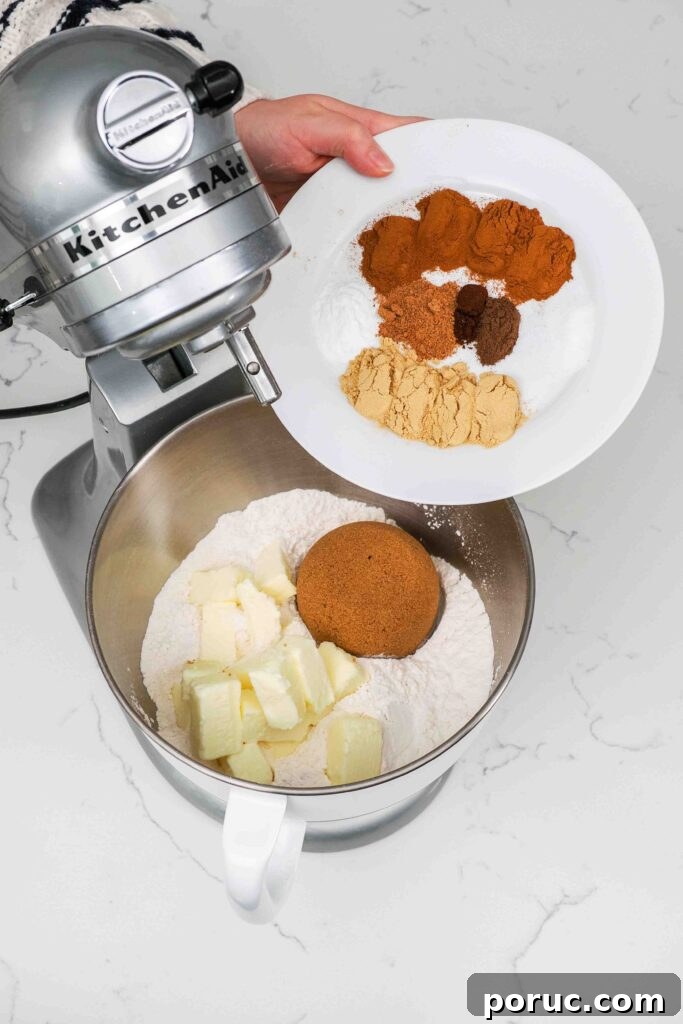
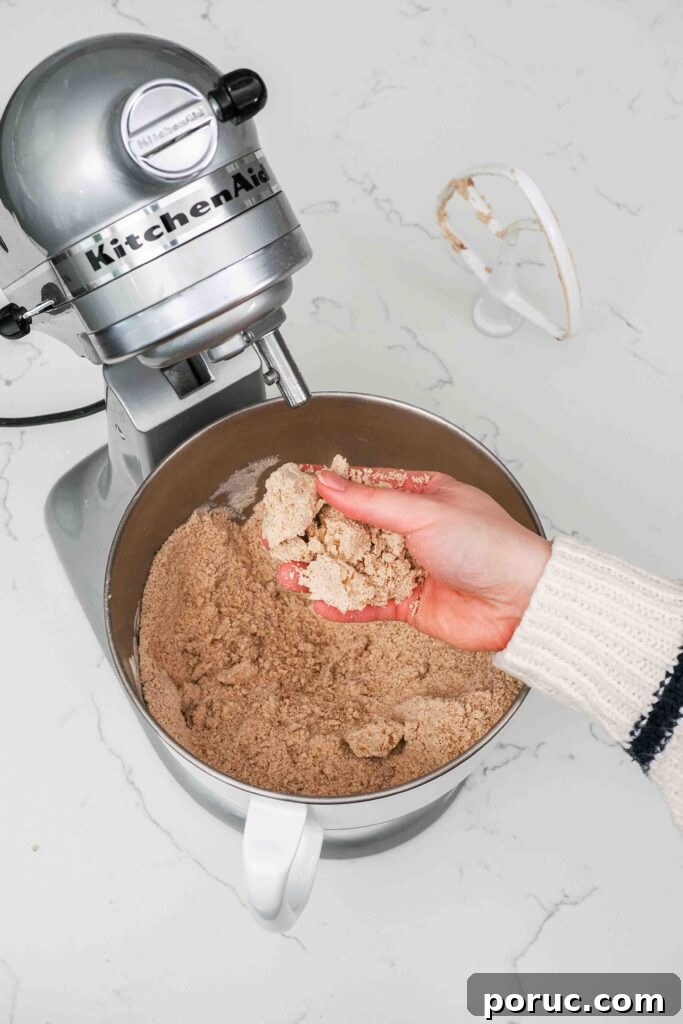
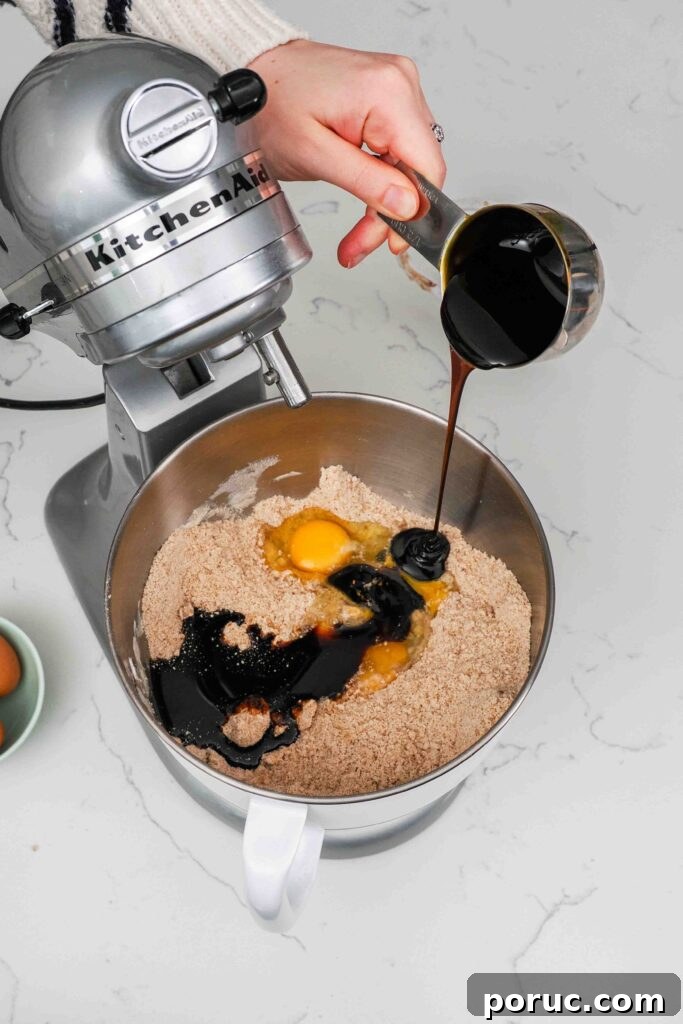
To make the dough: add all-purpose flour, brown sugar, softened butter, ground spices, baking soda, and salt to the bowl of a stand mixer fitted with a paddle (or use a large bowl and a sturdy spoon). Mix on low until the mixture looks sandy and no large butter pieces remain—when squeezed, it should hold together but crumble easily.
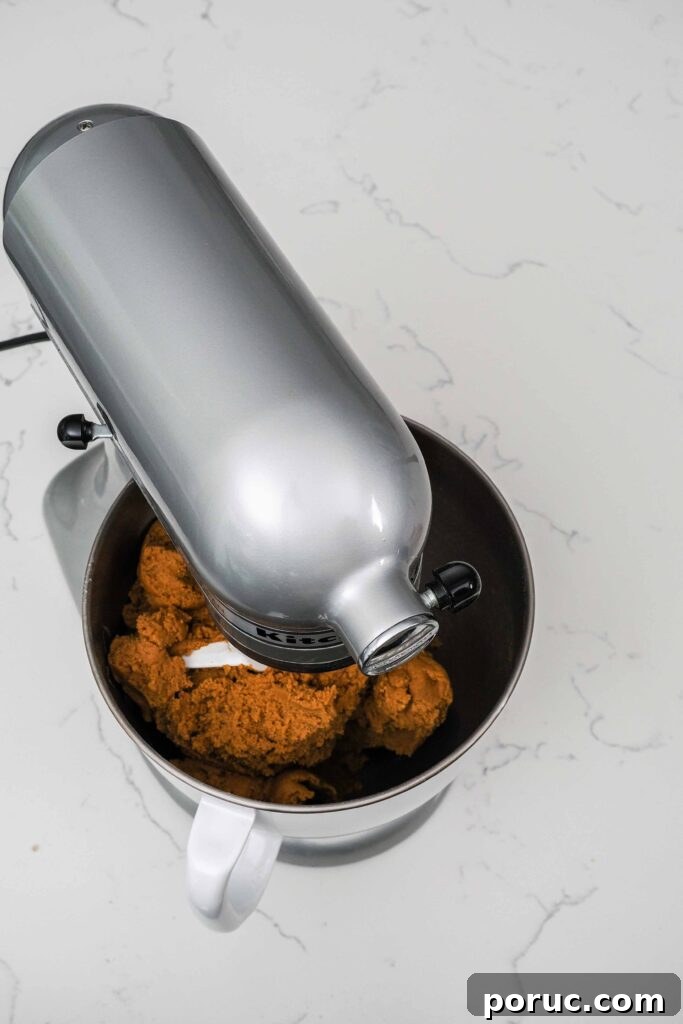
Then add the molasses and eggs and beat on low until a dough ball forms. This may take a few minutes; keep the mixer low until everything comes together. If the dough seems very soft or sticky, add 1–2 tablespoons (10–15 g) more flour.
Quick Tips for Rolling Out No-Chill Gingerbread Dough
This dough works great at room temperature or chilled. Roll immediately after mixing or refrigerate wrapped tightly for up to 2 days.
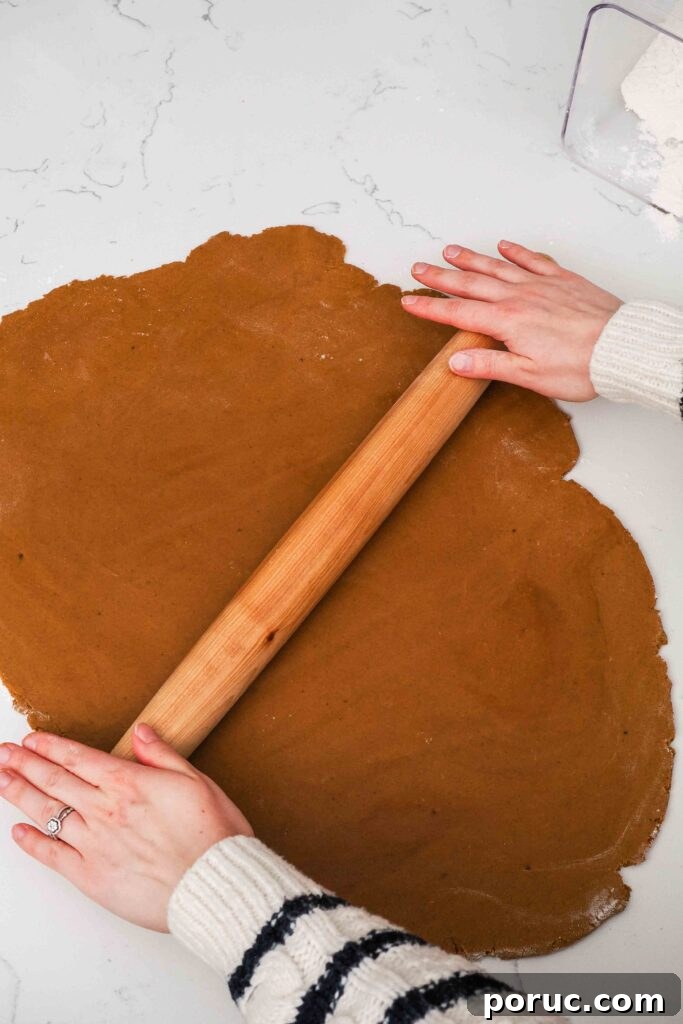
Turn the dough onto a lightly floured surface. For warm kitchens or porous counters, use a slightly heavier dusting of flour or roll between parchment paper. Roll to about 1/4″–3/8″ (6–9 mm) thick—this thickness helps maintain shape and avoids tears.
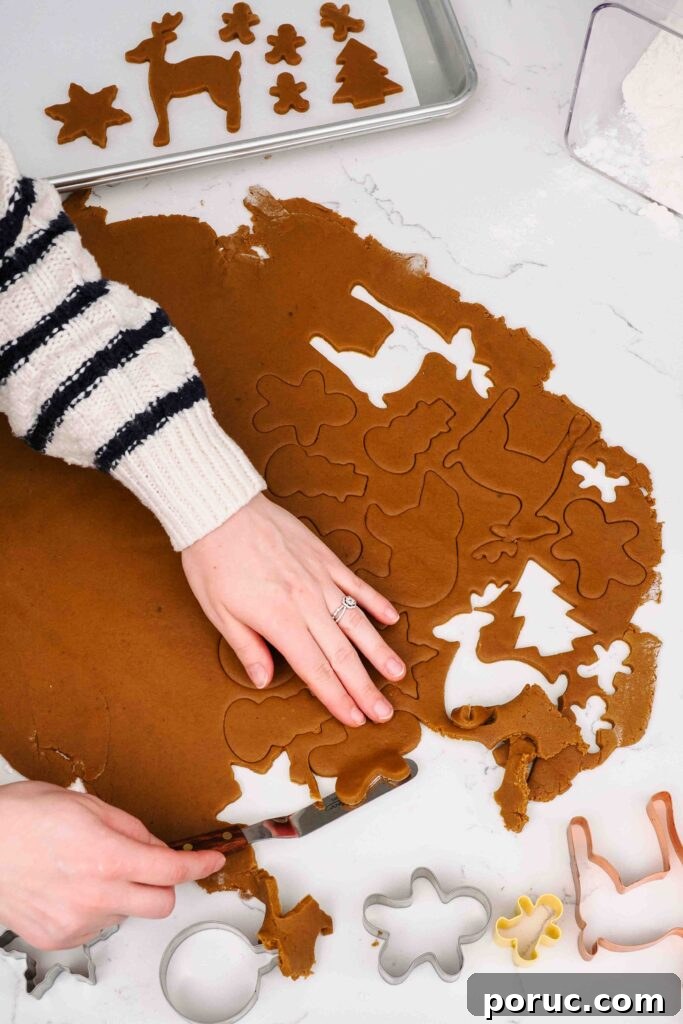
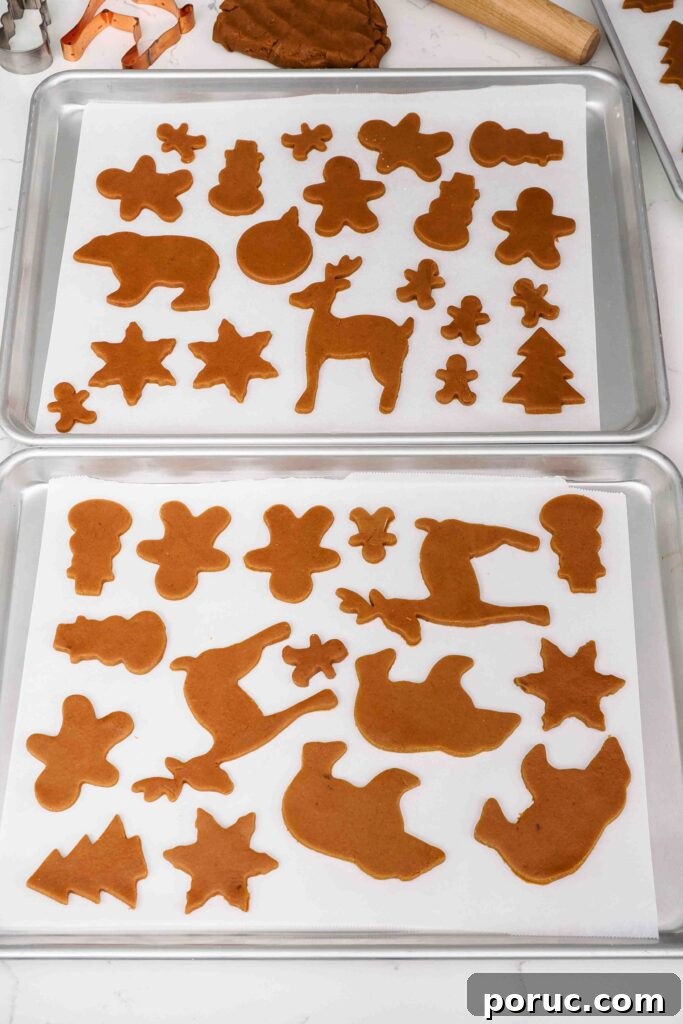
Use your favorite cookie cutters, then gently lift cut shapes with your fingertips, a bench scraper, or an offset spatula for delicate designs. Place cookies at least 1″ (25 mm) apart on lined baking sheets. Scraps can be pressed together and re-rolled multiple times.
How to Bake Gingerbread Cookies
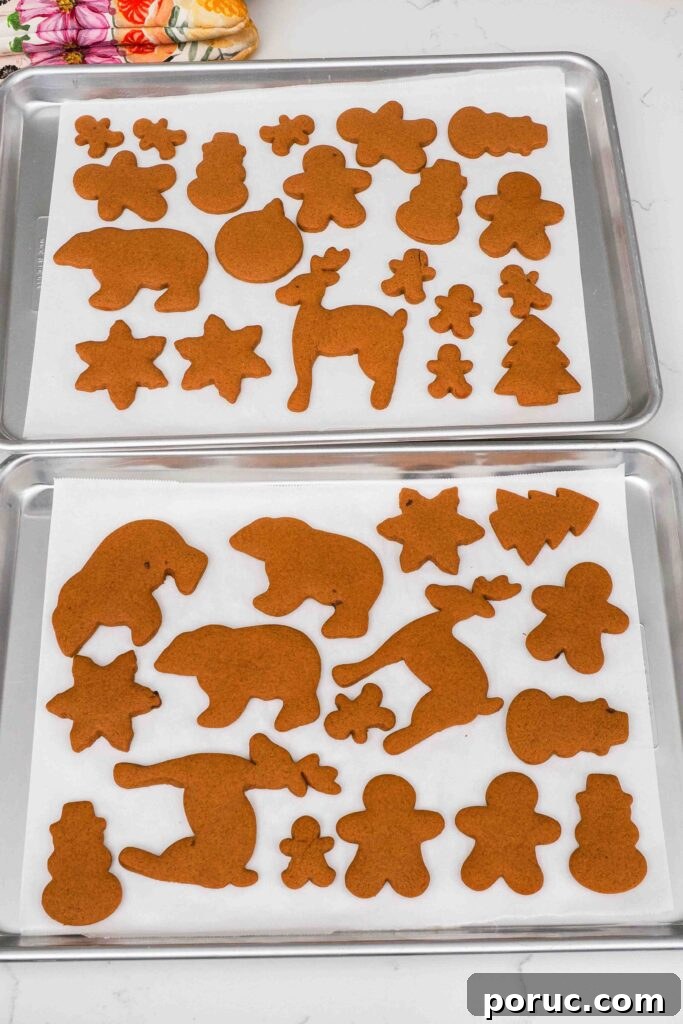
Bake on parchment- or silicone-lined sheets at 350°F (175°C) for 9–13 minutes, until the tops look matte and edges are slightly darker than the centers. Small or thin shapes bake closer to 9–10 minutes; thicker or larger cookies need 12–13 minutes. For crispier cookies, bake a couple minutes longer until the bottoms color slightly.
You can bake one or two trays at once; if baking two, rotate trays halfway through for even results.
How to Decorate Gingerbread Cookies
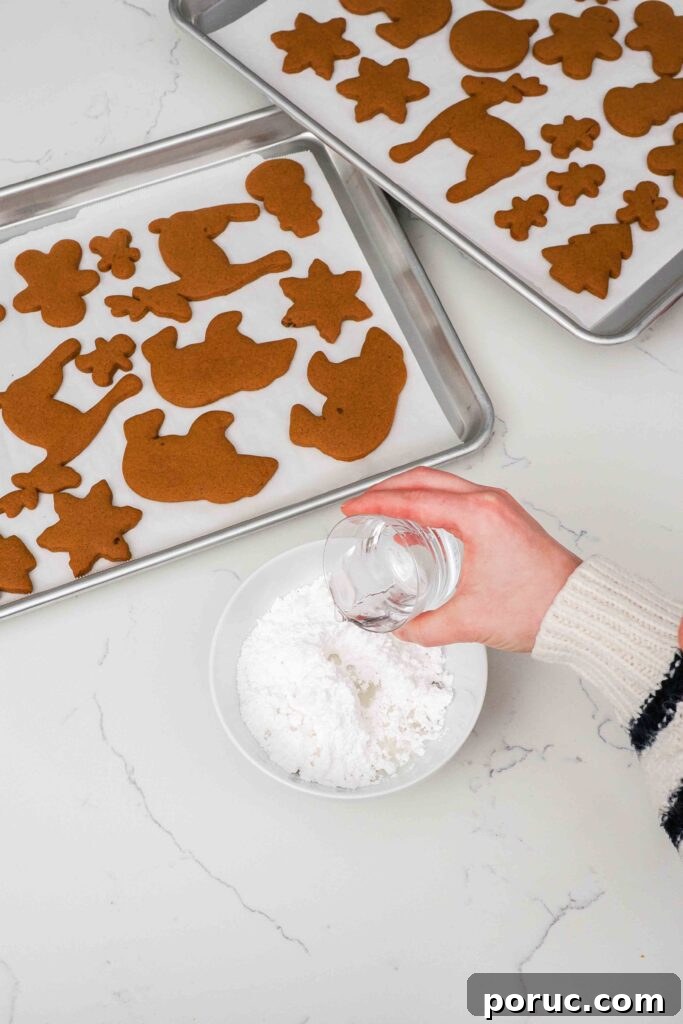
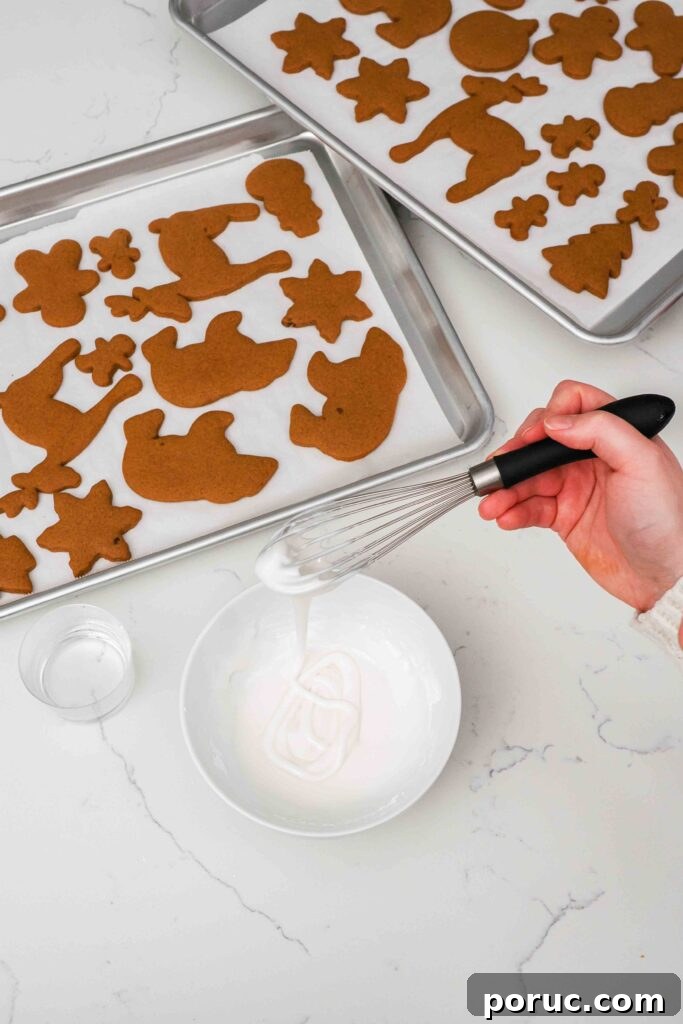
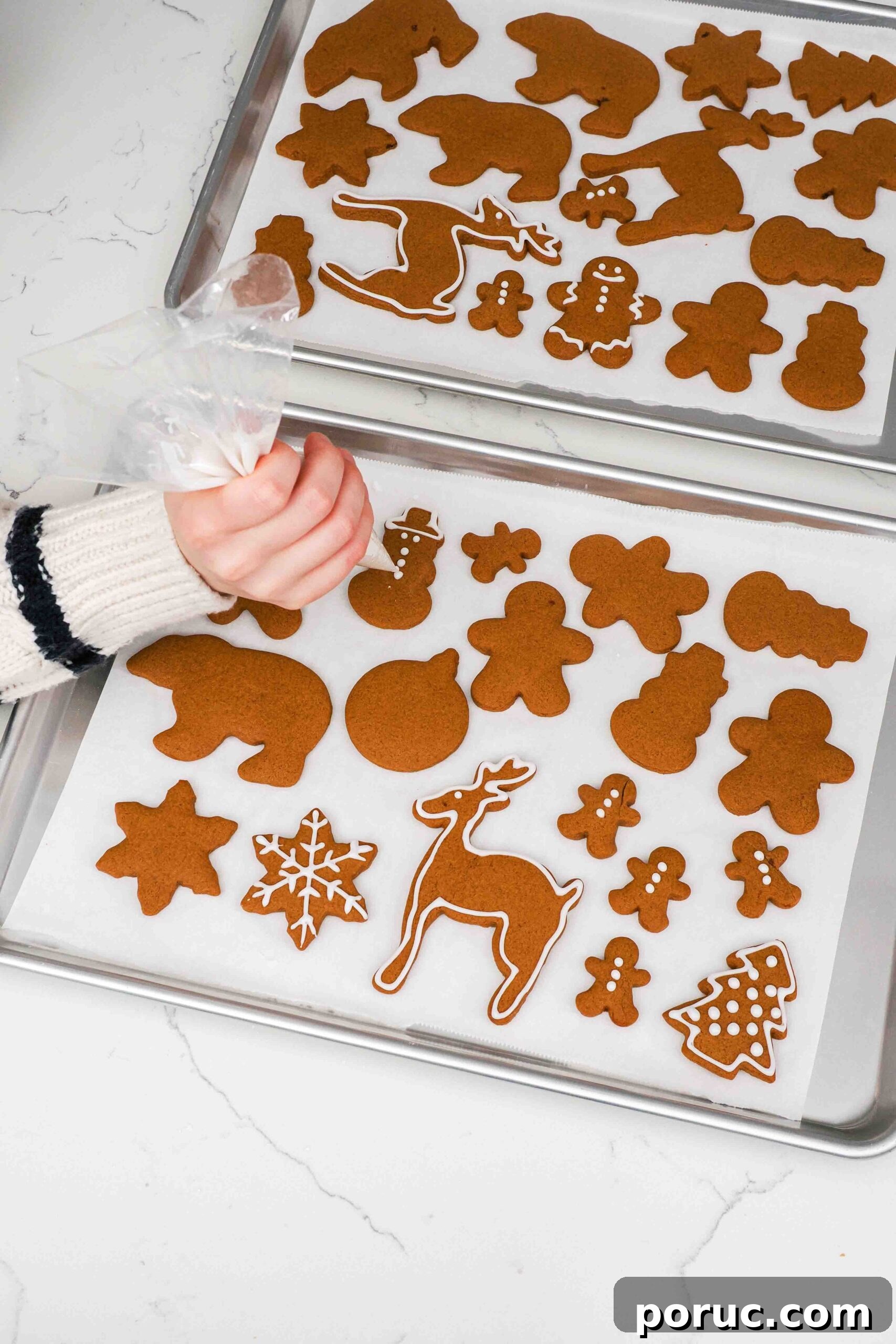
A simple icing of powdered sugar and water works well and is quick to prepare. Whisk powdered sugar with about half the water, then add more water a few drops at a time until you reach your desired piping consistency. Thick, opaque icing is great for visible piping lines and coverage; thinner icing is better for flooding.
For piping, transfer icing to a bag and cut a small tip or use a small piping tip. Divide and color with gel food coloring if desired. Outline shapes and add details, or fully cover cookies—either approach looks lovely.
How to Make Mini Gingerbread Cookies
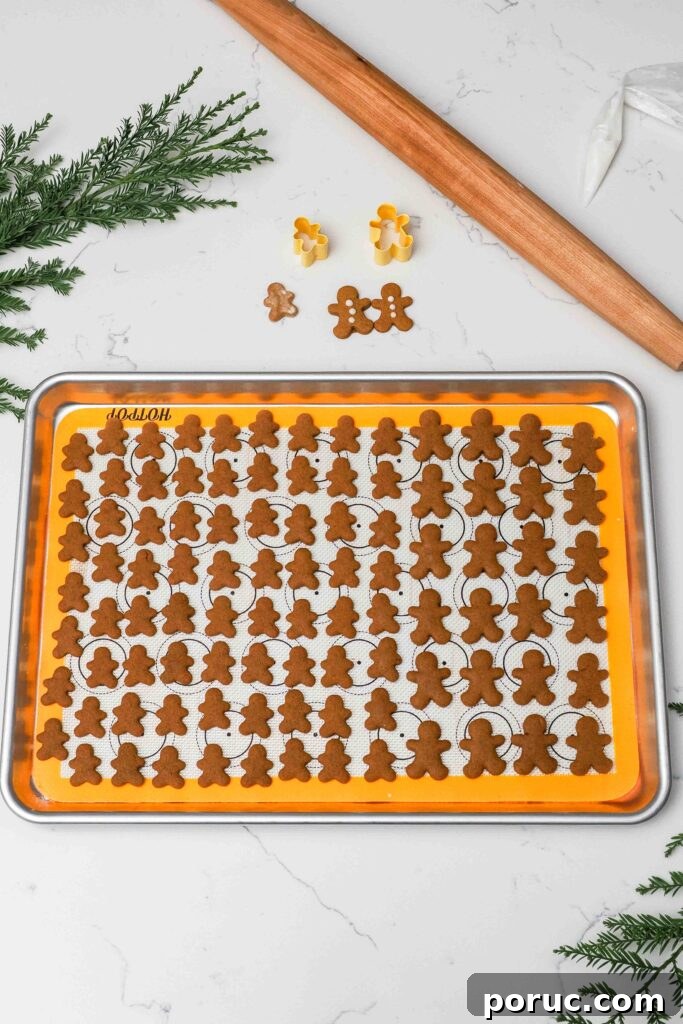
Use leftover dough to make mini gingerbread men for ice cream or decorations. Cut minis with small cutters and bake at 350°F for about 8 minutes on silicone; if using parchment or a dark pan, start checking at 6 minutes. Cool and ice simply—tiny buttons or lines look charming.

FAQs about No-Chill Gingerbread
Probably not ideal. This dough bakes soft, so it won’t be very strong for structure-heavy gingerbread houses.
Yes—royal icing is fine if you prefer it. The powdered sugar and water glaze is offered for simplicity.
Stored airtight, these stayed soft for at least two weeks on my counter. For longer storage, freeze the cookies.
Reverse creaming coats the flour with fat, which reduces gluten development and helps cut-outs keep their shape without puffing too much.
Yes—this dough chills and rolls out nicely the next day.
Other Recipes You May Enjoy
If you love gingerbread, try other ginger-spiced treats like chocolate gingerbread cookies or a whiskey gingersnap cocktail for a twist on classic flavors.

Dish Cleanup: Gonna Take a While
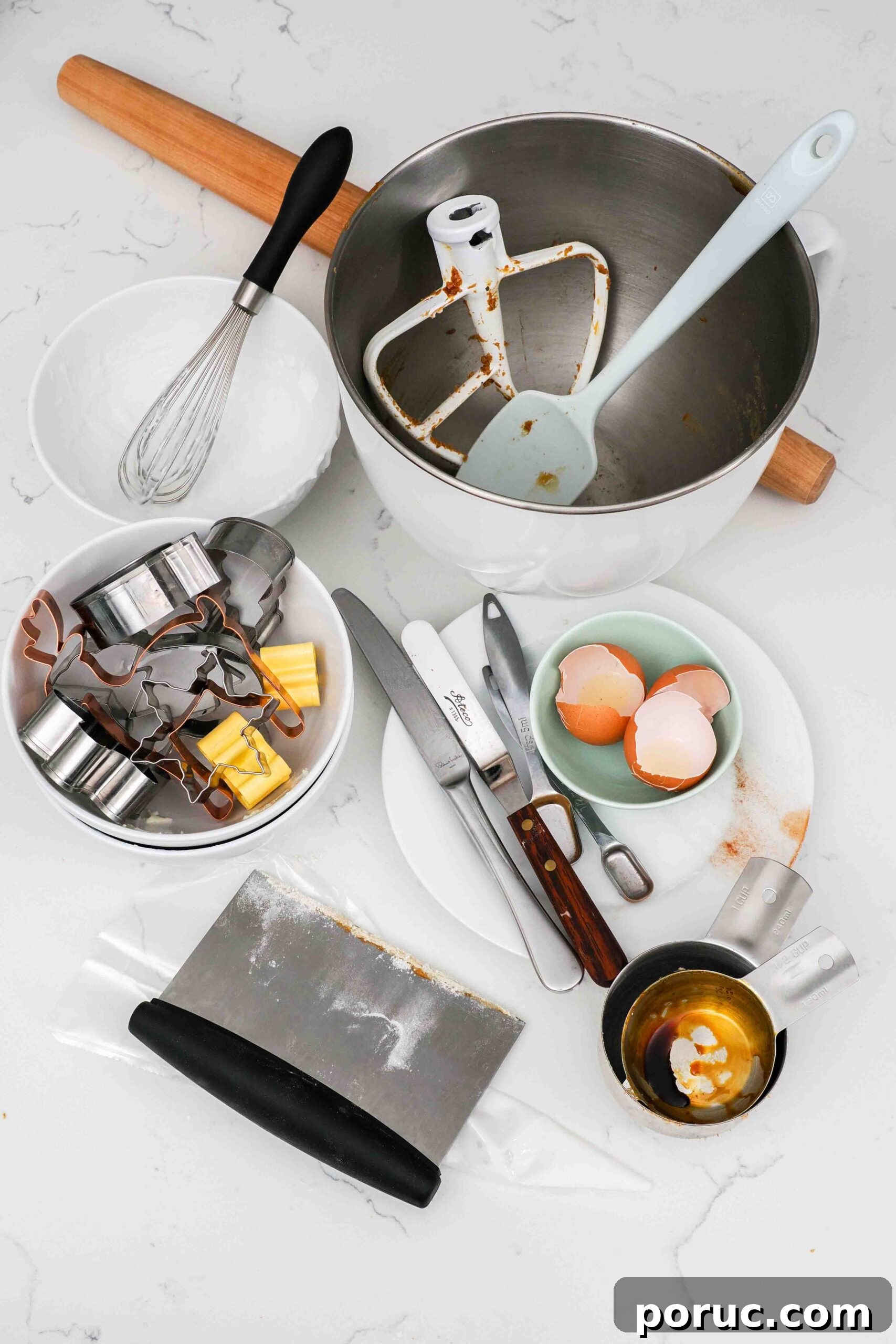
I rate cleanup for this recipe a 4 out of 5—there’s a mixing bowl, measuring cups, rolling pin, cookie cutters, and decorating tools. Lining baking sheets with parchment or silicone cuts down on washing pans.
No-Chill Gingerbread Recipe
Thanks for reading! If you make these cookies and enjoy them, please leave a review to let others know how they turned out.

No-Chill Gingerbread Cookies
Ingredients
For the Gingerbread Cut-Outs
- 4 1/2 cups (600 g) all-purpose flour, spooned and leveled, plus more for dusting
- 1 cup (210 g) brown sugar
- 16 Tablespoons (170 g) salted butter, softened
- 4 teaspoons (8 g) ground ginger
- 4 teaspoons (8 g) ground cinnamon
- 1 teaspoon ground nutmeg
- 1/2 teaspoon ground cloves
- 1/2 teaspoon ground allspice
- 1 teaspoon baking soda
- 1/2 teaspoon salt
- 1/2 cup (170 g) molasses
- 2 large eggs
For the Icing
- 1 1/2 cups (155 g) powdered sugar, sifted
- 2–3 Tablespoons (30–45 ml) water
Instructions
To Make the Gingerbread Cookies
- Preheat the oven to 350°F (175°C) and line at least two baking sheets with parchment or silicone. (This yields about 4–5 dozen cookies.)
- In a stand mixer with the paddle attachment, mix flour, brown sugar, butter, spices, baking soda, and salt on low until fully combined and no large butter pieces remain. The mixture should look sandy.
- Add molasses and eggs and beat on low until the dough forms a ball, about 3–4 minutes. If the dough is very soft or sticky, add 1–2 Tablespoons (10–15 g) more flour. Roll immediately or wrap tightly and chill up to 2 days.
- On a lightly floured surface, roll dough to about 1/4″–3/8″ (6–9 mm) thick. Dust with more flour as needed.
- Cut shapes, carefully lift them off the work surface using fingers, a bench scraper, or offset spatula, and place on lined sheets at least 1″ (25 mm) apart. Combine scraps and reroll as needed.
- Bake 9–13 minutes until tops are matte. Thin or small shapes finish around 9–10 minutes; thicker pieces need 12–13 minutes. For crisper cookies, bake a couple minutes longer until bottoms color slightly.
To Ice the Gingerbread Cookies
- Allow cookies to cool completely. Whisk powdered sugar with half the water, then add more water a few drops at a time until you reach a thick, pipeable consistency. Thick icing will leave a trail that holds for 10–15 seconds when drizzled.
- Divide and color icing if desired, transfer to piping bags, and decorate. Enjoy.
Notes
Recommended Supplies
- Rolling pin
- Cookie cutters
- Bench scraper
- Offset spatula
- Baking sheets
Nutrition
Video
I’d love to see your results—take a photo and tag @floralapronblog or use #floralapronbakes to share.