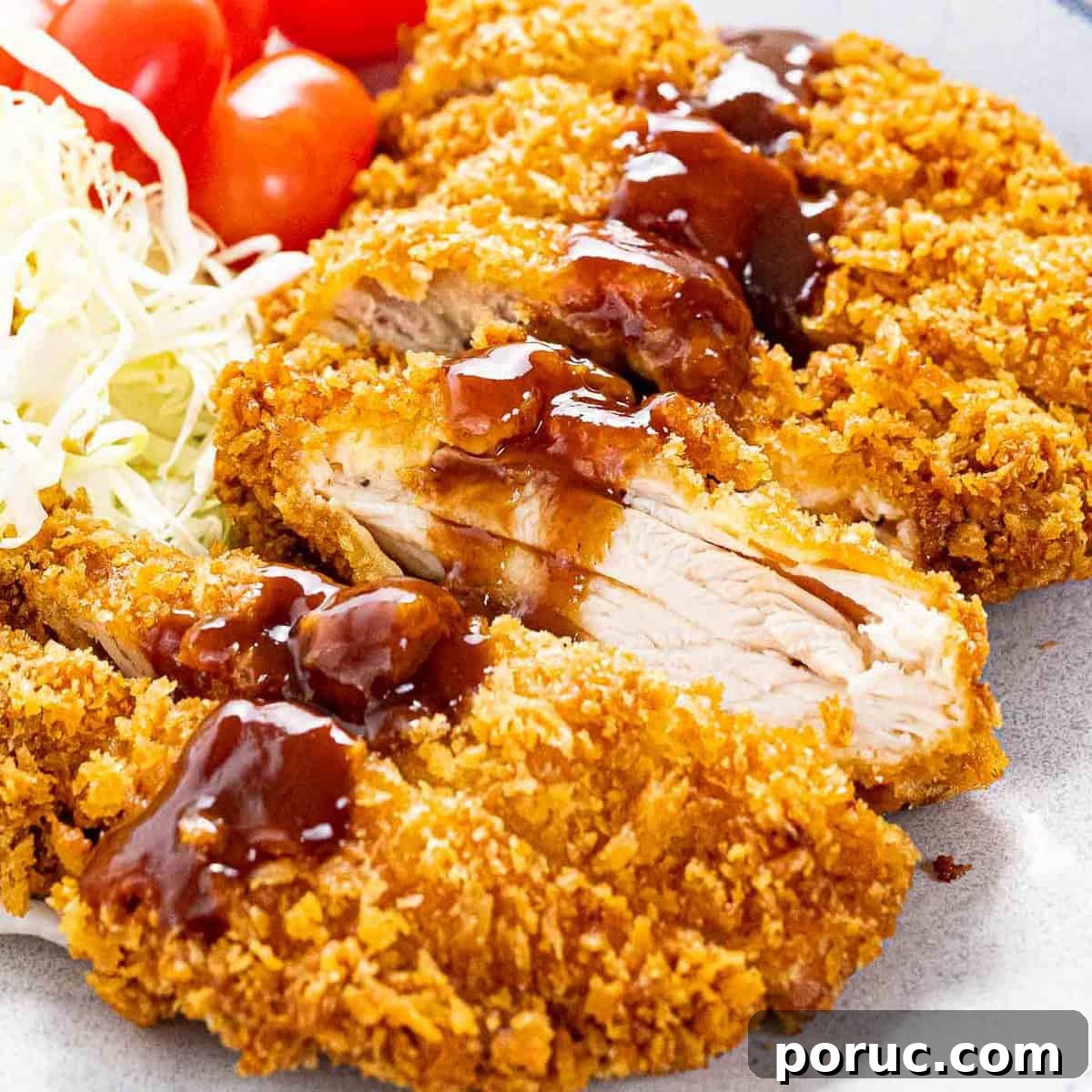
This is the best chicken katsu recipe you’ll find. Chicken thighs or breasts are coated in a generous layer of flaky panko breadcrumbs and fried until tender and juicy on the inside. Read on for tips to get the crispiest chicken katsu.
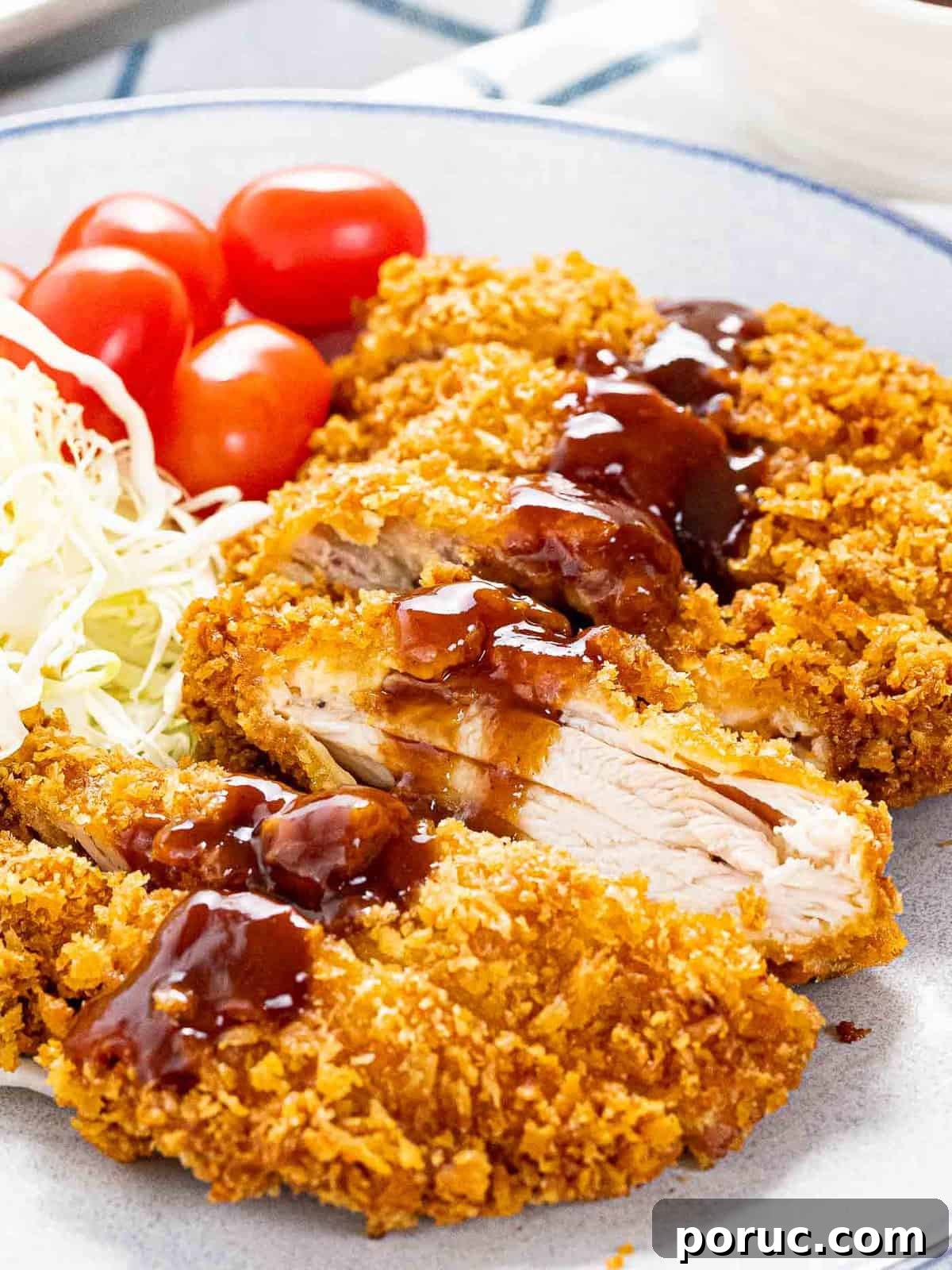
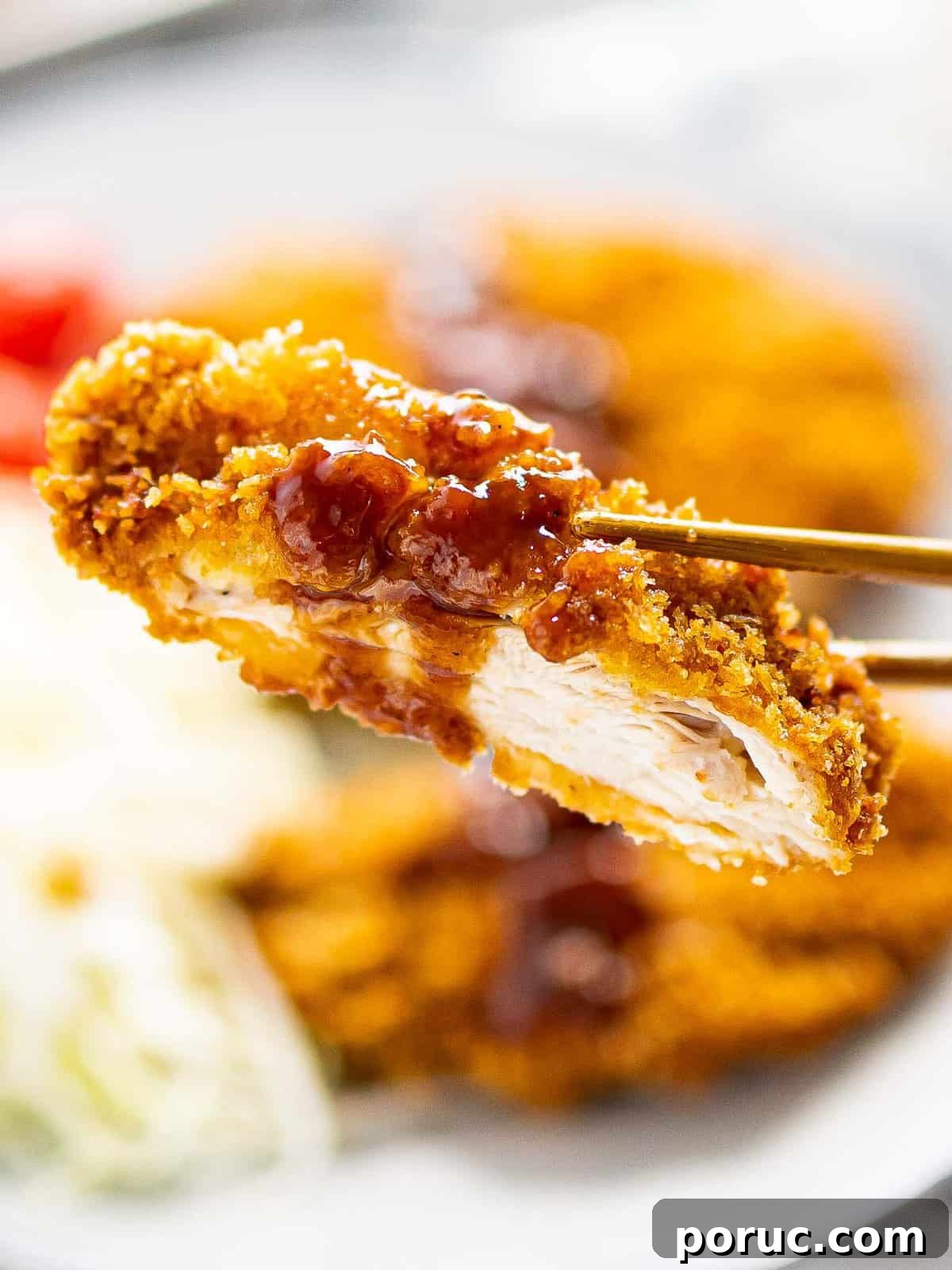
What makes this the best chicken katsu is the generous coating of panko breadcrumbs that gives outstanding texture and crunch to this Japanese fried cutlet.
The crunchy panko layer also protects the chicken from overcooking, keeping it juicy and tender. Below I share my secret for an extra-crispy crust and step-by-step instructions so you can reproduce restaurant-quality chicken katsu at home.
What is Chicken Katsu (チキンカツ)?
Chicken katsu (チキンカツ), also called tori katsu, is a Japanese fried chicken cutlet. The chicken is pounded flat, coated in panko breadcrumbs, and fried until golden brown. It is commonly served with katsu sauce, steamed rice, and shredded cabbage. Variations include katsu sando (sandwich), katsu don (rice bowl), and chicken katsu curry.
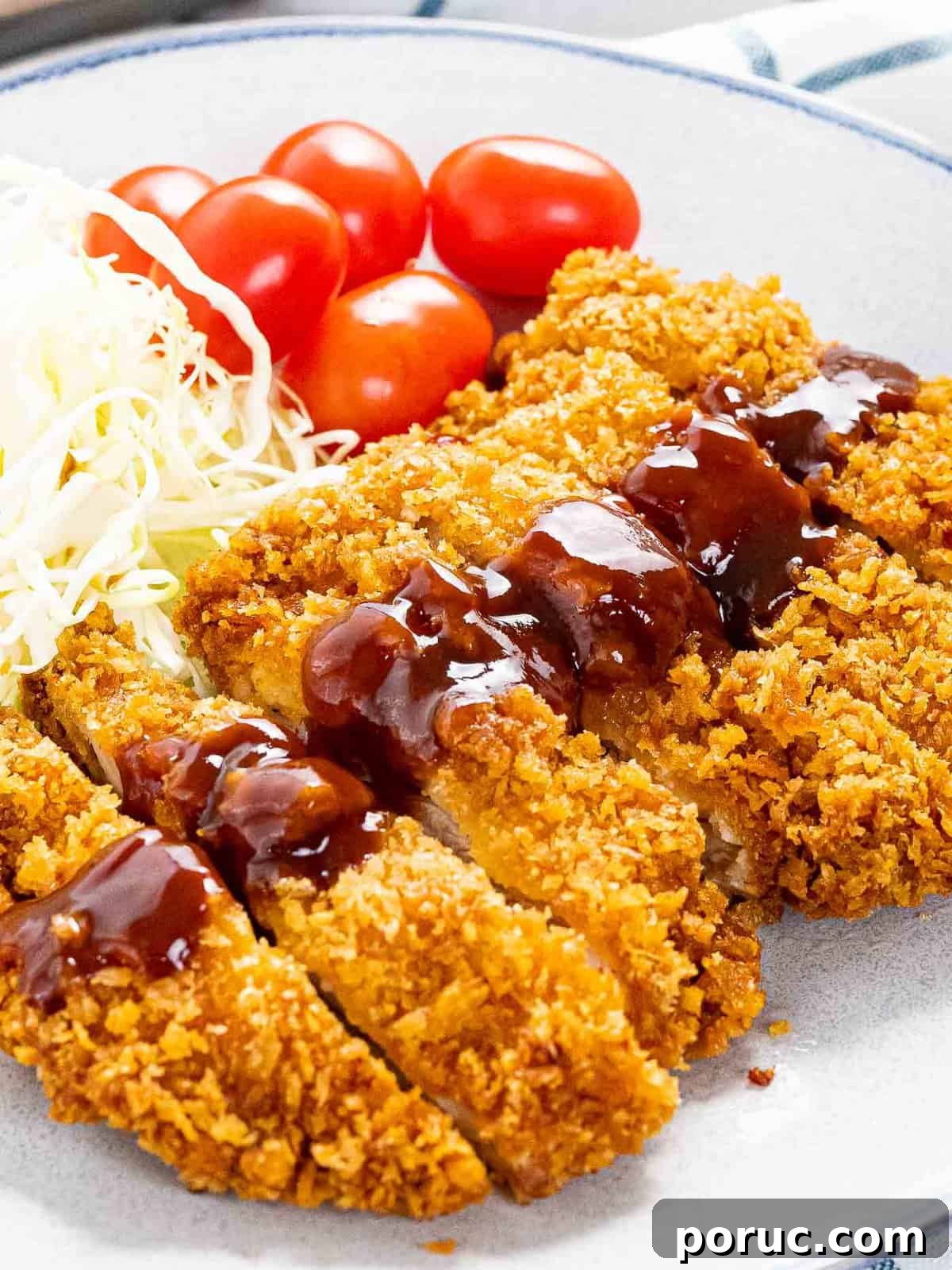
Many recipes skimp on the panko, producing a thin crust that misses the best part: a thick, crunchy coating. My key tip is to mix a tablespoon of flour into the beaten egg. That slightly thickens the egg wash so it picks up more panko, resulting in a thicker, crispier crust.
Ingredients for Chicken Katsu
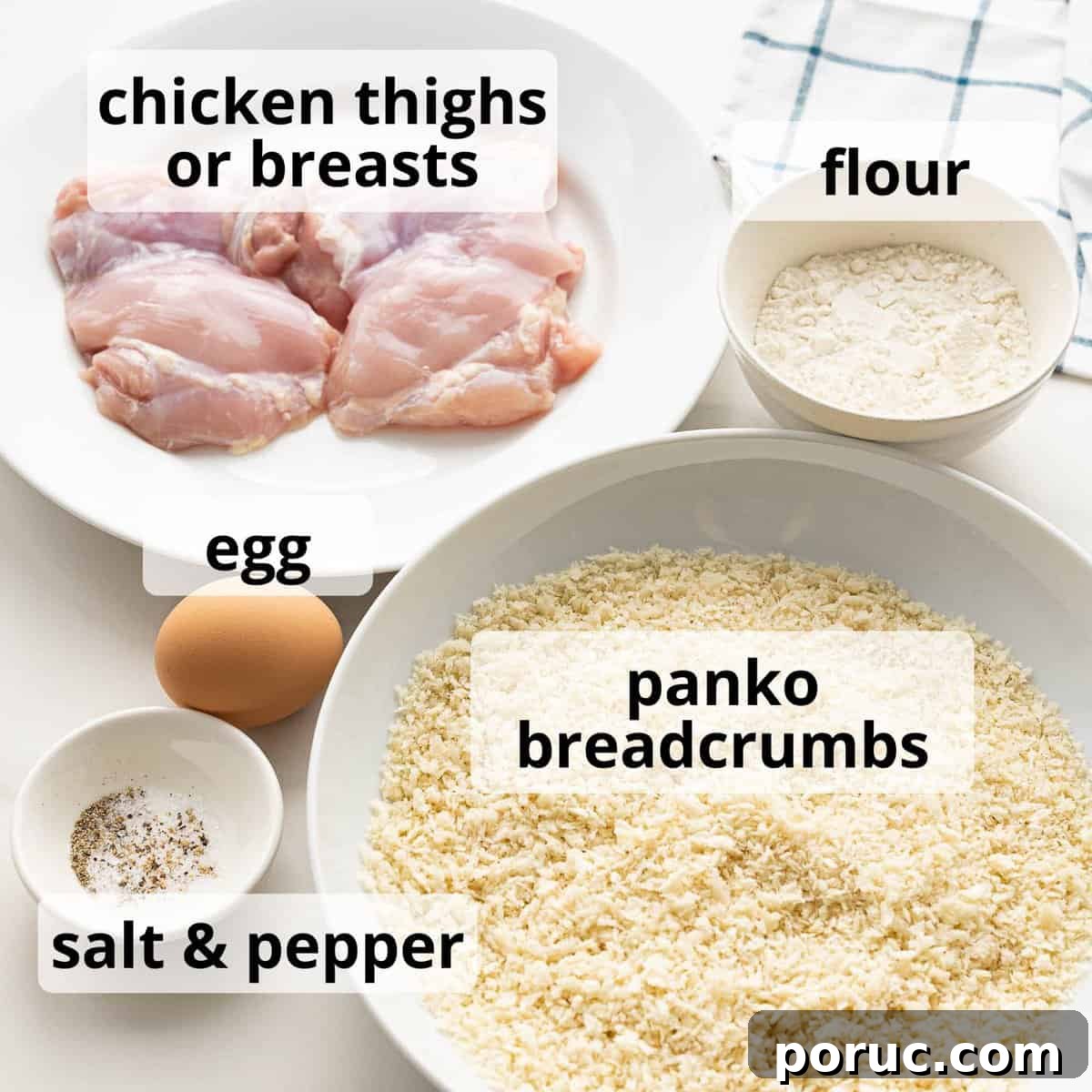
- Chicken thighs or breasts – Thighs stay juicier; if using breasts, halve and pound to an even 1/2 inch thickness. (Boneless, skinless thighs used in this recipe.)
- Panko breadcrumbs – Japanese-style breadcrumbs with large, flaky pieces for extra crunch.
- All-purpose flour – Used for the initial dredge and a tablespoon mixed into the egg wash.
- Egg – Beaten and mixed with flour for a thicker wash that helps panko adhere.
- Vegetable oil – For deep frying.
Panko Breadcrumbs
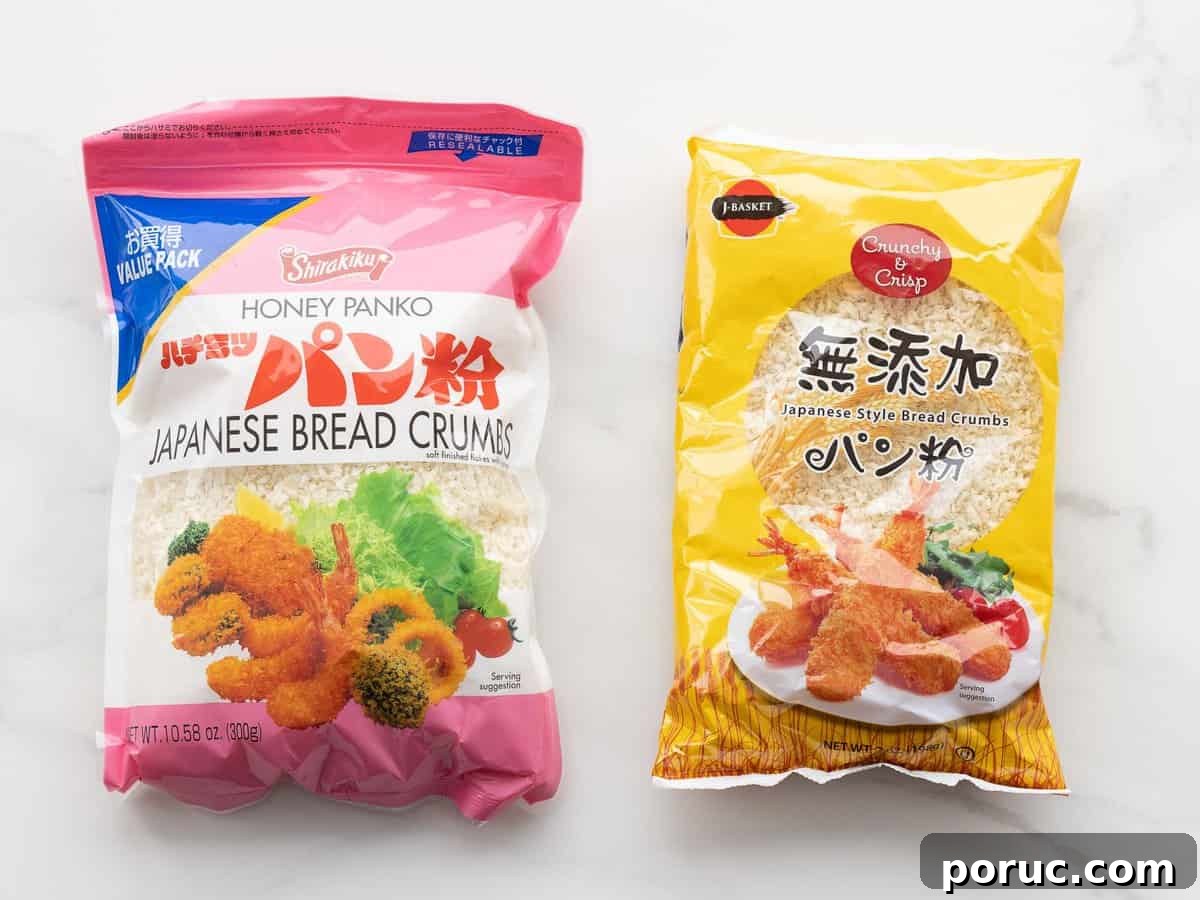
Panko breadcrumbs are lighter, flakier, and crunchier than regular breadcrumbs and are typically made from crustless bread. For the best texture look for large flakes, minimal seasoning, and Japanese-made panko when possible.
Chicken Katsu Sauce
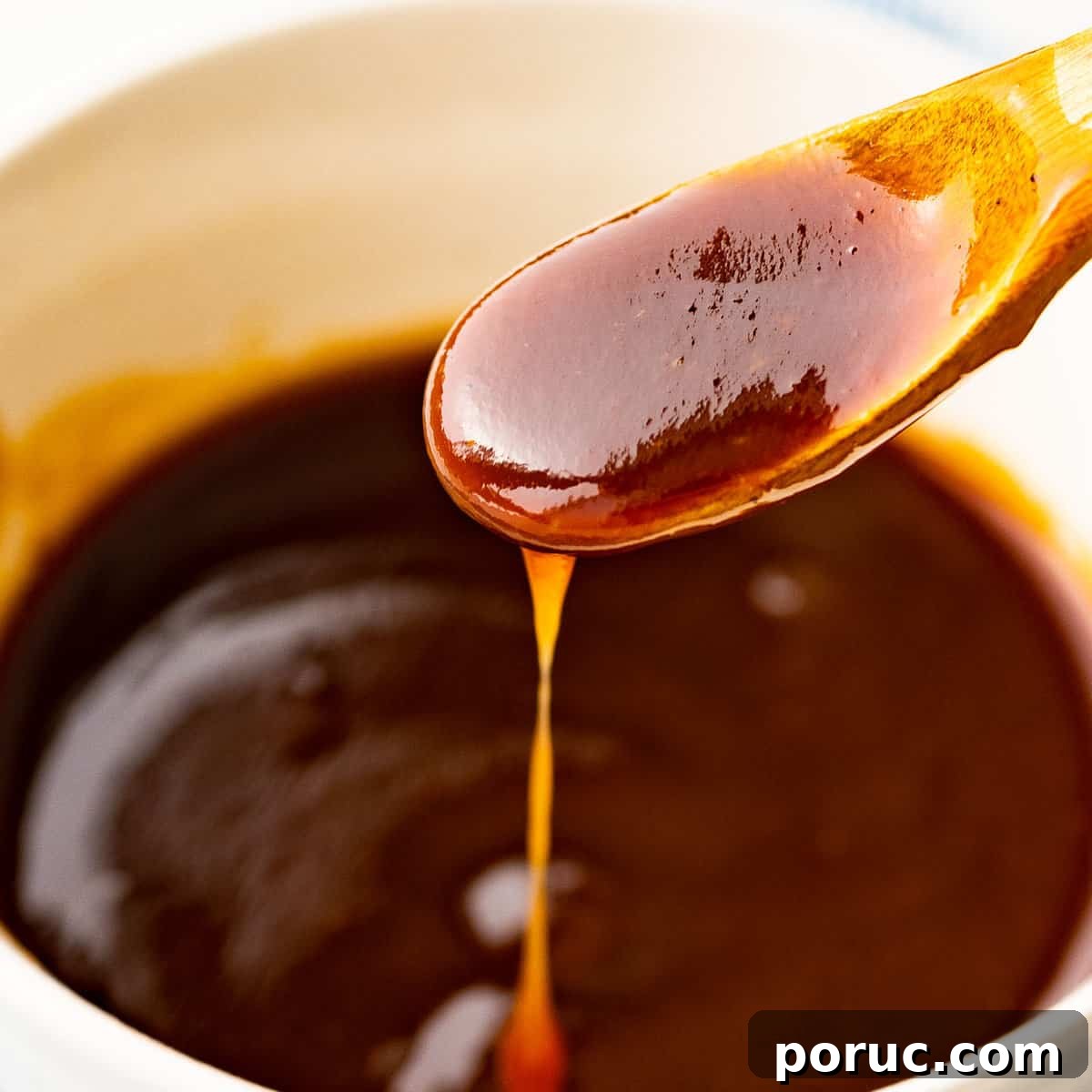
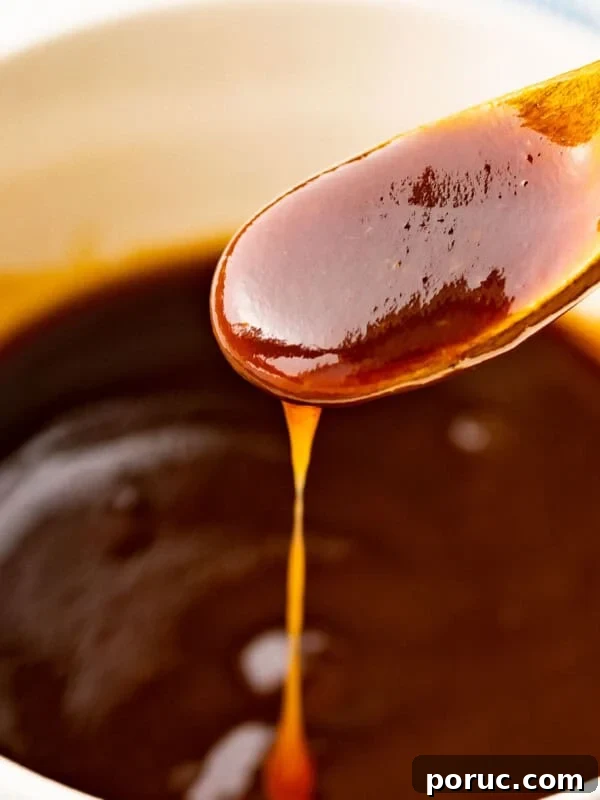
The classic accompaniment for chicken katsu is a tangy, savory katsu (tonkatsu) sauce. It tastes similar to a Japanese-style barbecue sauce — balanced sweet and savory with pronounced umami.
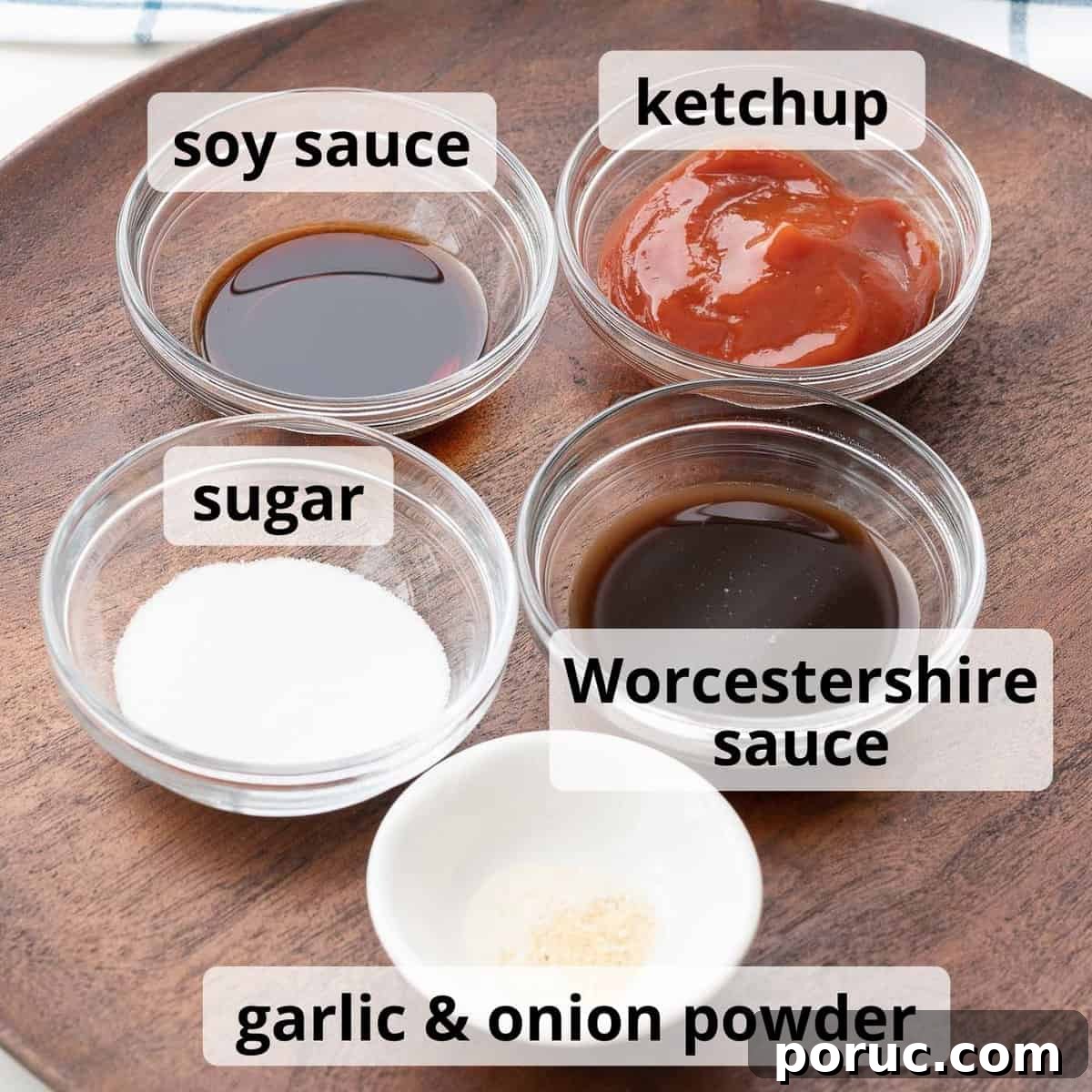
- Ketchup – Provides sweetness, body, and tomato flavor.
- Worcestershire sauce – Adds depth, salt, and umami.
- Soy sauce – Boosts savory notes and seasoning.
- Optional: A small amount of sugar to taste, and garlic or onion powder if you want extra flavor.
How to Make Chicken Katsu
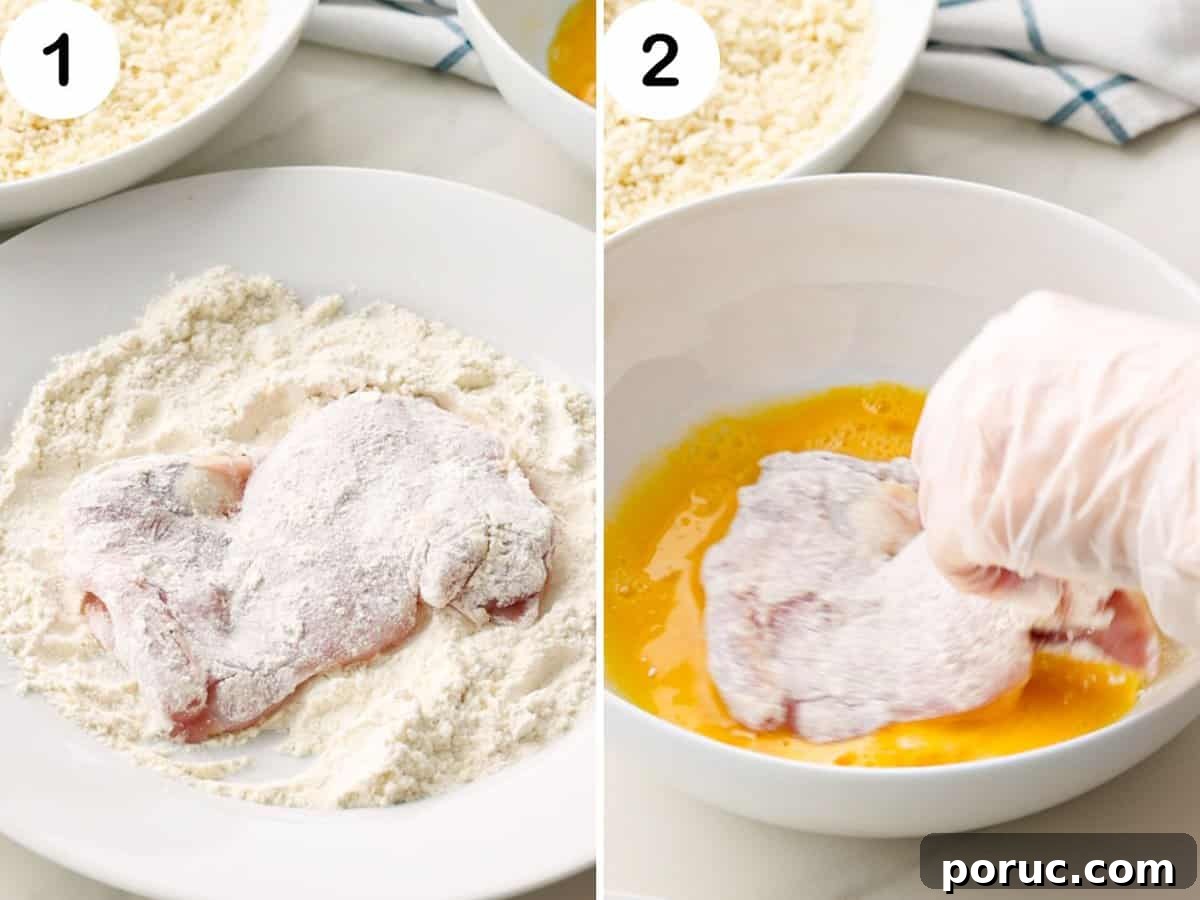
- Pound the chicken to about 1/2 inch thickness. Season with salt and pepper. Coat lightly in flour and shake off excess.
- In a shallow bowl, beat 1 egg and whisk in 1 tablespoon of flour to thicken the wash. Dip the floured chicken into the egg mixture and let excess drip off.
- Press the chicken firmly into a plate of panko breadcrumbs, ensuring a generous, even coating. Press again to secure any spots where panko may be thin.
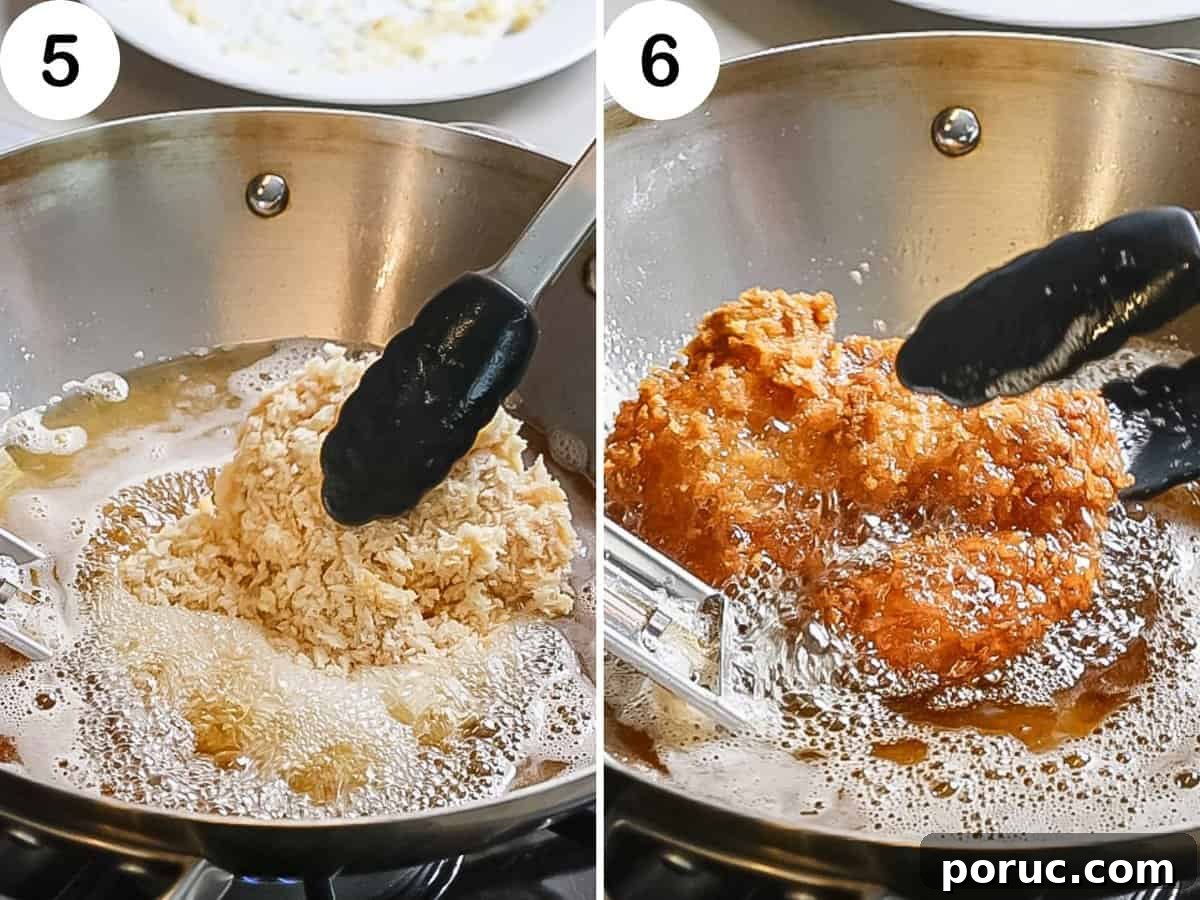
- Heat enough vegetable oil to deep-fry the cutlets to 340°F over medium heat. Medium heat helps the chicken cook through while the panko browns slowly and evenly.
- Carefully lower a cutlet into the oil and fry for about 4 minutes per side, or until the coating is golden brown and the chicken reaches a safe internal temperature. Work in batches to maintain oil temperature.
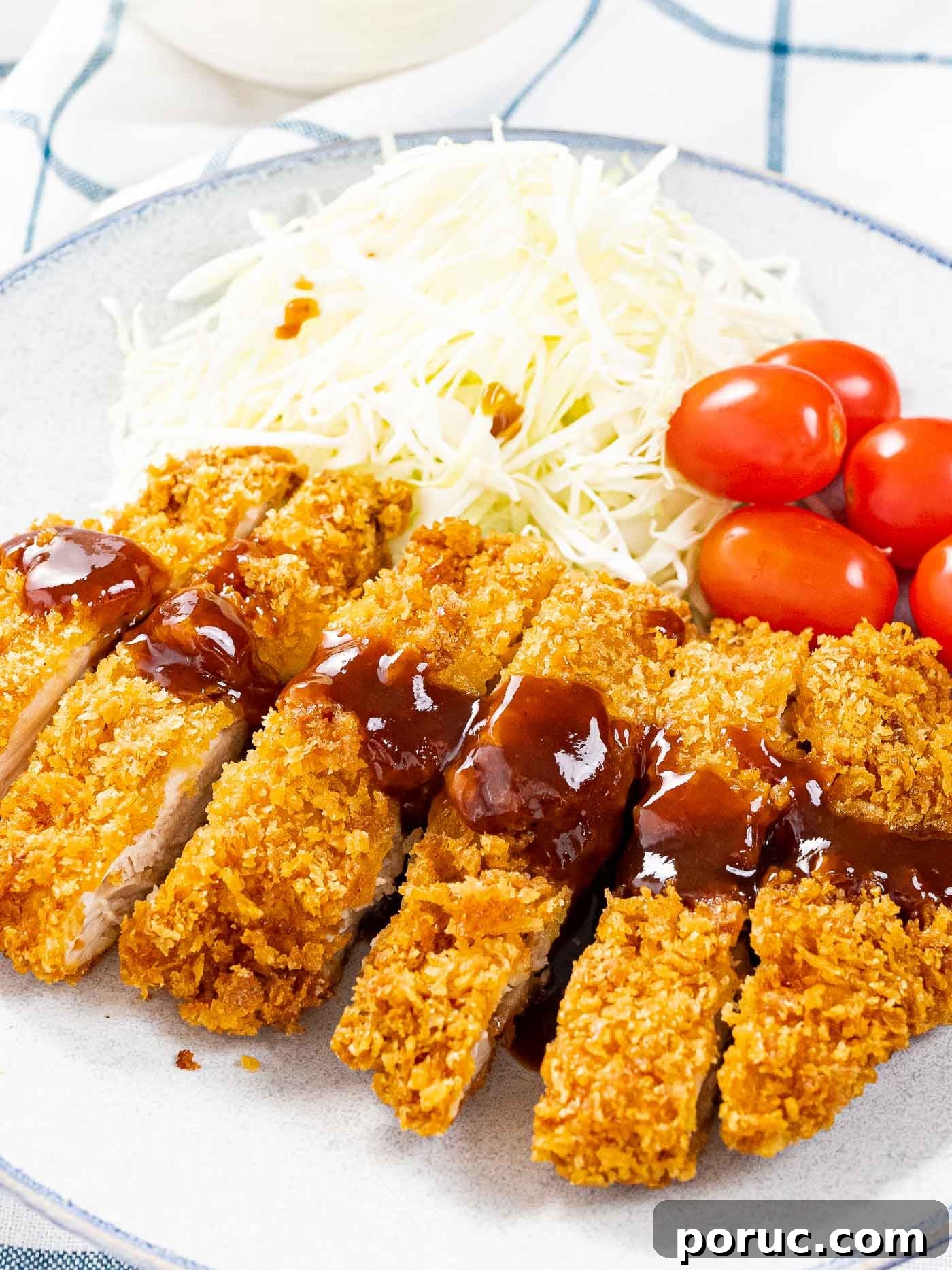
- Remove and drain briefly on a wire rack or paper towel-lined plate. Slice into 1-inch pieces and serve immediately with katsu sauce, shredded cabbage, and steamed rice.
These steps produce a thick, crunchy panko crust with juicy chicken inside. For restaurant-style presentation, slice the katsu and serve over steamed rice with a large pile of shredded cabbage and a drizzle of katsu sauce.
Serve while hot and crispy. Enjoy!
Katsu Tips
- Use large-flake panko for the best texture.
- Add 1 tablespoon of flour to the beaten egg to create a thicker egg wash so more panko will stick, producing a crunchier crust.
- Press the cutlet into the panko twice—right after breading and once more immediately before frying—to replace any crumbs that softened from the egg wash.
- Keep oil temperature steady at about 340°F. If the panko darkens too quickly, lower the heat; avoid overcrowding the fryer to maintain a consistent temperature.
More Japanese recipes:
Sauces
3-Ingredient Tonkatsu (Katsu) Sauce
Main Dishes
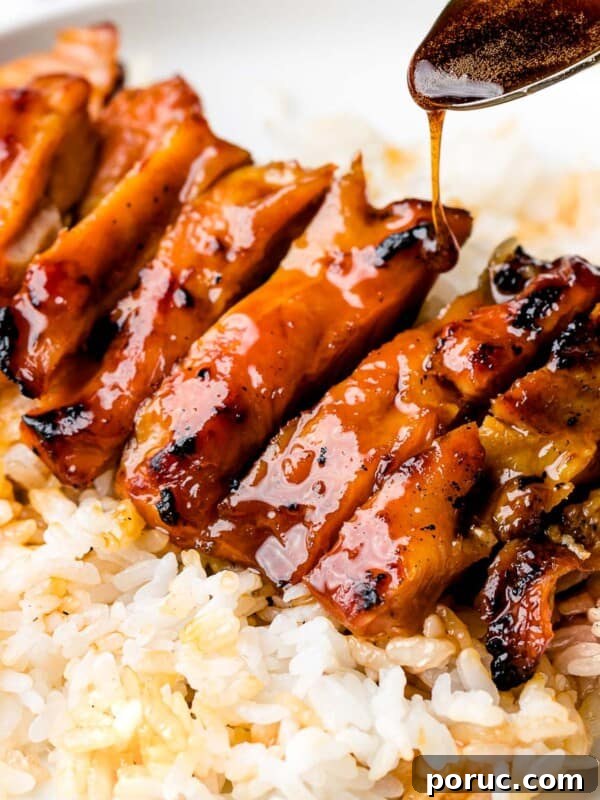
Easy Chicken Teriyaki with Marinade
Sides
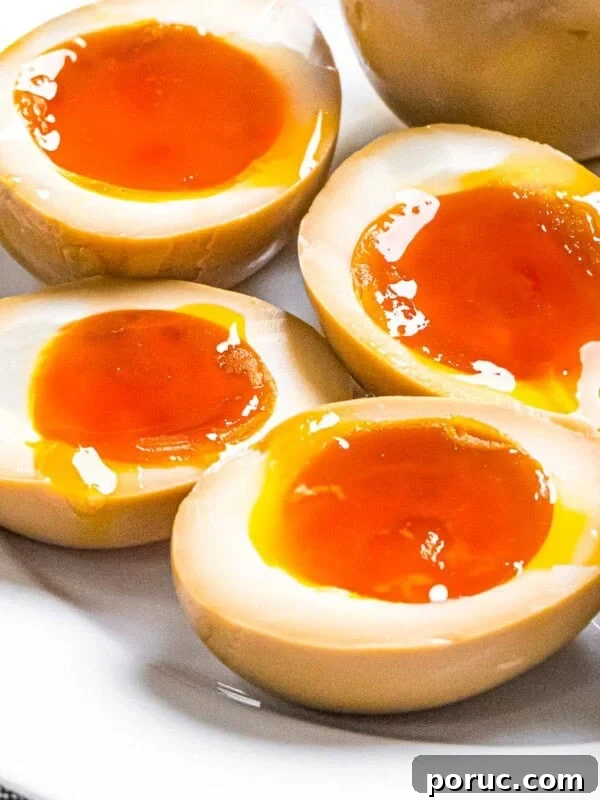
Ramen Eggs – Soy Sauce Marinated Eggs
Baked Goods
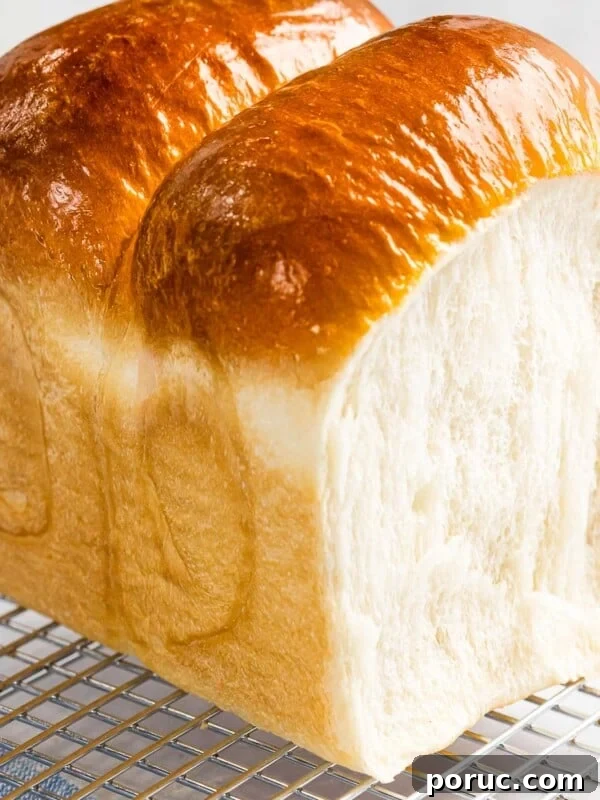
Soft and Fluffy Japanese Milk Bread
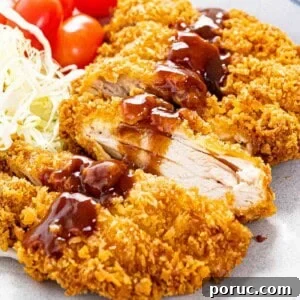
Crispy Chicken Katsu
Equipment
- Fine-mesh skimmer (recommended)
Ingredients
- 2 chicken thighs or breasts (see note)
- 1 cup Japanese panko breadcrumbs
- 1/2 cup all-purpose flour
- 1 egg, beaten
- Vegetable oil for frying
Chicken Katsu Sauce
- 4 tablespoons ketchup
- 2 1/2 tablespoons Worcestershire sauce
- 1 tablespoon soy sauce
- 1/8 teaspoon garlic and onion powder
- 1 1/2 teaspoons sugar (optional)
Instructions
Make Chicken Katsu Sauce
- Katsu sauce: Whisk together ketchup, Worcestershire sauce, soy sauce, and garlic/onion powder. Taste and add sugar if desired. Set aside.
Dredge the Chicken
- Bread the chicken: Set out flour, the beaten egg (mixed with 1 tablespoon flour), and panko on separate plates. Season chicken with salt and pepper. Dredge in flour, dip in the egg wash, then press into panko so the crumbs form a thick, even coating.
Deep-Fry the Chicken
- Heat oil: Add enough oil to deep fry and heat to about 340°F over medium heat. If you don’t have a thermometer, drop a few crumbs in—when they sizzle, the oil is ready.
- Fry the cutlets: Carefully place a cutlet in the oil and fry about 4 minutes per side until golden and cooked through. Work in batches to keep the oil temperature steady. Use a skimmer to remove loose crumbs.
- Serve: Slice into 1-inch pieces and serve hot with katsu sauce, shredded cabbage, and steamed rice.
Notes
- Chicken: Boneless, skinless thighs are recommended for juiciness. If using breasts, halve and pound to 1/2 inch thickness.
- Extra crispy: Press the cutlets into panko one more time immediately before frying to replace any crumbs that absorbed the egg and became soggy.
- Oil temperature: Adjust heat if the panko browns too quickly. Avoid overcrowding the fryer to keep the temperature consistent.
Leftovers: Store in an airtight container in the refrigerator for up to 3 days or freeze up to 1 month.
Reheat: Reheat in an oven, toaster oven, or air fryer at 350°F until warm and crisp, about 4–7 minutes.
Nutrition
Calories: 336 kcal, Carbohydrates: 41 g, Protein: 7 g, Fat: 16 g, Sodium: 1083 mg (approximate).
Nutrition information is automatically calculated and should be used as an approximation.
Like this? Leave a comment below!