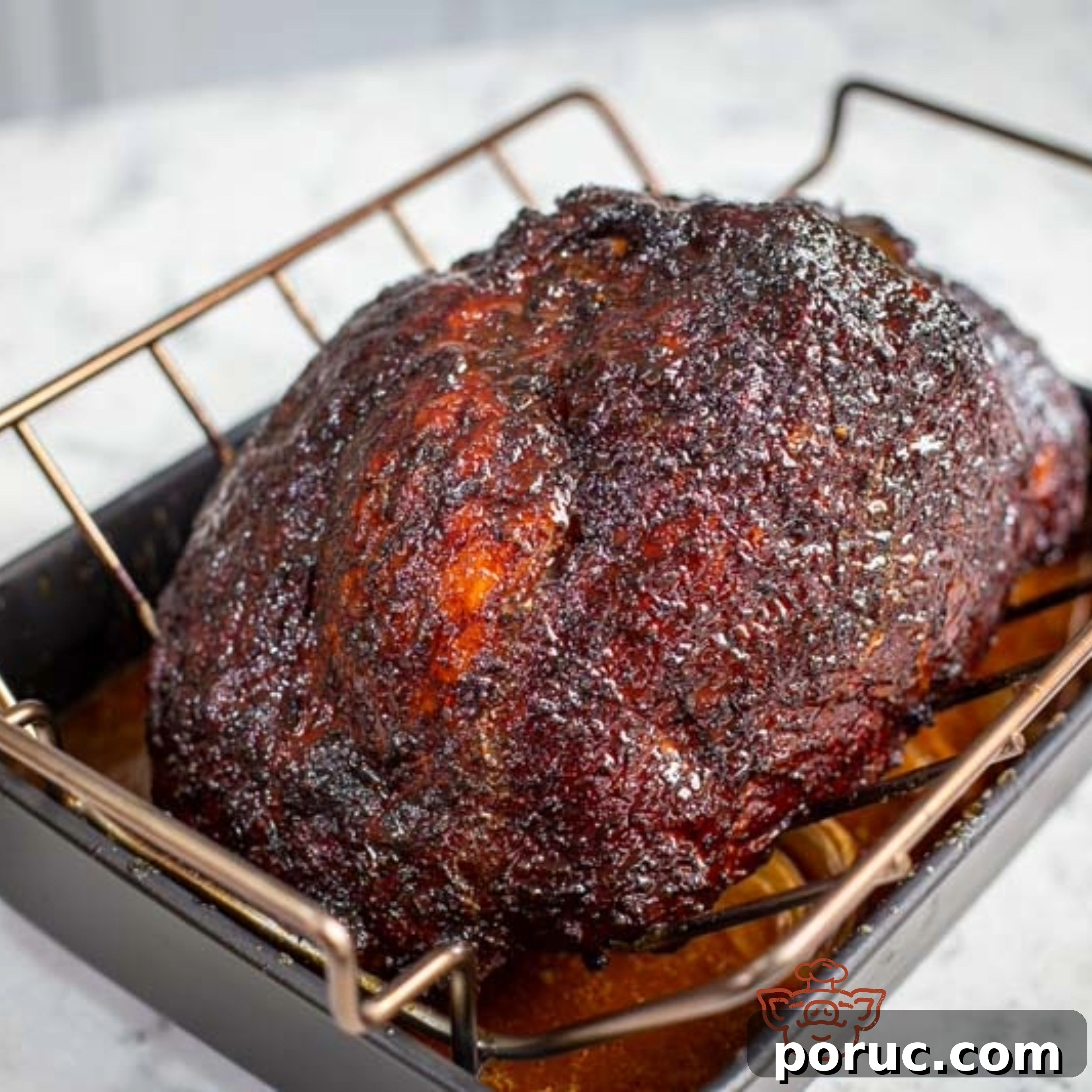
The Ultimate Holiday Centerpiece: Double Smoked Maple Bourbon Glazed Ham
It’s that season again — whether you’re planning Thanksgiving, Christmas, or Easter, this Double Smoked Maple Bourbon Glazed Ham is an impressive centerpiece with minimal stress. Using a high-quality pre-cooked ham and warming it on the Big Green Egg adds a second layer of wood smoke that transforms the store-bought product into something extraordinary. A thick maple-bourbon glaze caramelizes into a sticky, savory-sweet crust that elevates any holiday spread.
This method frees the oven for sides, introduces a depth of flavor a conventional oven can’t replicate, and reliably produces a smoky, sweet, and tender centerpiece everyone remembers. Get your Egg stabilized, pour a glass of your favorite wine, and follow along for a foolproof double-smoked ham.
Why This is the “All-Season” Holiday Winner:
Easter: A classic choice enhanced by a glaze that pairs well with spring sides.
Thanksgiving: A salty-sweet partner to turkey or a great standalone main for non-turkey households.
Christmas: The warmth of maple, bourbon, and hickory smoke creates a cozy, festive aroma.
Selecting Your Ham
The Foundation: Choosing Your Ham
Start with the best pre-cooked ham you can find. Double smoking enhances any ham, but the initial quality sets the ceiling. Because the meat is already cured, this cook is about restoring and amplifying flavor rather than traditional cooking.
The Gold Standard: Snake River Farms Kurobuta
A Kurobuta (Berkshire) bone-in ham offers superior marbling, color, and flavor and makes an outstanding centerpiece. If available, a heritage bone-in ham gives the richest results, especially when paired with the maple-bourbon glaze.
Navigating the Ham Aisle: What to Look For
If ordering a specialty ham isn’t an option, you can still get excellent results from grocery store offerings. Key points:
- Bone-In: A bone-in ham warms more evenly and adds depth of flavor; save the bone for soups.
- Spiral Cut vs. Whole: Spiral-cut hams are convenient and allow glaze to reach between slices, but they dry faster. Whole hams retain moisture and let you slice to your preference.
- Labeling: Prefer products labeled “Natural Juices” over “Water Added” to avoid diluted texture and flavor.
Where to Find Your Centerpiece
- Specialty Purveyors: Best for guaranteed premium hams.
- Local Butchers: Can source quality wet-cured city hams without over-processing.
- Club Stores: Often offer large, good-quality bone-in hams at a strong value during the holidays.
The Rule of Thumb: Any pre-cooked ham will work. A quality ham plus the Big Green Egg and glaze will deliver remarkable results.
Ham Size and Estimated Cook Times
Plan the cook by ham weight. The Big Green Egg holds temperature well, but ham density determines how long warming takes. Use these ranges as a guide and rely on a probe thermometer for accuracy.
| Ham Weight | Total Estimated Time | First Smoke (Uncovered) | Steam Phase (Wrapped) | Glaze Set (Uncovered) |
| 6–8 lbs | 2.5 – 3 Hours | 90 Minutes | 45 Minutes | 15–20 Minutes |
| 9–11 lbs | 3 – 3.5 Hours | 120 Minutes | 60 Minutes | 20–30 Minutes |
| 12–15 lbs | 4 – 5 Hours | 150 Minutes | 90 Minutes | 30–45 Minutes |
Use a thermometer rather than the clock alone. Variations in bone size, initial temperature, and ham shape will affect timing. Build your timeline working backward from your serving time to ensure the ham reaches the proper internal temperature without drying out.
Seasoning the Ham
Prep: The Slather and the Seasoning
Even though the ham is cured, a fresh layer of seasoning and a binder help build a crust that the glaze will cling to.
The Binder: Why Yellow Mustard?
Spread a thin layer of yellow mustard over the ham. The vinegar helps the surface accept seasoning and the mustard acts as glue for the rub. The mustard flavor disappears during smoking, leaving a tacky surface for the glaze.
The Simple but Effective Rub
A short rub complements cured ham without over-salting:
- Kosher Salt — enhances savory notes.
- Coarse Black Pepper — adds bite to cut the richness.
- Paprika — adds color and a subtle smoky note.
Coat the ham evenly, then let it rest at room temperature for 30–45 minutes while you prepare the Egg and drip pan. Removing the chill ensures even warming and prevents the exterior from overcooking before the center heats through.
Setting up Your Drip Pan
The V-Rack & Drip Pan: The Ultimate Ham Architecture
For large bone-in hams use a V-rack inside a drip pan. This elevates the ham, promotes airflow, and captures drippings while allowing steam to humidify the cooking environment.
The Apple Juice “Bath”
Add about 3 cups of apple juice to the drip pan. As it simmers, it creates humid steam that protects the ham from drying while the exterior develops smoke and color.
Why the V-Rack Matters
- 360° Exposure: Elevation lets heat and smoke circulate under and around the ham, preventing soggy bottoms.
- Stable Glazing: The V-rack holds the ham steady so glaze can cascade evenly instead of pooling.
- Easy Clean-Up: The pan catches fat and glaze, preventing burned residue on the Egg.
The Savory Secret: The Drip Pan Aromatics
Rough-chop one large onion and add it to the apple juice. The onion simmers with the juice, adding savory depth and creating a flavorful liquid you can use for basting, gravy, or finishing.
Why Add Onion?
- Savoriness: Onion adds natural sugars and savory notes that balance the apple’s sweetness.
- Versatile Liquid: The finished pan liquid, mixed with drippings, makes a great braise, gravy base, or basting sauce.
Pro Tip: Add smashed garlic cloves or a sprig of thyme for additional aroma in holiday cooks.
Setting the Stage
Place the V-rack inside the drip pan so the ham sits elevated above the apple juice and onion. This arrangement lets the meat “bathe” in seasoned steam while smoke circulates around it.
Setup the Big Green Egg
The Fire: Setting the Big Green Egg for Success
We want a steady, gentle environment that lets the ham accept smoke and warm through without drying. Light quality lump charcoal and add three chunks of wood for smoke.
Lump Charcoal & Wood Selection
Use fresh lump charcoal and add three hickory chunks for a bold, classic smoke that stands up to the maple and bourbon. Bury one chunk and offset the others for consistent thin blue smoke during the cook.
Stabilizing at 275°F
Set the convEGGerator (legs up) and stabilize the Egg at 275°F. This temperature renders fat, sets the glaze, and preserves a juicy interior. At this setting, an 8–10 lb ham typically warms at roughly 12–15 minutes per pound.
The “Clean Smoke” Check
Wait for initial white smoke to clear and look for thin blue smoke. Clean smoke is key for cured meats to avoid bitter, over-smoked flavors. If you prefer a milder profile, swap a hickory chunk for apple or cherry wood for a brighter, fruitwood note.
Cook the Ham in the Big Green Egg
The Double Smoke Phase: Initial Warming
With the Egg stabilized at 275°F and thin blue smoke present, place the seasoned ham in the V-rack over the drip pan uncovered. The uncovered phase allows smoke absorption, bark formation, and initial fat rendering. Monitor internal temperature — aim for roughly 100°F before moving on.
The Set-and-Forget Window
Keep the dome closed during this phase to maintain steady heat and humidity. Avoid opening the Egg frequently, which disrupts the cook and slows progress.
What to Look For
Around two hours in or when the ham reads 90°F–105°F, the exterior should turn a deep mahogany and the aroma of smoke and sweet pork should fill the area. This “color set” signals readiness for the next step.
The 1-Hour Wrap
The Steam Bath Phase: Locking in Moisture
When the ham reaches 90°F–105°F with a developed color, loosely tent it with heavy-duty foil and let it steam above the drip pan for about one hour. The trapped steam softens the surface, infuses flavor from the apple-and-onion pan, and ensures a tender interior.
The Foil Tent
Create a loose foil canopy rather than sealing tightly. This traps aromatic steam while allowing gradual temperature rise without drying the edges.
- Flavor Infusion: Steam carries apple and onion essence into the meat.
- Texture Softening: The braising effect relaxes muscle fibers for easy slicing.
- Moisture Lock: The foil guards against edge drying while internal temperature climbs to about 130°F.
One Hour of Patience
Cook under foil until the internal temperature reaches 130°F. This generally brings total cook time to approximately three hours for a medium-sized ham.
The Internal Check
Use a reliable instant-read thermometer to confirm temperature. At 130°F the ham will have relaxed and pulled slightly from the bone — a good sign that fats have rendered and the meat is tender.
Making the Maple Bourbon Glaze
The Liquid Gold: Crafting the Maple Bourbon Glaze
While the ham steams, make the glaze on the stovetop. This syrupy lacquer is essential for the final look and flavor.
The Ingredients of a Classic
Combine brown sugar, maple syrup, pineapple juice, bourbon, Dijon mustard, and cinnamon.
The Process: Reducing for the Perfect Lacquer
Bring to a light boil, then simmer about 30 minutes, stirring constantly until the mixture reduces to a thick, spoon-coating syrup. This concentrates flavors, cooks off the harsh alcohol, and yields a glaze that clings instead of running off.
The Final Prep
Remove the glaze from heat and let it cool slightly. It will thicken as it cools and will be ready to brush onto the ham when the foil comes off.
Pro Tip: Add a pinch of cayenne or extra black pepper for a subtle kick that balances the sweetness.
Glazing the Double Smoked Ham
The Reveal: Applying the Liquid Gold
Remove the foil to reveal a matte mahogany surface. Using a silicone brush, apply the warm glaze generously, working it into crevices and score marks. For spiral hams, glide some glaze between slices; for bone-in hams, focus on the fat cap where the glaze will caramelize beautifully.
Setting the Lacquer
Close the Egg and let the glaze set for 15–30 minutes. The sugars will bubble and caramelize into a sticky, glossy coating. For a thicker, glass-like crust, apply a second glaze after 15 minutes.
Pitmaster Note: Layering the glaze produces a Honey-Baked style finish that looks and tastes exceptional.
The Target Temperature
While the glaze sets, monitor the internal temperature. Aim for a serving temperature of 140°F–145°F. At this range the ham is hot and juicy without becoming tough.
The Finish: Pull, Rest and Serve
When the thermometer reaches about 140°F, remove the V-rack and drip pan from the Egg. The glaze will be caramelized and the edges slightly charred in the best way. Transfer the ham to a carving board and rest for at least 10 minutes to allow juices to redistribute and the glaze to firm up.
The Slice
Slice against the grain for the most tender bites. For bone-in hams, release the large muscle sections with a vertical cut before slicing thin pieces about 1/4 inch thick.
The Service: Holiday Perfection
This ham balances sweet maple and pineapple, savory hickory smoke and onion steam, and the sophisticated bite of bourbon and Dijon. It works beautifully as a Thanksgiving alternative, a Christmas showpiece, or an elevated Easter brunch centerpiece.
One Final Tip: Save the bone for split pea soup or collard greens — it adds exceptional depth from the double-smoked flavor.
Happy Holidays from The BBQ Buddha
The Ultimate Holiday Tradition
This recipe has become a family favorite because it hits the sweet-and-savory balance just right while imparting an extra layer of smoke you won’t get from a conventional oven. The combination of quality ham, apple-and-onion steam, hickory smoke, and the final maple-bourbon lacquer makes an unforgettable holiday dish.
A Centerpiece for Every Season
Whether part of Thanksgiving, the star of Christmas dinner, or the highlight of Easter brunch, this double-smoked ham is a reliable, low-stress main that lets you spend more time with guests and less time in the kitchen.
Happy holidays, and happy grilling!
Double Smoked Maple Bourbon Glazed Ham on the Big Green Egg
Ingredients
- 8-10 pound bone-in ham see weight and timing chart above
Glaze Ingredients:
- 1 cup brown sugar
- 1/2 cup pineapple juice
- 1/2 cup maple syrup
- 1 cup bourbon
- 1/4 cup Dijon mustard
- 1 tsp cinnamon
Rub Ingredients:
- 1 Tbsp yellow mustard
- 2 Tbsp kosher salt
- 2 Tbsp black pepper
- 1 tsp paprika
Drip Pan Ingredients:
- 3 cups apple juice
- 1 yellow onion, rough chopped
Instructions
- Prep: Slather ham with mustard, apply the rub, and let rest at room temperature for 30–45 minutes.
- BGE Setup: Light lump charcoal with three hickory chunks and stabilize the Egg at 275°F for indirect cooking with the convEGGerator legs up.
- Double Smoke: Place the ham in a V-rack over the drip pan with apple juice and onion; smoke uncovered ~2 hours until deep mahogany.
- Check Color & Temp: Confirm internal temperature is 90°F–105°F before moving on.
- Steam Wrap: Tent loosely with heavy-duty foil and continue cooking until internal temp reaches about 130°F (45–75 minutes).
- Make Glaze: Simmer glaze ingredients on the stove for about 30 minutes until syrupy, stirring constantly.
- Paint: Remove foil at 130°F and brush a thick layer of glaze over the ham.
- Final Set: Return to the Egg uncovered and let glaze caramelize 15–30 minutes until internal temp reaches 140°F–145°F.
- Rest & Slice: Remove ham, rest at least 10 minutes, then carve against the grain into thin slices.
Nutrition information is an approximation.