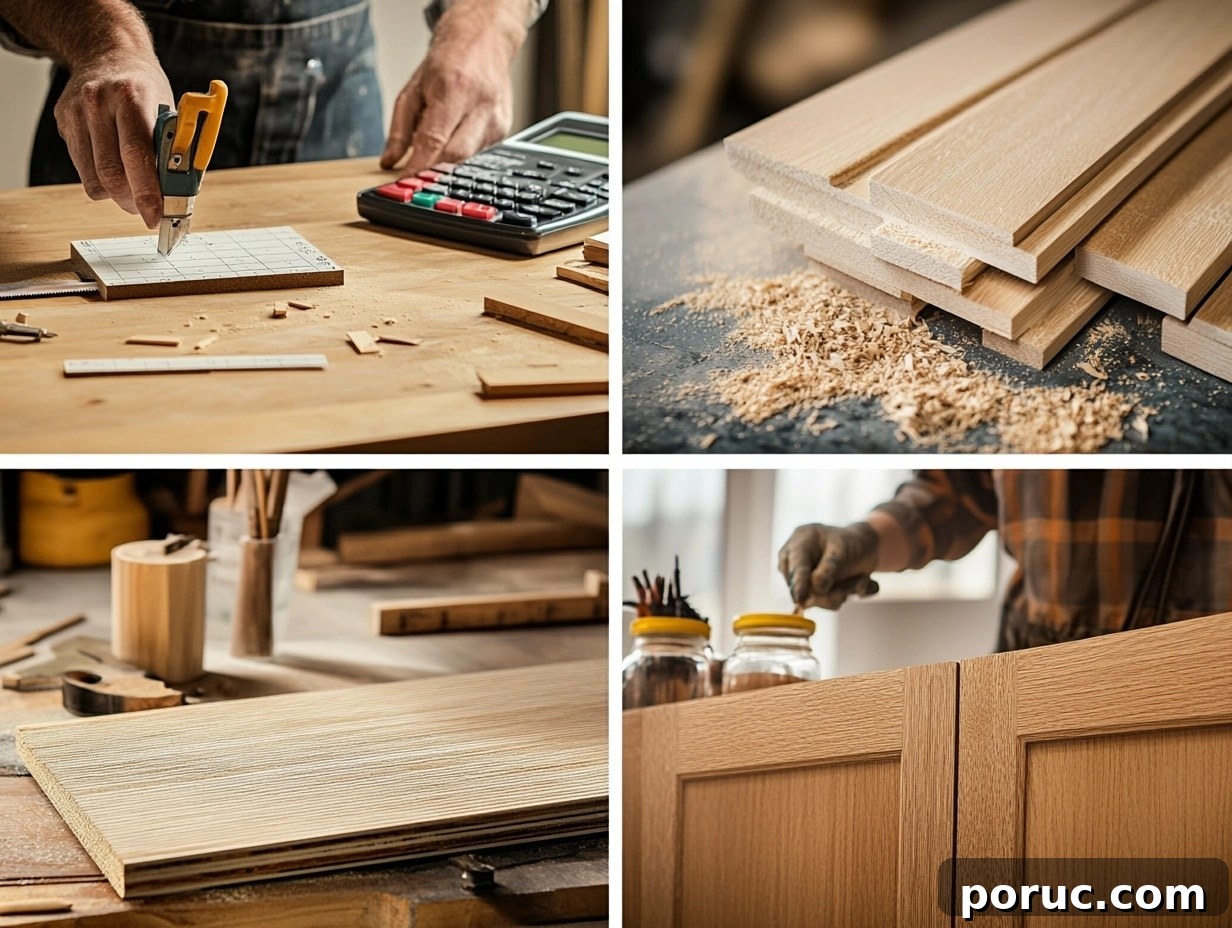
After seven years of building custom cabinet doors in my workshop, I’ve learned that making your own doors delivers both satisfaction and substantial savings.
What began as a hobby turned into a passion for producing well-fitted, individualized cabinet doors that transform kitchens and storage spaces. Each project taught me more about wood behavior, tool techniques, and the value of patience.
After countless doors—some successes and some lessons—I developed reliable methods for achieving professional-quality results at home.
Understanding Door Styles
Over the years I’ve experimented with different styles and found each has its benefits:
Shaker Style: A favorite for beginners, the Shaker design offers clean lines and timeless appeal. Its straightforward frame-and-panel construction teaches essential woodworking skills and works well in both modern and traditional kitchens. The simple design lets you focus on mastering technique.
Step-by-Step Guide to Making Cabinet Doors
Step 1: Essential Preparation
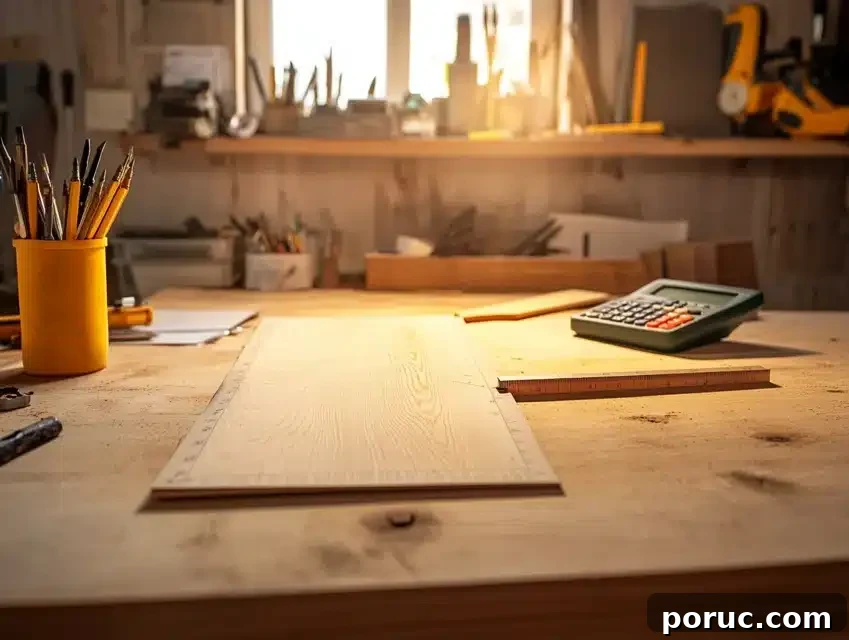
Every successful door starts with careful measurement and planning. Precise dimensions ensure proper fit and function, and the right tools make a big difference in the final quality. My preparation routine reduces mistakes and improves results.
Detailed Measuring Steps
- Measure cabinet openings twice to confirm accuracy.
- Allow for standard overlays as required—commonly 1 inch for typical cabinets.
- Create a cutting list that includes every piece.
- Account for saw blade kerf when laying out cuts.
- Mark wood grain direction on each piece.
- Double-check all measurements before cutting.
Critical Tools Needed
- Reliable measuring tape
- Carpenter’s square
- Sharp pencil
- Calculator or smartphone for quick math
- Note paper or digital checklist
Step 2: Material Selection and Cutting
Choosing the right wood is critical. Straight, well-dried lumber causes fewer problems and lasts longer. Inspect boards carefully for knots, splits, or cupping, and buy extra material in case you find defects during cutting. Check moisture content with a meter and aim for levels below about 12%.
Detailed Material Assessment
- Examine boards for knots, splits, or defects.
- Prefer straight-grain patterns for stability.
- Check both faces for cupping or warping.
- Use a thumbnail or light tap to sense density.
- Verify moisture content is appropriate for your environment.
- Sort boards by grain for consistent appearance.
Initial Cutting Process
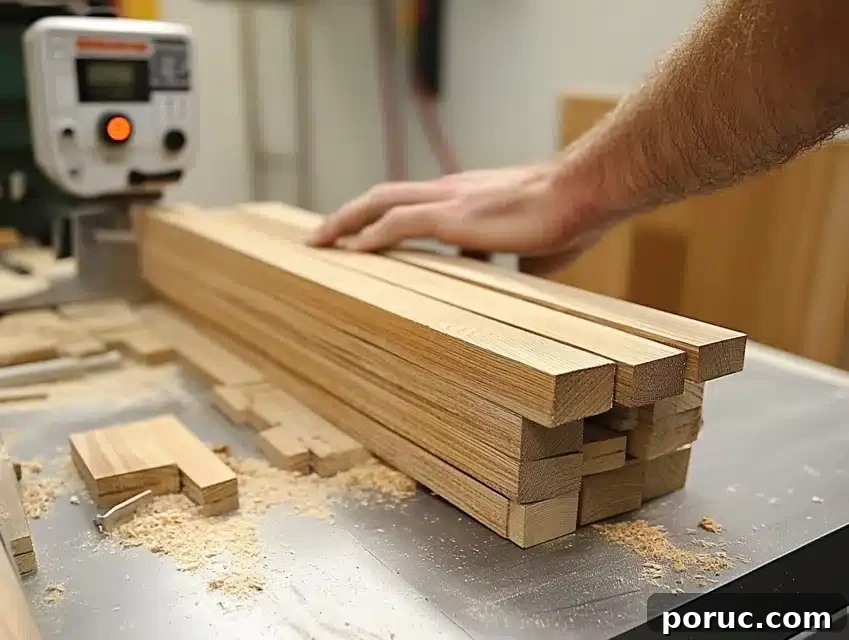
I begin by rough-cutting pieces slightly oversized so I can trim to exact dimensions later. Cutting in a specific order improves efficiency and helps maintain grain matching. Label each piece to avoid confusion and keep offcuts for future projects.
Cutting Steps
- Cut all stiles (vertical pieces) first.
- Match grain patterns when cutting rails (horizontal pieces).
- Make center panels slightly undersized to allow for movement.
- Label every part with its intended location.
- Stack similar pieces together for the next steps.
- Save useful offcuts for smaller projects or test pieces.
Practical Tips
- Sharp blades deliver cleaner cuts and reduce tearout.
- Take regular breaks to maintain accuracy and safety.
- Recheck critical dimensions between cuts.
- Keep the workspace clean to avoid mistakes.
Step 3: Frame Construction and Panel Preparation
Proper frame assembly determines a door’s strength and longevity. I dry-fit joints before applying glue so I can make adjustments. The fit you achieve now affects performance for years, so take your time and test everything before you glue.
Creating Rail and Stile Joints
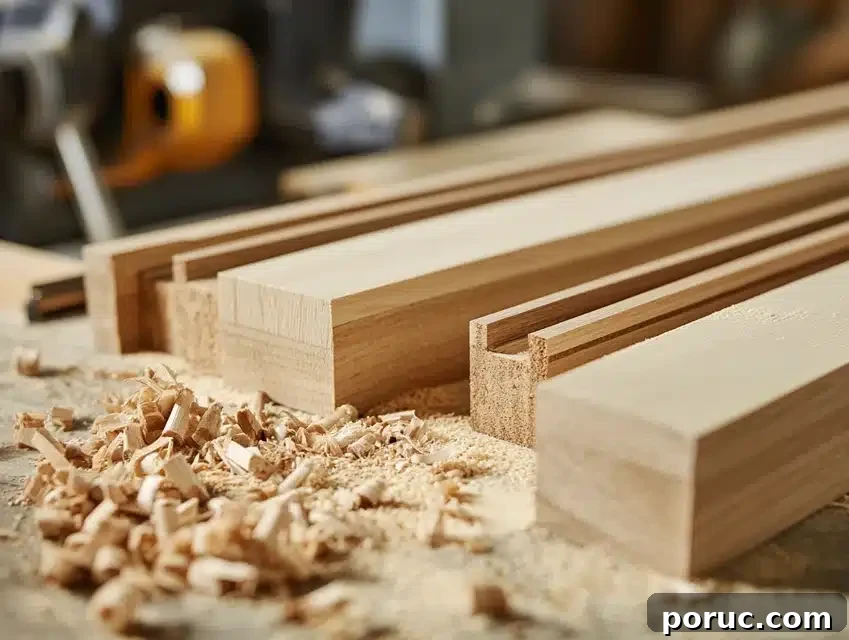
I use a router table with matched rail-and-stile bits. Run test pieces to verify bit height and fence settings, and make multiple light passes instead of one heavy cut for cleaner joints. Always wear appropriate safety gear and listen for consistent cutting sounds.
Detailed Assembly Steps
- Set up the router table and test on scrap first.
- Cut matching grooves in stiles and rail ends for proper fit.
- Test-fit each joint carefully and mark mating pieces to keep alignment.
- Clean dust from grooves before assembly.
Joint Tips
- Check depth consistency and square cuts.
- Perform a dry test fit for every joint.
- Organize pieces to avoid mixing similar parts.
- Keep joints clean and free of debris before glue-up.
Step 4: Panel Fitting and Final Assembly
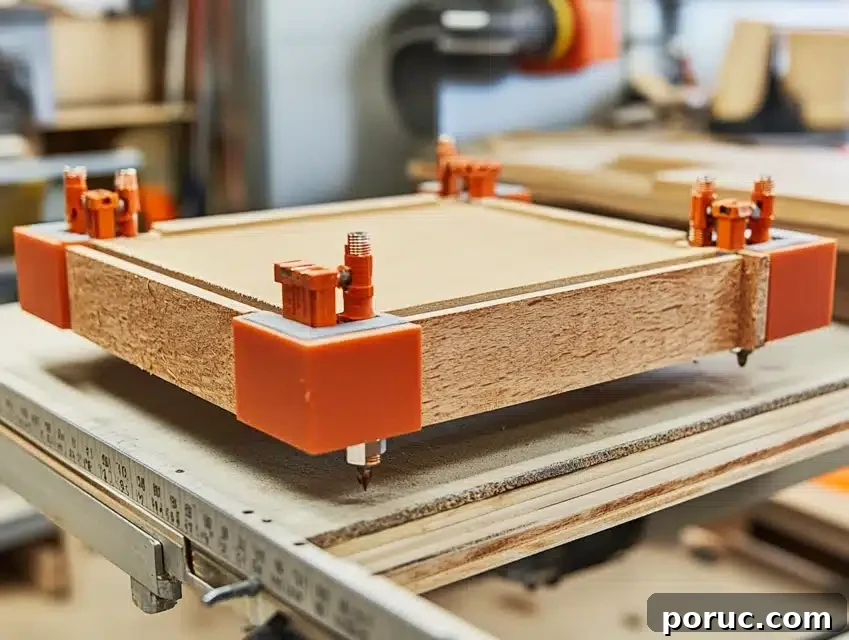
This stage brings the door together. Lay out components in final positions and dry-fit everything at least twice. Allow the center panel to float in grooves for seasonal movement, using small spacers as needed. Temperature and humidity will affect how tight the fit should be.
Panel Installation Process
Make sure the panel can move freely within the grooves and check square before final assembly. Apply glue only to rail and stile joints and avoid gluing the floating panel. Use corner clamps to keep the frame square and check diagonal measurements during clamping.
Assembly and Clamping Steps
- Clean grooves thoroughly and test panel fit in both directions.
- Apply glue to frame joints only; keep glue away from the panel edges.
- Start clamping with corner clamps, then add parallel clamps gradually.
- Wipe excess glue immediately and allow sufficient drying time.
Lessons Learned
- Over-clamping can bind the panel and cause problems.
- Glue squeeze-out can stain wood if not removed quickly.
- Room temperature affects drying times—plan accordingly.
- Work on a flat surface to keep assemblies true.
Step 5: Surface Preparation and Finishing
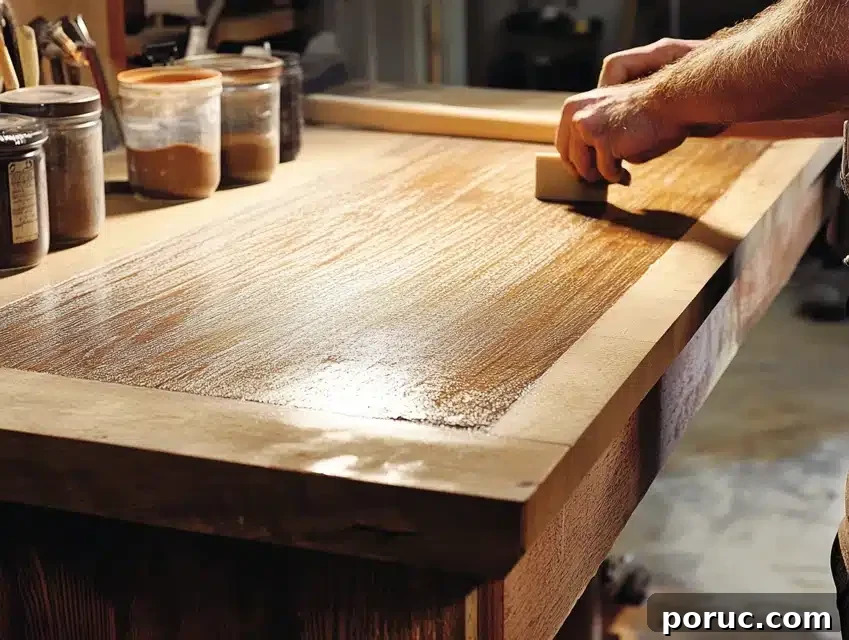
Surface preparation turns raw parts into finished doors. I inspect each panel under strong light, remove glue residue, and sand progressively through grits for a smooth result. Controlling dust and working with proper ventilation are essential for a professional finish.
Detailed Sanding and Finishing Steps
- Start sanding with 80-grit to remove heavy marks, progress to 120-grit, and finish with 180-grit for smoothness.
- Slightly soften edges to prevent sharp corners showing wear.
- Remove dust between grits using a brush or tack cloth and inspect under bright light.
- Apply a wood conditioner if needed, then finish coats, sanding lightly between coats.
- Keep the finish area as dust-free as possible and watch for runs while they can still be corrected.
Final Inspection Points
- Check all surfaces for consistent smoothness.
- Verify color uniformity across pieces.
- Look for dust nibs or imperfections and correct them.
- Ensure the finish has cured to the desired hardness before handling extensively.
Step 6: Hardware Installation and Mounting
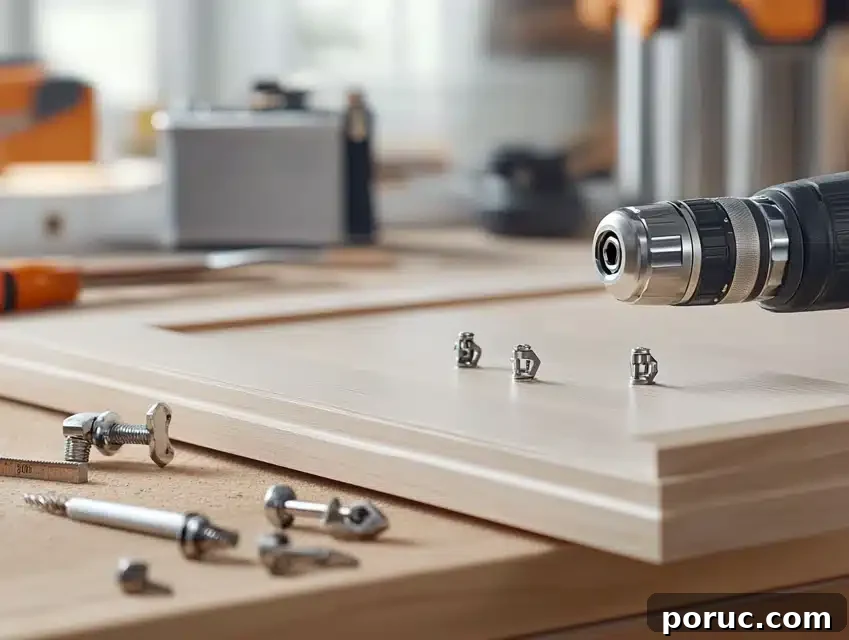
Proper hardware installation guarantees doors operate smoothly. I create templates for hinge and handle placement to ensure consistency, mark hinge locations, and drill pilot holes to prevent splitting. Verify hinge movement and adjust as needed before final mounting.
Hinge and Handle Installation
Use a dedicated station or jig for hinge drilling and always verify measurements against your master template. Pilot holes and correct drill depth help hinges sit flush. For handles and pulls, measure carefully, use templates, and support the back while drilling to avoid tearout.
Hardware Steps
- Mark hinge locations and create pilot holes to correct depth.
- Test hinge movement and adjust screw depth for proper fit.
- Install soft-close mechanisms if desired and test operation before mounting to the cabinet.
- Measure handle placement with a template and secure with straight drilling and backing support.
Final Adjustments
- Check door gaps and uniform spacing.
- Adjust hinge screws for perfect alignment.
- Test closing action and handle alignment.
- Verify that all screws are securely tightened.
Why Build Your Cabinet Doors?
Clients often ask why they should build instead of buy. The advantages are clear in the finished product:
- Complete control over wood species and quality.
- Perfect fits for odd-sized or custom cabinets.
- Significant cost savings on larger projects.
- Easier matching to existing millwork or finishes.
- The pride that comes from creating durable, beautiful work.
Common Cabinet Door Issues and Solutions
1. Understanding Door Issues
Wood movement can cause warping over time. Grain direction, temperature, and humidity influence how a door behaves, so early detection and regular inspection help prevent small problems from becoming serious.
2. Measurement Mishaps
The most frequent mistake is miscalculating overlays or hinge spacing. One wrong measurement can affect an entire kitchen. Templates and precision tools like digital calipers reduce these errors significantly.
3. Sanding Secrets
Over-sanding edges is often difficult to fix. Use sanding blocks to maintain flat surfaces, mark original dimensions, and progress through grits rather than aggressive sanding to avoid rounding edges.
4. Gap Problems
Uneven gaps usually point to installation or frame issues. Check diagonal measurements to detect twists and adjust hinges to correct small gaps. Some gap variation can be seasonal due to wood movement.
5. Hardware Solutions
Loose or worn hinges cause alignment problems. Replace worn screws with slightly larger ones if needed, add a third hinge for heavy doors, and use magnetic catches for doors that need extra hold. A good template saves time and reduces errors.
Maintenance Schedule for Cabinet Doors
| Frequency | Tasks | Details |
|---|---|---|
| Monthly | Wipe down surfaces | Use a damp cloth to remove dust and grime. |
| Check hinge movement | Ensure smooth operation and no squeaks. | |
| Note any new issues | Look for scratches, dents, or loose parts. | |
| Quarterly | Deep clean all surfaces | Use a gentle cleaner for thorough cleaning. |
| Tighten loose hardware | Secure screws and handles as needed. | |
| Adjust for seasonal changes | Check alignment due to humidity shifts. | |
| Annually | Refinish worn areas | Apply a fresh coat of finish if needed. |
| Replace damaged hardware | Swap out any broken or non-functional parts. | |
| Complete alignment check | Ensure all doors close evenly and flush. |
Conclusion
Perfection comes with practice. Every expert started with a first door and learned from each project. The skills you gain building cabinet doors apply to many other woodworking tasks, and the satisfaction of closing a door you made yourself is hard to beat.
Key takeaways:
- Take time with measurements.
- Stay organized throughout the process.
- Learn from each challenge and document what works.
- Maintain tools and keep a clean workspace.
- Share techniques and tips with fellow makers.
Enjoy the creative process. Cabinet doors may look simple, but they offer opportunities for expression and skill development. With the right tools, attention to detail, and patience, you can create doors that will serve your home beautifully for years.
Frequently Asked Questions
What Are the Easiest Methods to Make Cabinet Doors at Home?
Slab-style doors are the simplest: good-quality plywood or MDF cut to size, edged with banding, and finished cleanly. Shaker-style doors are also beginner-friendly and teach fundamental skills. Start with one door to practice before committing to larger sets.
What Materials and Tools Do I Need to Build Cabinet Doors?
Essential tools include measuring tape, circular saw or table saw, drill, clamps, and sanding supplies. Materials: quality lumber (pine for paint, hardwoods for stain), wood glue, and appropriate screws. Allow for extra material for practice cuts and mistakes.
Can I Make Cabinet Doors without Advanced Woodworking Skills or Specialized Tools?
Yes. Basic styles like slab or simple Shaker doors require only straight cuts and accurate measuring. Specialized tools help, but they are not essential—consider borrowing or renting tools if needed and focus on accuracy and patience.
How Much Does It Cost to Build Cabinet Doors versus Buying Them?
Building your own can save 40–60% versus buying pre-made doors. Materials for a typical 24″x30″ door can be much less than retail, but factor in tool purchases if you are starting from scratch. Savings increase significantly with multiple doors and custom sizes.
What Are the Different Styles of Cabinet Doors I Can Make Myself?
Common easily achievable styles include:
- Slab doors: simplest and best for beginners.
- Shaker style: classic look, moderate difficulty.
- Flat panel: modern appearance and straightforward construction.
- Glass panel: adds elegance but requires careful measuring.
- Beadboard: farmhouse style that needs more detailed work.