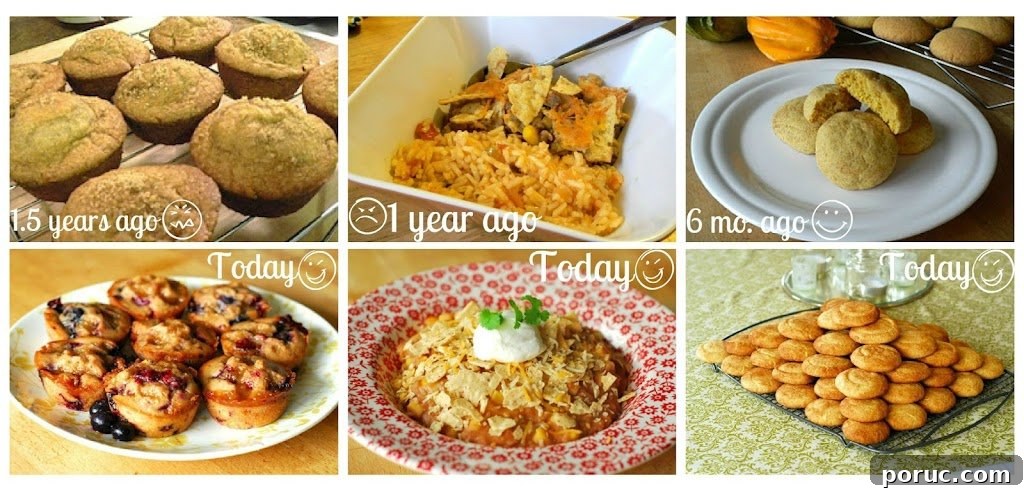
Over the past few months I’ve been revisiting and reworking older posts. When I first launched this blog it was simply because I loved to cook and wanted to share that passion—especially with other college students. Back then I had no idea how much thought went into good food photography or how to create it. If you look at those early images, the lighting and composition are often off; I just didn’t know how to make photos look appealing.
I’m still learning, but with lots of practice my photography has improved dramatically over nearly two years of blogging. A handful of changes in circumstances and tools have helped me produce much better images.
First, I’m no longer a student. That sounds like an easy excuse, but it mattered: when I was in school I cooked late at night and photographed under harsh kitchen bulbs, which left a yellow-green cast on everything. Now, if I cook late, I save some of the food to photograph the next morning in natural light. This works especially well for baked goods.
Second, my amazing mom gave me a DSLR for Christmas, and it transformed my approach to food photography. While it’s true you can take decent images with a point-and-shoot, a DSLR opens up far more possibilities. I’m using a Nikon D200 with a 50mm f/1.8D lens, and the difference is clear in depth, clarity, and color.
Below are some before-and-after comparisons that show how my photography has evolved. I find these contrasts fascinating, and I hope you will, too.
Muffin Comparison
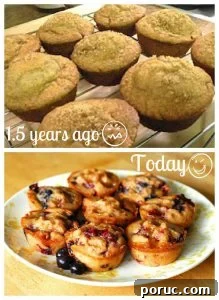
The top picture came from an early banana bread post a few months after I began blogging. The bottom photo is from a more recent beer berry muffins post. The top image has several issues:
1. It was taken with a cell phone, so the file was small and became grainy when enlarged.
2. It was shot under a standard kitchen bulb with no natural light, resulting in a yellow-green tint that makes the muffins look unappetizing.
3. The composition is awkward—an odd angle and a tight crop.
4. The image lacks visual interest and shows distracting background elements.
In contrast, the bottom image is much more inviting:
1. It uses natural light, which brightens the scene and produces truer, more vibrant colors—arguably the single most important lesson I’ve learned.
2. The composition is clear and straightforward, showing the muffins in a way that makes you want to reach in and grab one.
3. The mostly white plate keeps attention on the muffins while allowing their color and texture to stand out.
Mexican Casserole
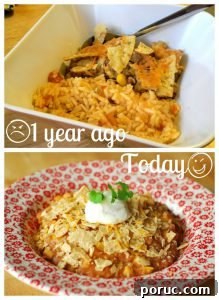
Both photos show my Mexican casserole. The earlier image is unappetizing for several reasons:
1. It’s unclear what you’re looking at—the composition is too tight and the elements don’t read well.
2. The artificial kitchen light gives everything an unpleasant yellow cast.
3. The scene is dull: a plain white bowl, a spoon, and a hot pad corner in the background add nothing.
4. Distortion and focus issues from the point-and-shoot lens further degrade the image.
The updated photo fares much better:
1. Natural light makes the image bright, crisp, and appealing.
2. Visual interest comes from the patterned bowl, the swirl of sour cream, and fresh cilantro—these details add texture and color.
3. While casseroles are sometimes hard to identify at a glance, the individual components (sour cream, cilantro, chips, cheese, beans, corn) are distinguishable and inviting.
4. The composition centers the food so your eye focuses on the ingredients rather than the container.
Snickerdoodles
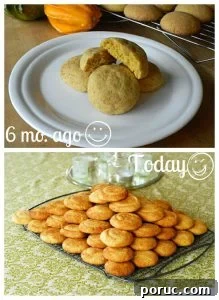
By this stage my photography was close to where I wanted it to be. The top photo is of pumpkin snickerdoodles from last winter; the bottom shows regular snickerdoodles I made for a spring 5k.
Top image observations:
1. Although this photo uses natural light, it’s too dark and has heavy shadows—my preference is for bright, clear images.
2. Props like gourds add interest, but here they’re partially cut off and poorly placed, so they don’t contribute as effectively as they could.
3. There’s too much empty plate showing; using more cookies would create a fuller, more appealing composition.
Bottom image improvements:
1. Bright natural light with minimal shadows makes the cookies look inviting.
2. To counter the monotony of brown cookies, a green patterned tablecloth adds contrast and color.
3. A centered prop provides visual interest without stealing focus from the cookies.
4. The composition is pulled back enough to include all the food and create balance.
5. A full baking rack of cookies makes the scene feel abundant and fun.
How about you?
1. Are you a food blogger? What have you learned about photography while blogging?
2. Are you a photographer? What tips would you offer food bloggers?
3. What photography or food goals are you working toward?
4. What creative techniques do you use to make your food photos more interesting?
I hope you enjoyed this look at how my photography has evolved. There’s always more to learn—technique, styling, plating—and I’m excited to see where I’ll be in another year.