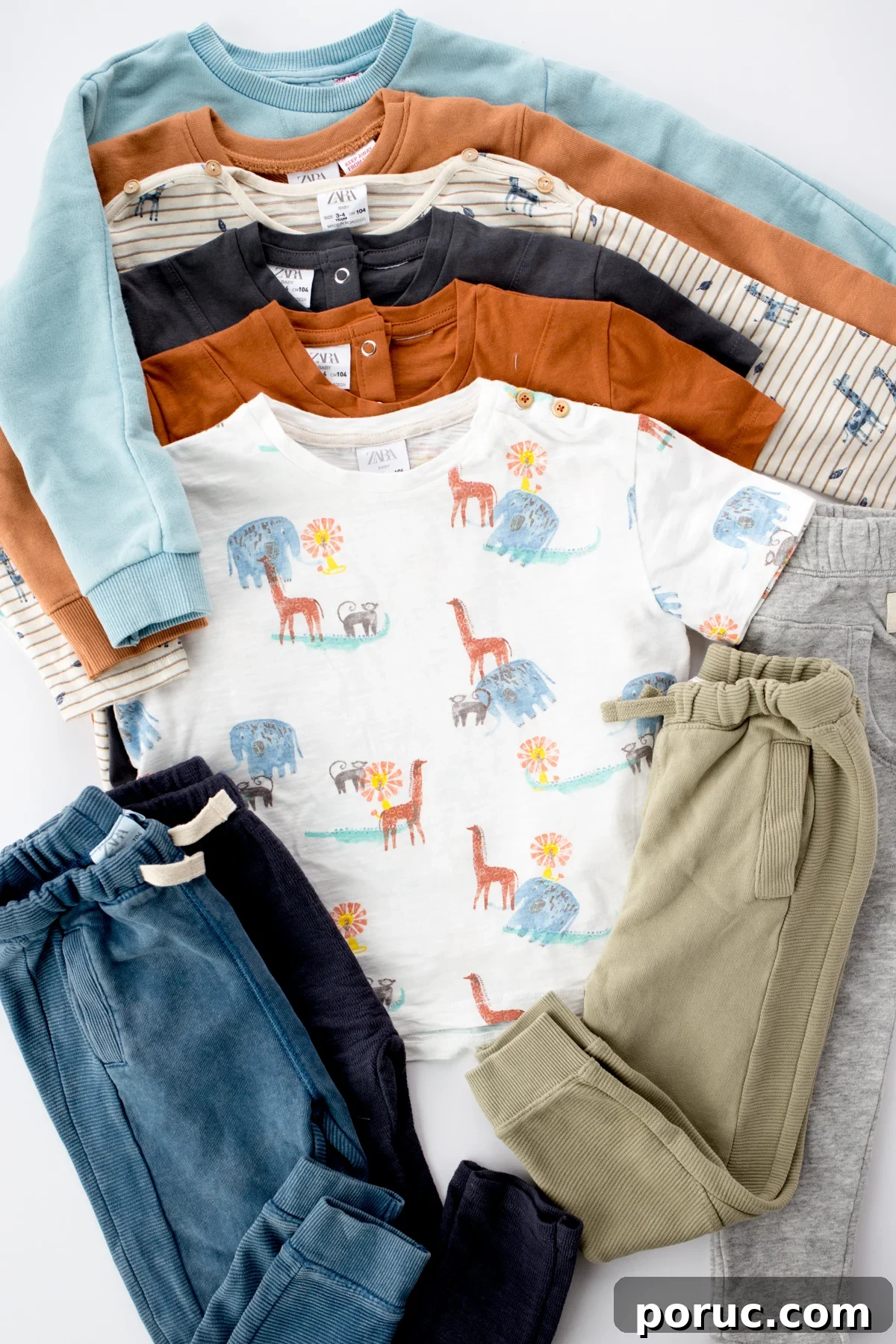
A kids’ capsule wardrobe has simplified our life in many ways. We spend less time and money on clothing, and mornings are calmer because everything coordinates. Here’s how I built a capsule for my children and how you can create one that works for yours.
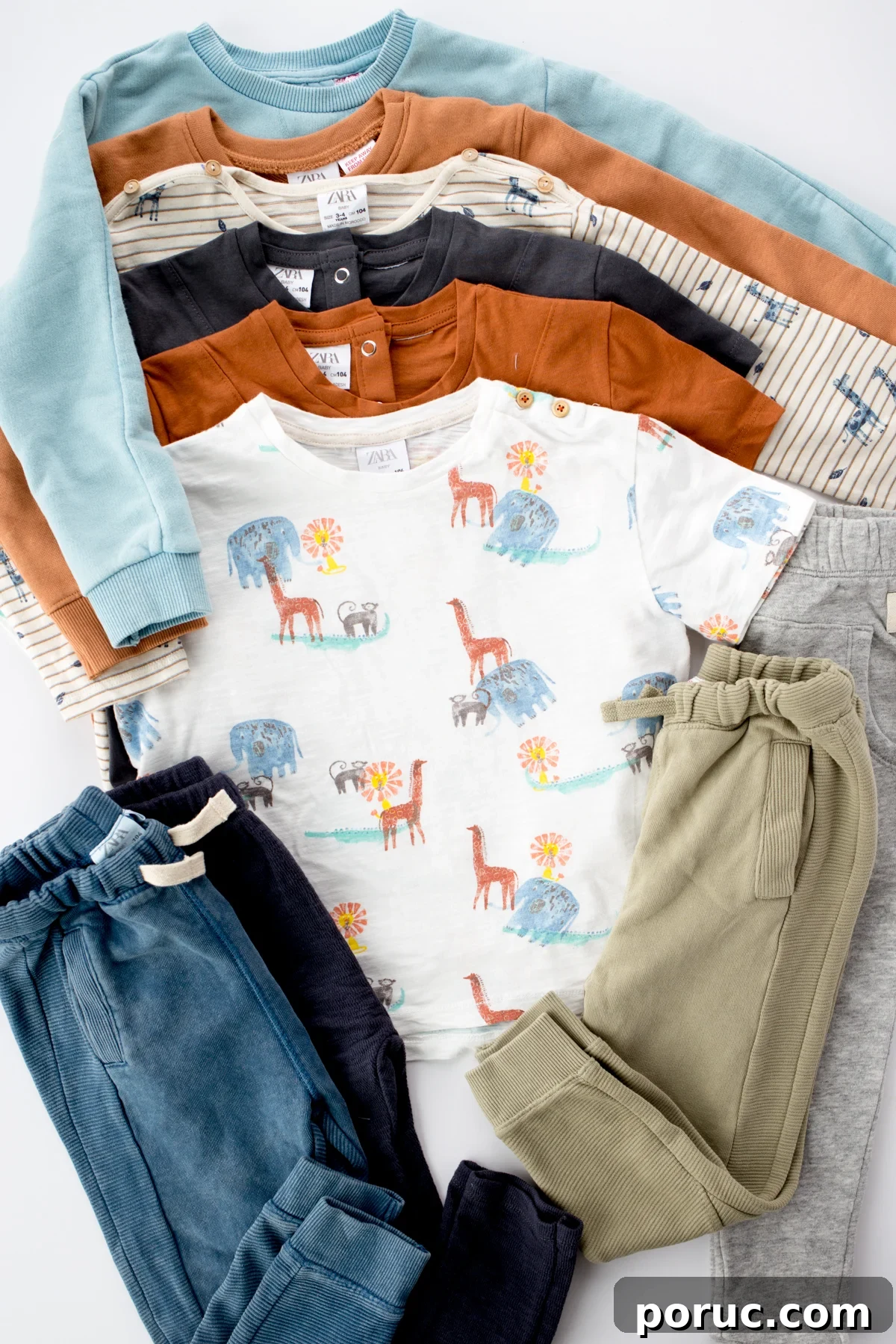
Table of Contents
Toggle
Why I Started Doing Capsules For Our Kids
After building my first capsule wardrobe for myself and experiencing how much simpler life became, I wanted the same ease for our children. Kids need fuss-free clothing: durable, comfortable pieces that mix and match easily.
Before capsules, I spent too much time shopping, returning, folding, and trying to make unrelated pieces work together. New seasons felt like starting over: sizes, cuts, and colors varied wildly between brands. I often abandoned multiple online carts because nothing coordinated.
Now I shop from one or two stores each season. The result: we spend less, the kids have more usable outfits, and mornings are far less stressful—though dressing little humans still has its moments.
Benefits of a Kids Capsule Closet
Capsule wardrobes work well for children. Key benefits we’ve seen:
- Faster, less stressful shopping: you only look for a few coordinated pieces.
- Lower clothing costs: buying with intention reduces impulse spending.
- Less laundry overwhelm: fewer items mean smaller, more manageable loads.
- Independent outfit choices: kids can pick their own clothes and still look put together.
- Reduced decision fatigue: fewer, better options make mornings easier for the whole family.
Elle’s Tip: The best time to build a capsule is when your child needs new clothes—right before the season changes or when they’re about to size up. Shop early for the best selection and fit.

How to Create a Minimalist Kids Capsule Wardrobe
If you want to try a capsule for your child, follow these practical steps.
1. Do a wardrobe audit with a kids capsule checklist
Start by assessing what your child already owns. Separate items into: keep, donate, repair, or hand-me-down storage. A checklist keeps the focus on essentials and prevents duplicate or unnecessary purchases.
Use a simple essentials list—tops, bottoms, a nicer outfit, layers, underwear, socks, pajamas, and shoes—and mark what’s missing. That clear inventory guides intentional shopping instead of impulse buys.
2. Stick with one or two favorite brands
Clothing sizes and fits vary greatly between brands. Choosing one or two reliable brands makes buying simpler and ensures pieces coordinate. Look for brands that offer the cuts, colors, and quality you prefer. Affordable basics in muted tones and well-made items for special pieces both have a place in a capsule.
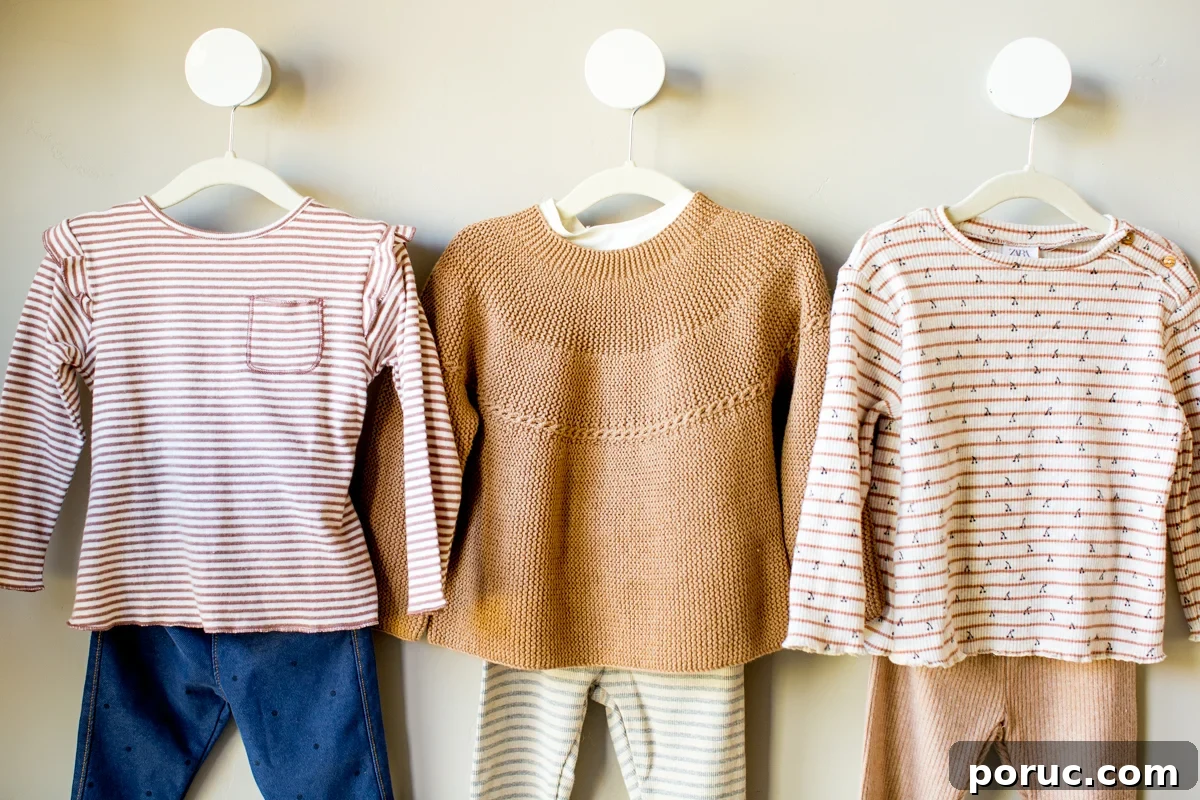
3. Pick a color palette
Limit the palette to neutrals plus two or three accent colors per season. Start with a foundation piece you love—a sweater, sweatshirt, or pair of pants—and build the capsule around those hues. A cohesive palette makes mixing and matching effortless.
4. Keep it simple with 15–20 core pieces
Fifteen to twenty core items usually provide enough variety while keeping things streamlined. It may feel minimal at first, but the right combination of basics and a few special pieces covers everyday needs.
Core capsule items typically include:
- 5–6 tops
- 5–6 bottoms
- 1 nicer outfit (dress or button-up set)
- 1–2 sweaters or cardigans
- 1–2 sweatshirts
- 2 activewear sets
Everyday essentials:
- 5–6 underwear or onesies
- 5–6 pairs of socks
- 2 pairs of pajamas
- 4–5 pairs of shoes (play sneakers, nicer sneakers, sandals, boots)
Seasonal extras:
- Layering basics (thermals or long sleeves)
- Rain or snow boots
- Season-appropriate coat
- Flip-flops and hats/sunglasses
- Swimwear and any required snow gear
Comfort is essential: choose soft fabrics, easy fits, and pieces that let kids move and dress themselves without sacrificing coordination.

5. Shop once and be done
Try to complete your capsule in one or two shopping sessions so the collection feels cohesive. Shopping online can save time and spread try-ons over several days. Look for free shipping and easy returns and consolidate any returns into one trip.
Kids Capsule Wardrobe FAQ
A practical kids capsule includes about 15–20 core pieces plus outerwear, shoes, socks, and underwear. That balance keeps daily dressing simple without clutter.
A capsule wardrobe can work at any age—from babies to teens. Starting early helps children get used to a simpler, more intentional closet, but it’s never too late to begin.
Refresh the capsule each season or when your child sizes up. Choose stretchy fabrics and adjustable waistbands to extend the life of clothing between updates.
Be selective: keep neutral, high-quality pieces that will fit into future capsules and pass on items that don’t match your style or are worn. Store useful hand-me-downs by size in clear, labeled bins so they’re easy to access when needed.