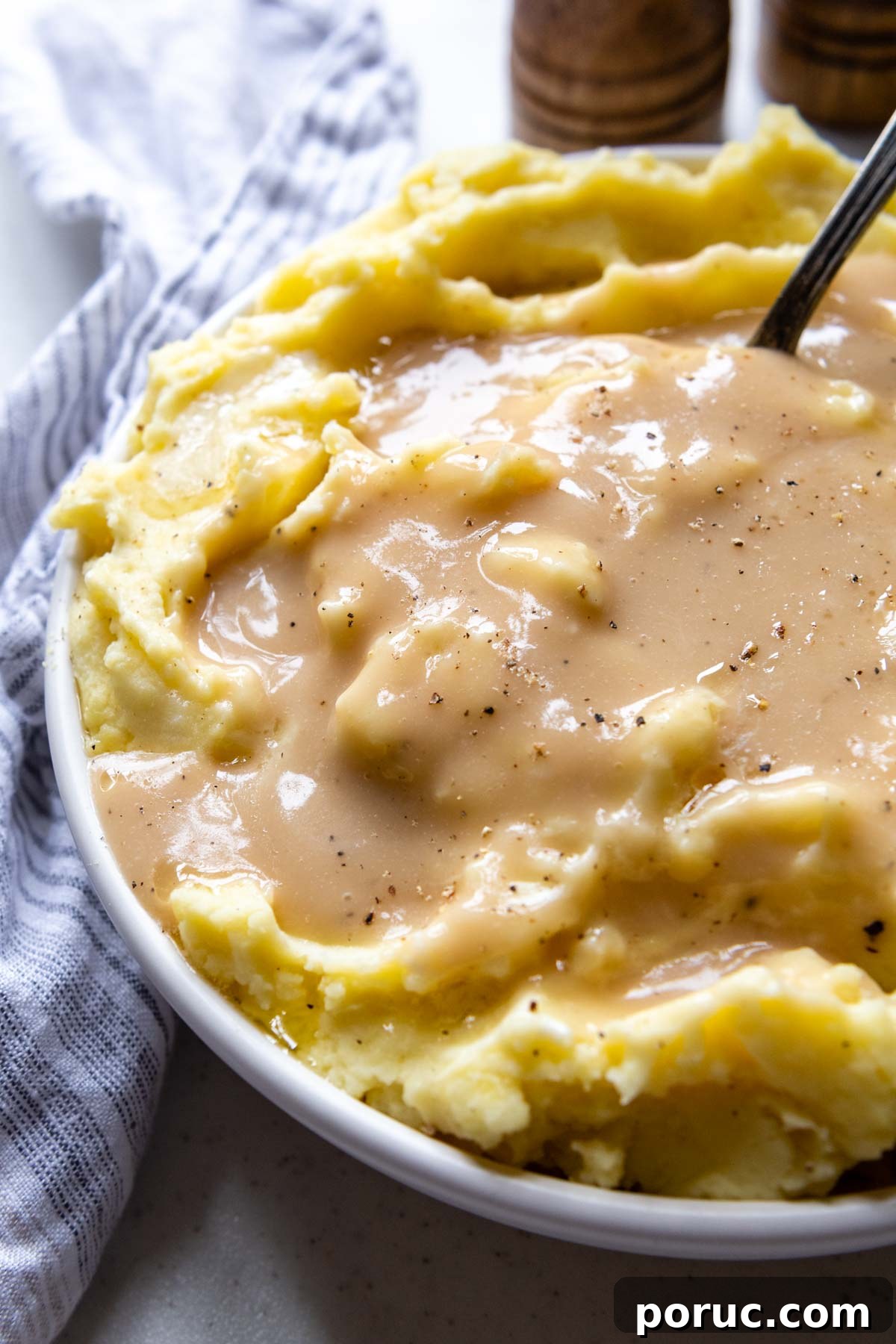
Learn how to make gluten-free gravy with this simple, adaptable recipe. You can make it with or without pan drippings, choose the best gluten-free thickener, and easily transform it into turkey, chicken, beef, or brown gravy. Serve it over fluffy gluten-free mashed potatoes for a comforting meal.
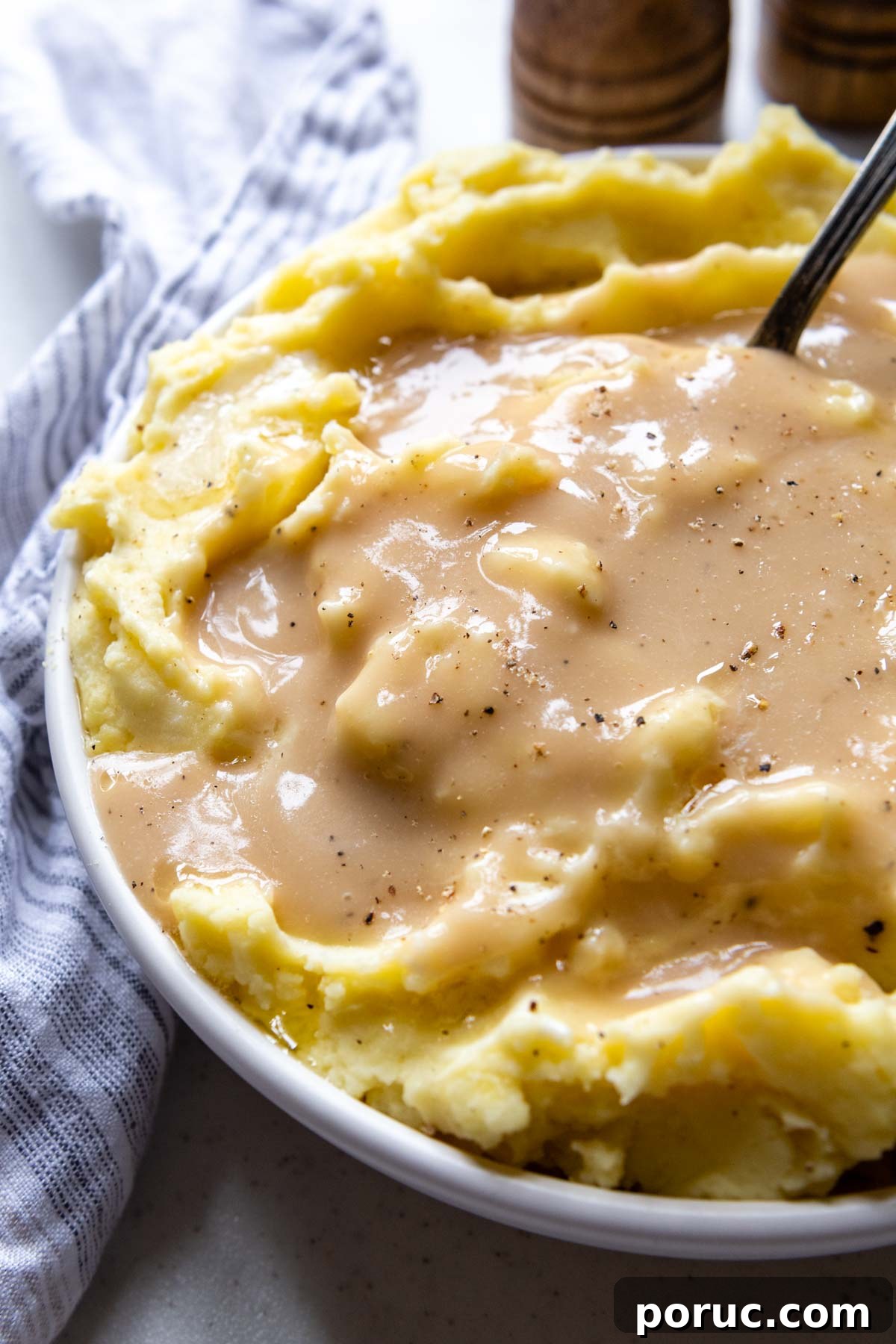
Easy Gluten Free Gravy – Our Back Pocket Recipe
This reliable gluten-free gravy comes together in about five minutes and works whether you have pan drippings or not. I tested three gluten-free thickeners—sweet rice flour, gluten-free all-purpose flour, and cornstarch—and found one clear favorite for texture, flavor, and how it holds up after freezing and reheating.
Sweet rice flour produced the creamiest, silkiest gravy with a neutral flavor that blends seamlessly into the stock. It’s forgiving, minimizes lumps, and reheats and freezes very well. Below are straightforward tips to ensure a smooth, lump-free sauce, plus storage, reheating, and variations to make turkey, brown, chicken, or white country gravy.
Ingredient Tid Bits
The recipe uses just a few basic ingredients, but there’s flexibility depending on what you’re serving:
- Butter and/or pan drippings – You need 4 tablespoons total fat for the roux. Use all pan drippings or a combination of drippings and butter. If your drippings are from lean meat (like turkey breast), add butter for richness.
- Broth – Use poultry broth for turkey or chicken gravy and beef broth for brown gravy. Check labels to confirm products are gluten-free.
- Sweet rice flour or gluten-free flour blend – Sweet rice flour (also called glutinous rice flour) gives the best, smoothest results. A neutral-tasting gluten-free all-purpose flour works too; avoid blends with strong-tasting grains like teff or sorghum.
- Seasoning – Add salt and pepper after the gravy thickens. Amounts depend on how seasoned your broth and drippings are. Optional boosters: 1/4 teaspoon onion powder or poultry seasoning for white/gravy poultry sauces, or 1/2–1 teaspoon gluten-free Worcestershire sauce for brown gravy.
Just made my first batch of real GF gravy. I’m stunned and amazed! This is just as good as my best wheat-based gravies. Thanks for a keeper recipe.
—Lisa
Watch The Recipe
Let’s Make This Together!
(Below are step-by-step photos and shortened instructions. Full recipe quantities and details are in the recipe card.)
Magic lump preventer
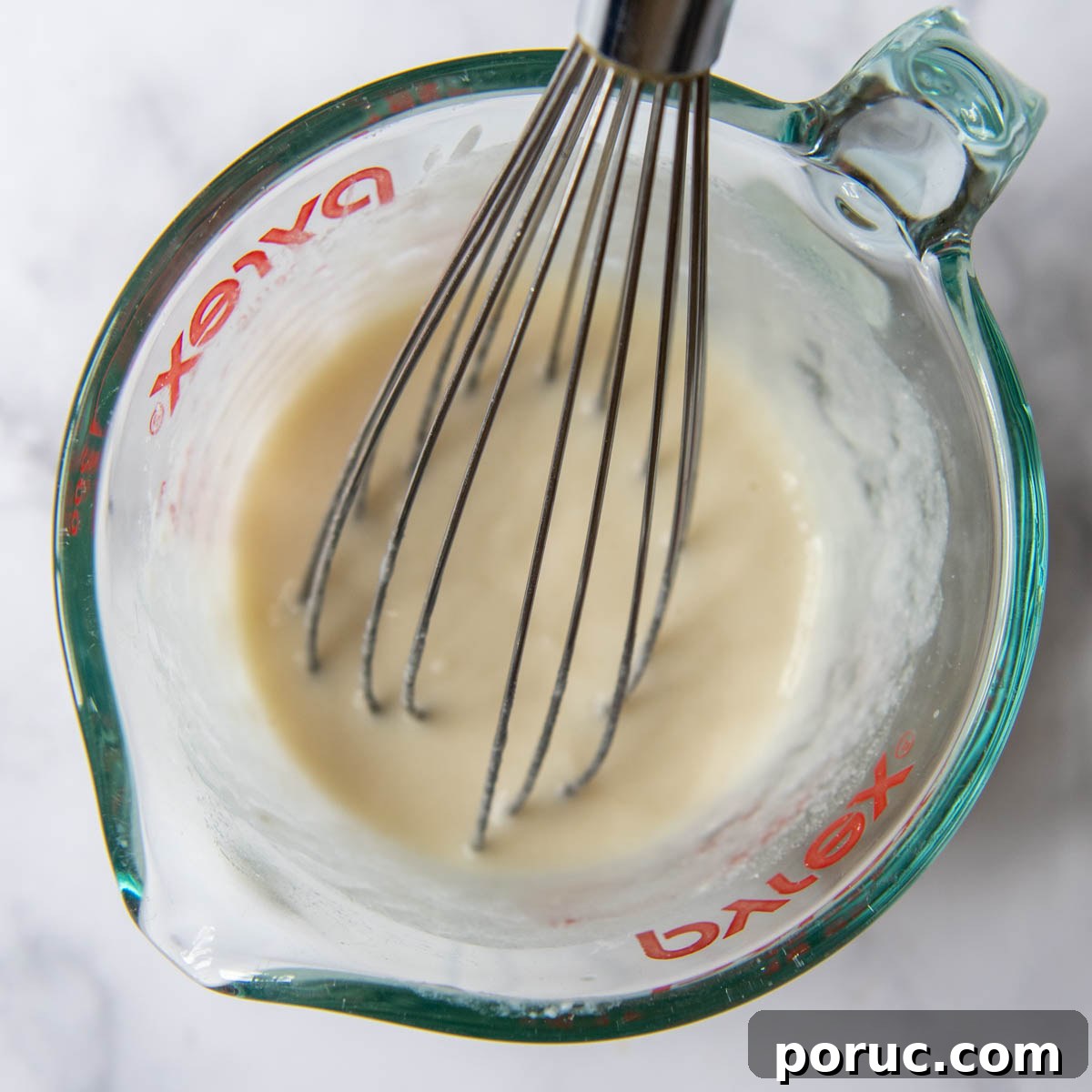
For a lump-free gravy, strain pan drippings first. Measure 4 tablespoons total fat (drippings, butter, or both). In a small bowl whisk 1/2 cup broth with the sweet rice flour to make a smooth slurry before adding to the pan.
Make the paste
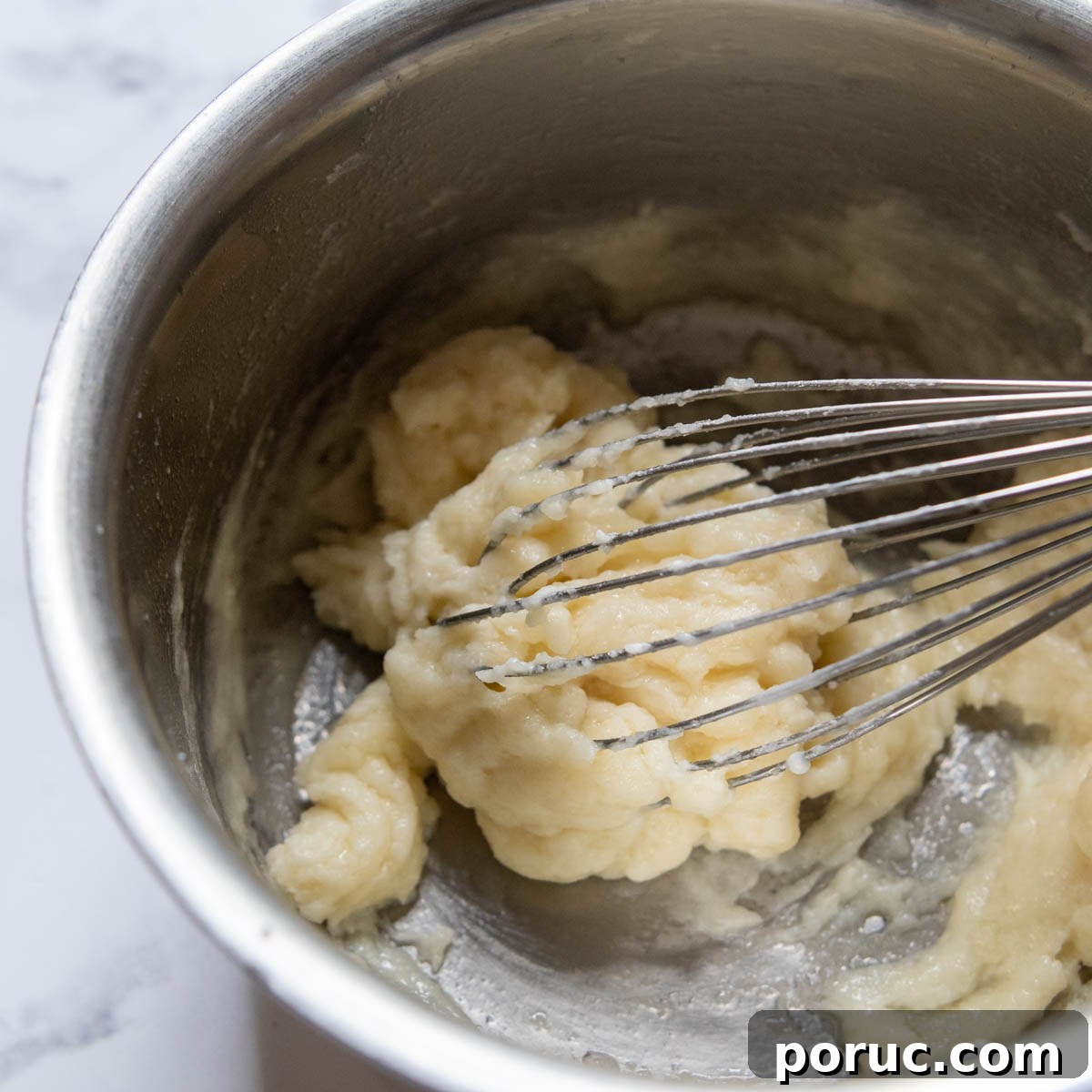
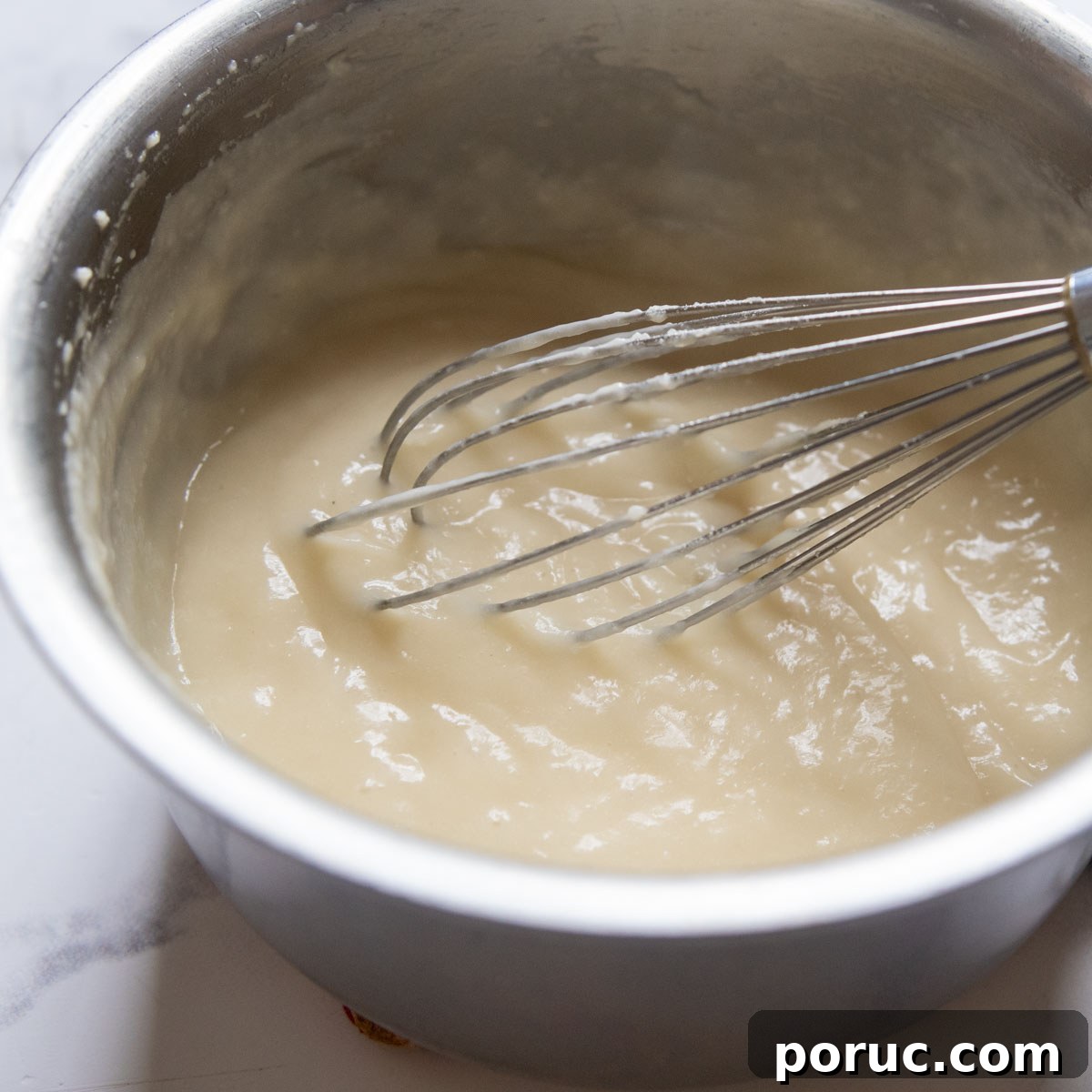
Heat the butter or drippings in a small saucepan over medium heat, then whisk in the flour-broth slurry. It will form a thick paste—this is normal and the base of your gravy.
Finish and season
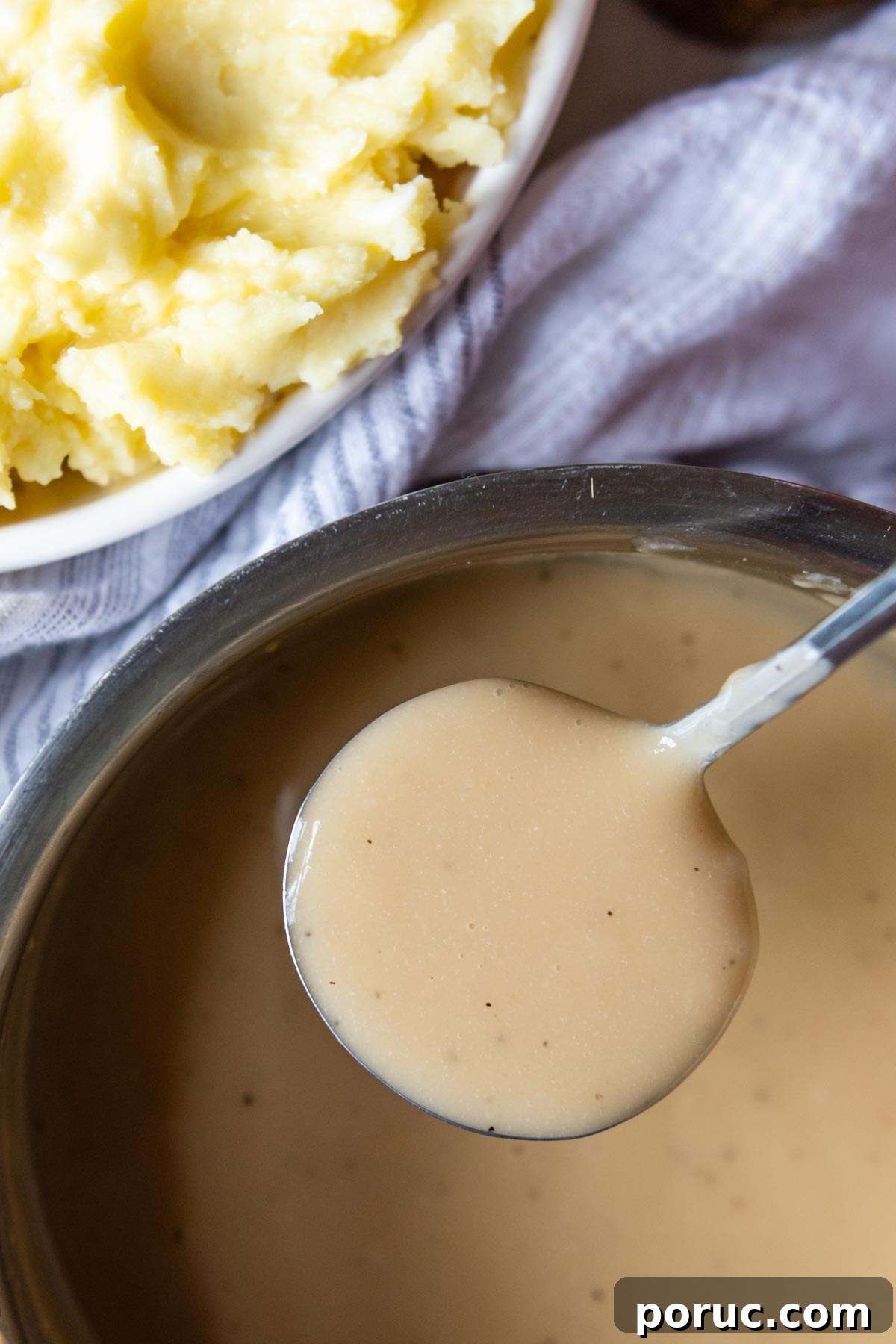
Whisk in the remaining broth a little at a time. The mixture will loosen, bubble, and thicken as it heats. If too thick, add more stock or a splash of cream. Season to taste starting with 1/4 teaspoon salt and 1/8 teaspoon pepper, adjusting as needed.
Best Gluten-Free Thickener for Gravy
Choosing the right gluten-free thickener makes all the difference. Here’s what to expect from common options:
- Cornstarch – Cornstarch thickens powerfully but can yield a more translucent, starchy-tasting sauce that may thin when reheated and doesn’t freeze well. Good for quick sauces but not ideal for classic gravy.
- Gluten-free all-purpose flour – Produces good flavor and reheats well, especially if the blend uses neutral starches. It can clump if not whisked thoroughly, so vigorous whisking or a flat whisk helps achieve smoothness.
- Sweet rice flour – The best all-around choice: neutral flavor, creamy texture, and forgiving when it comes to lumps. It reheats and freezes nicely and closely resembles traditional gravy mouthfeel.
Note: Sweet rice flour (glutinous rice flour) is not the same as white rice flour. Sweet rice flour comes from short-grain sticky rice and has a higher starch content, which gives gravy its smooth texture.
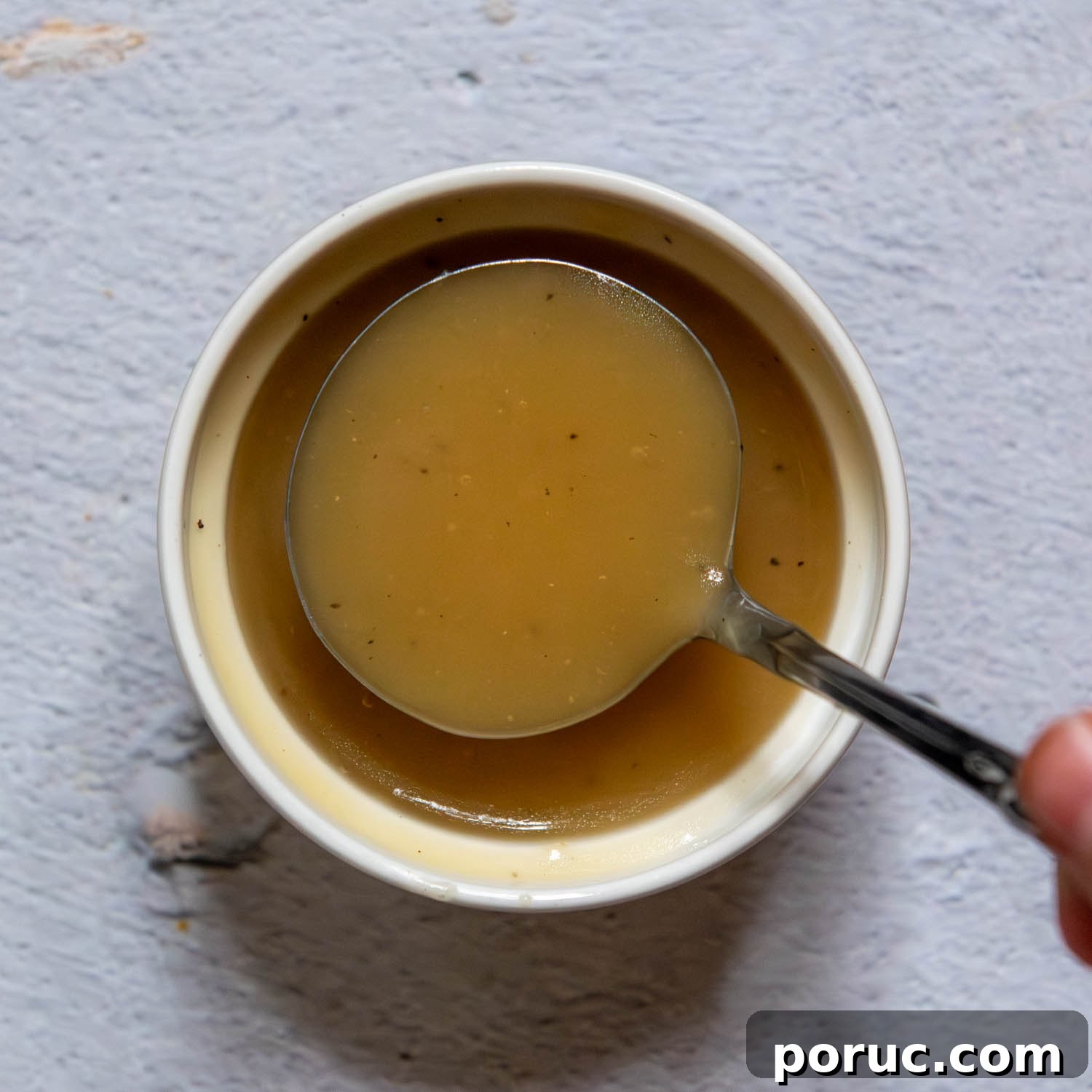
Making Different Types of Gravy
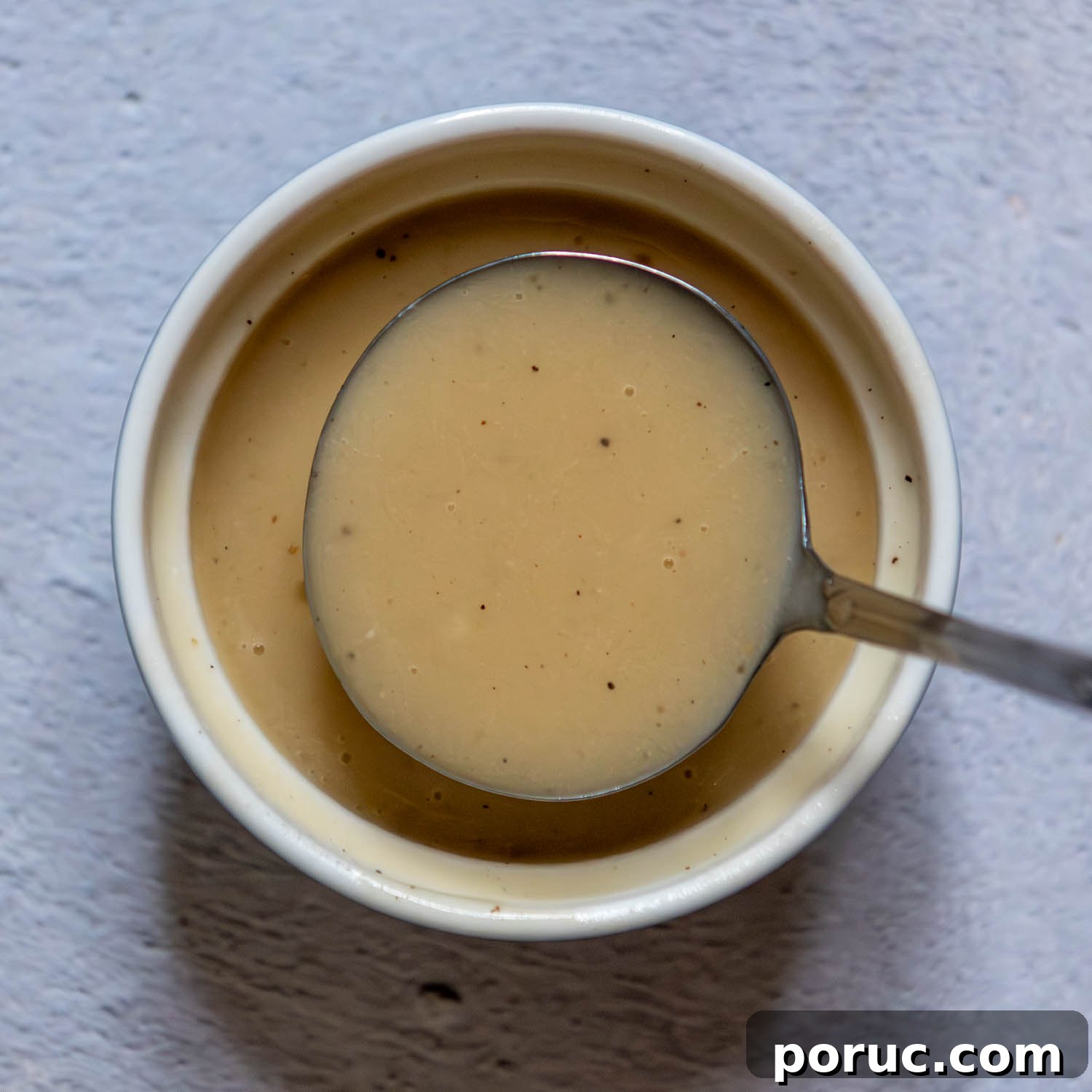
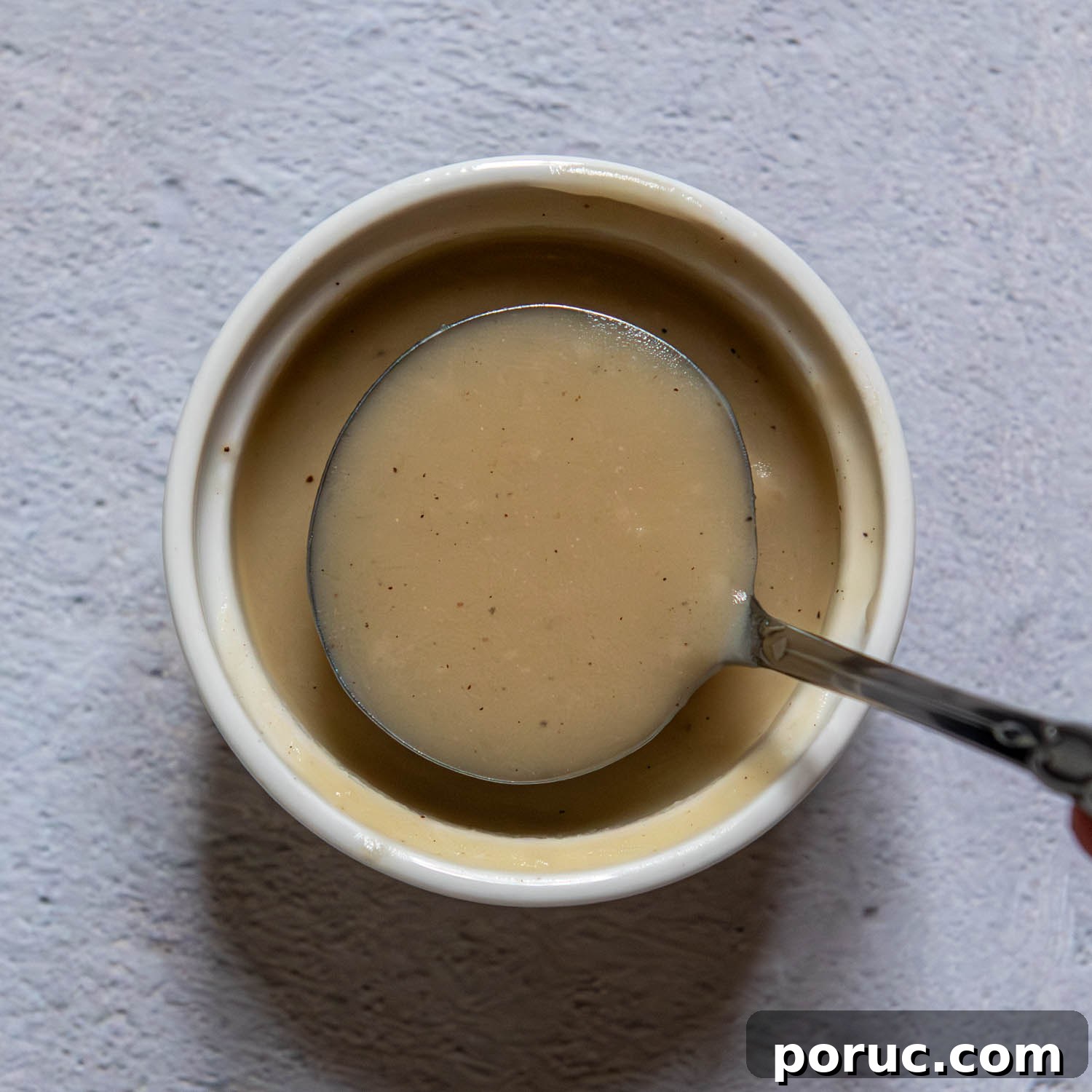
Turkey gravy – Use turkey broth or stock. If unavailable, chicken broth is an acceptable substitute.
Brown gravy – Use beef stock or broth. If you lack drippings, add garlic or onion powder, beef bouillon, or gluten-free Worcestershire sauce for depth. Always check labels for gluten-free status.
Dairy-free option – Use pan drippings, dairy-free butter, or ghee to reach 4 tablespoons of fat.
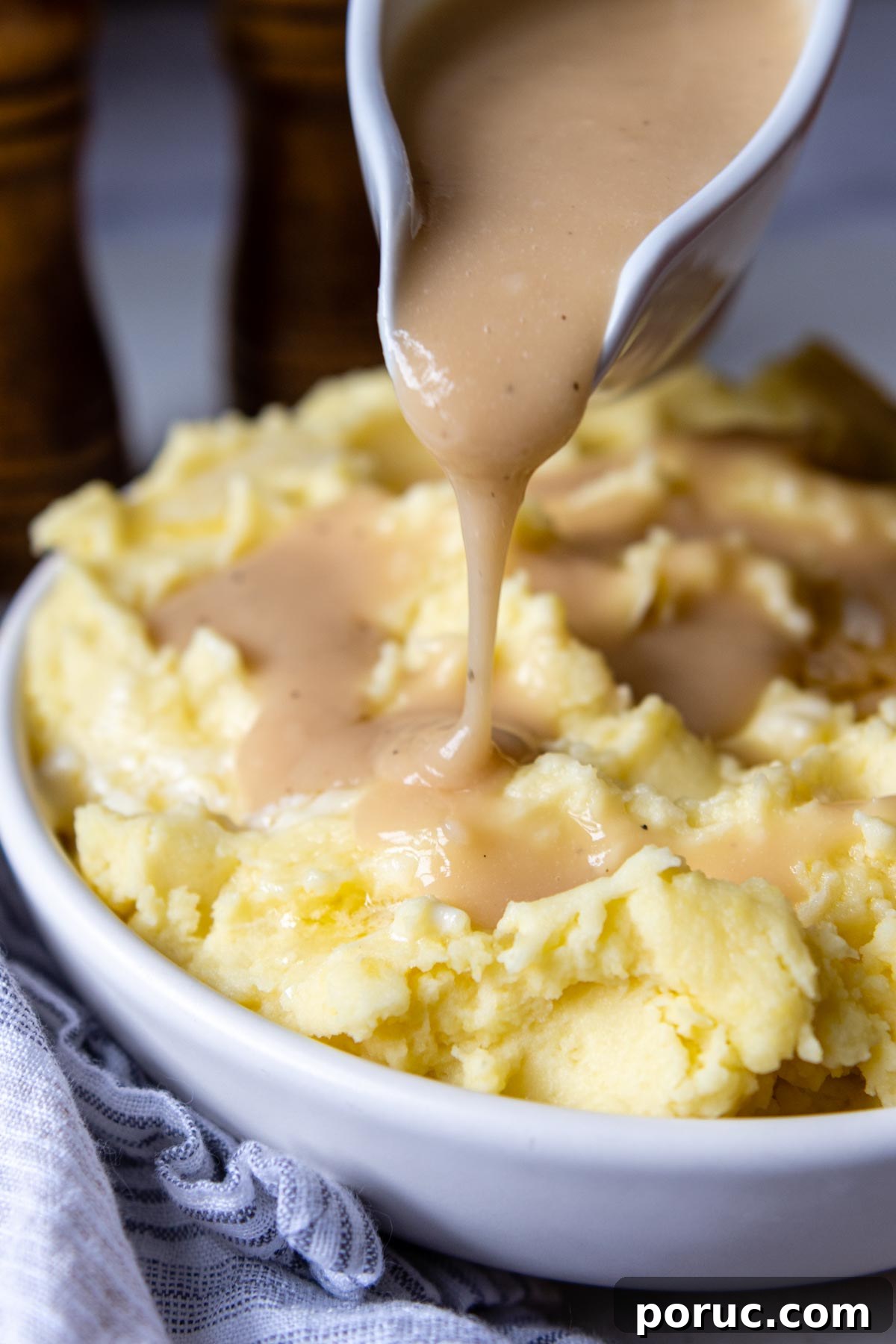
Save this recipe for later
Pin it to your board and make it when you need a dependable gluten-free gravy.
Did you make this recipe? Leave a star rating and comment below the recipe card — feedback helps others and is appreciated.

Gluten Free Gravy Recipe (No Drippings, Best Thickener)
 Melissa Erdelac
Ingredients
- 4 tablespoons butter, pan drippings, or combination of both
- 1/4 cup sweet rice flour (highly recommended; can substitute GF all-purpose flour)
- 2–3 cups gluten-free broth or stock (turkey, chicken, or beef)
- 1/4–1/2 teaspoon salt
- 1/8–1/4 teaspoon black pepper
- Optional: 1/4 tsp onion powder, 1/4 tsp poultry seasoning, 1/2–1 tsp gluten-free Worcestershire sauce
Equipment
- Whisk (a flat whisk works best to prevent lumps)
- Fine mesh strainer (if using drippings)
Instructions
- Whisk the sweet rice flour (or GF flour) with 1/2 cup broth until smooth. Set aside.
- If using drippings, strain them. Melt butter or heat drippings in a small saucepan over medium heat. Whisk in the flour-broth mixture until a thick paste forms.
- Pour in an additional 1 cup broth in a steady stream, whisking continuously. The mixture will begin to smooth and loosen. Continue whisking until incorporated.
- Gradually add the remaining broth over medium-low heat until the gravy bubbles and reaches your desired thickness.
- Stir in salt and pepper to taste. Add any optional seasonings if desired. Serve immediately.
Notes
Make ahead, reheating, and freezer tips
Store leftovers in an airtight container for up to 3 days in the refrigerator. Cool completely before storing. Reheat gently on the stovetop while whisking, or reheat in the microwave.
Freeze gravy for up to 3 months in a flat freezer bag. Thaw overnight in the refrigerator and reheat gently.
Expert tips
- Use a small saucepan rather than a large roasting pan to better control whisking and prevent lumps.
- A flat whisk helps scrape the sides and incorporate any thickener that might clump.
- If gravy becomes lumpy, blend it smooth with a blender or immersion blender.
- To boost flavor, add a pat of butter, a splash of cream, or extra seasonings as needed.
- For dairy-free gravy, use vegan butter, ghee, or only pan drippings.