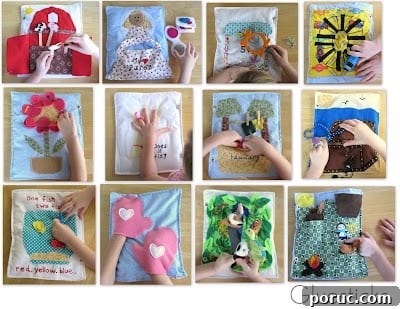
Children love quiet books, and parents appreciate how they encourage imaginative, independent play. Below are 12 simple quiet book page ideas you can add to a fabric quiet book — from barnyard animals to pirate treasure, suitable for a range of ages.

Our Quiet Book: 12 Layout Ideas
After nearly a decade of meaning to make a quiet book for my children, I finally finished one — and it was easier and faster than I expected. Many of the page designs had been in my head for years, so once I sat down I was able to put them together fairly quickly.
A friend invited a few of us to her home to look through quiet books she’d kept from when her kids were little. Seeing them in person gave me both ideas and the push I needed to get started.
Tips for Making a Quiet Book
Limit Velcro. Velcro is noisy. It’s perfect for a busy book, but if you plan to use the quiet book in public or at church, use Velcro sparingly. I used it on only one page.
Use minimal felt. Felt can pill over time. I used felt in a few spots, but mostly used sturdy cotton. Cotton frays, so I used a zigzag stitch to sew pieces in place without hemming. To make pages, I folded large cotton rectangles in half to create two pages, sewed up three sides, inserted a thin layer of batting, then sewed the top closed and topstitched the edges with a sewing machine. The pages are slightly bulky, but this method allowed me to fit more pages into the book.
Puffy paint or fabric paint for details. These are easier and quicker than hand stitching and dry within a couple of hours. They add durable texture and color when used for small accents.
Use eyelets and rings to bind the book. Eyelets are inexpensive and allow you to bind the pages with rings. This makes pages removable so you can add, rearrange, or share pages among children.
Below are the pages I created. I don’t have patterns to share, but the photos and descriptions should give you clear ideas if you want to design your own. Most pages use simple shapes and lots of scrap fabrics — a great way to use leftover materials and create color schemes around favorite prints.
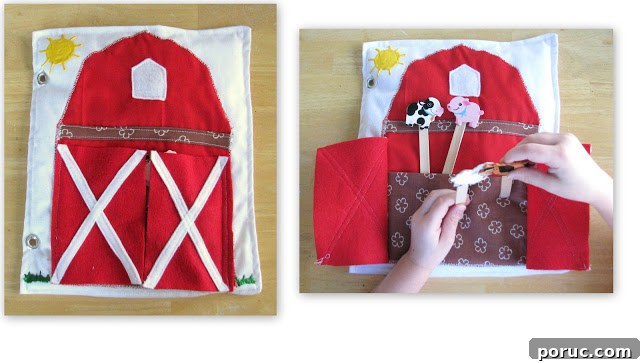
Barnyard: I glued small wooden farm animals to popsicle sticks so kids can move them around the page. The animal packs were inexpensive and work well for tactile play.
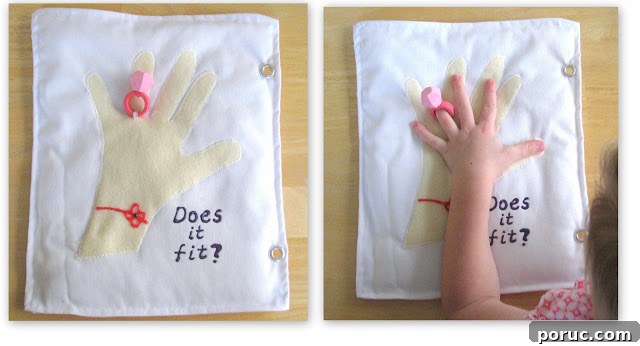
Does It Fit? This page uses small objects (we used novelty erasers) and a ring to encourage sorting by size and shape. Kids enjoy trying pieces to see what fits.
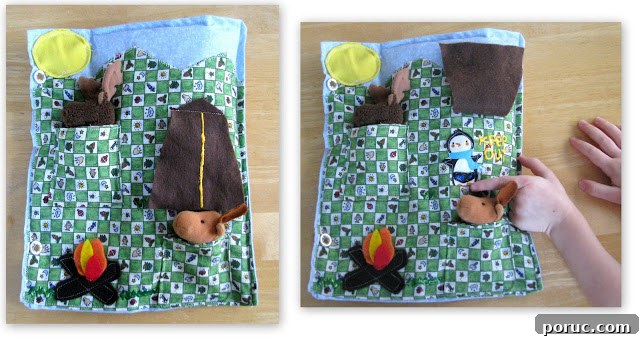
Woodland Campout: A tent with a pocket for small surprises and fabric pockets that hold finger puppets. Personal touches — like a tiny character under the tent — make pages memorable and spark imaginative stories.
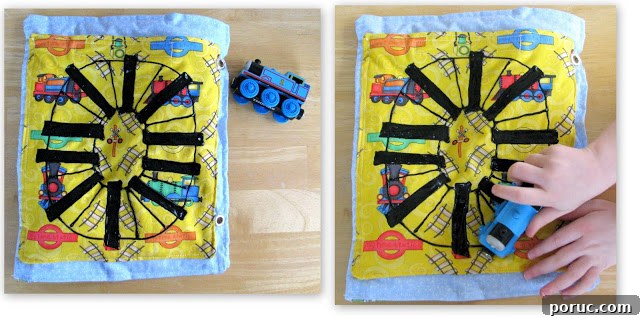
Train Tracks: Created with puffy paint details and a pocket with minimal Velcro to store a small wooden train. Simple and effective for children who enjoy moving pieces along a track.
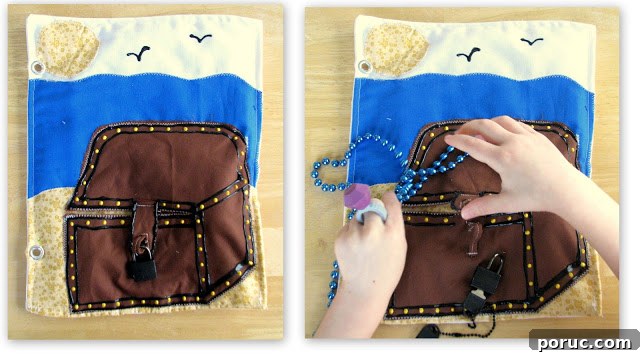
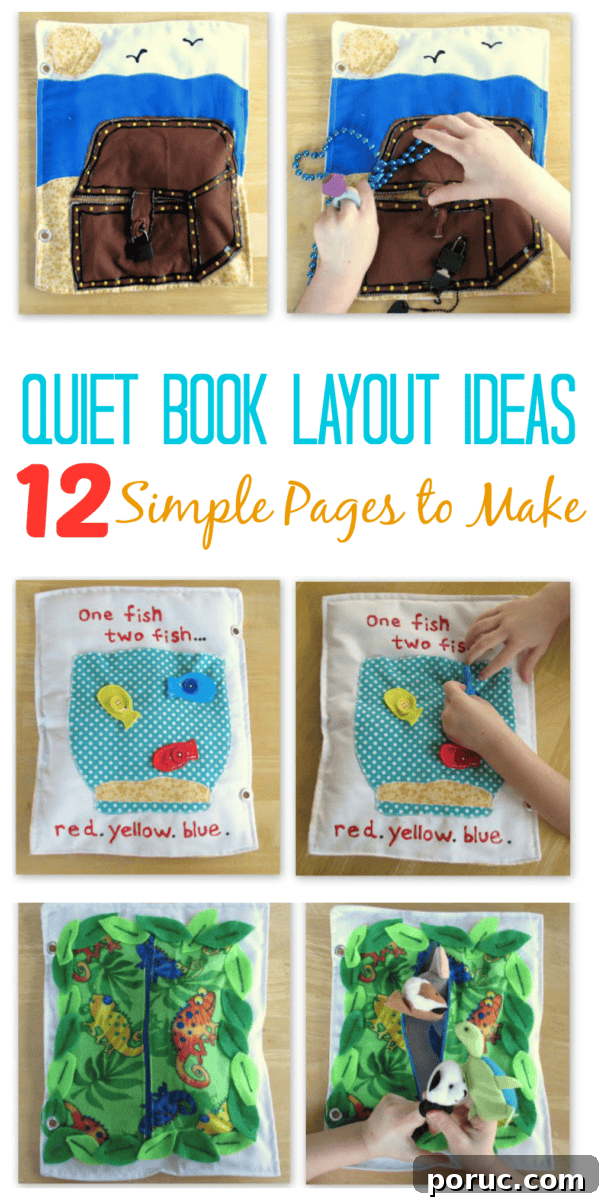
Treasure Chest: A flap with a small lock and key mechanism adds excitement. Fill the chest with small fabric or bead “treasures” for discovery play.
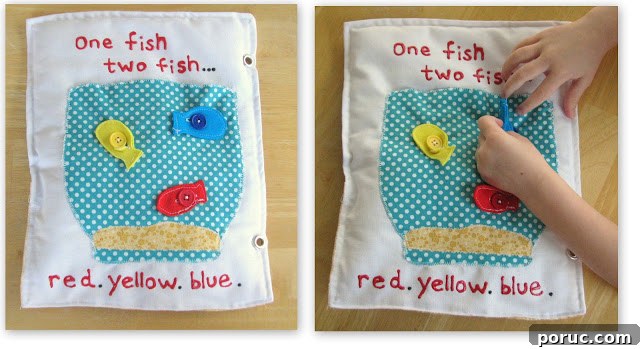
Button Fish: Colorful fish button onto matching spots and are stored in a fishbowl pocket. This page is great for color matching and fine motor practice.
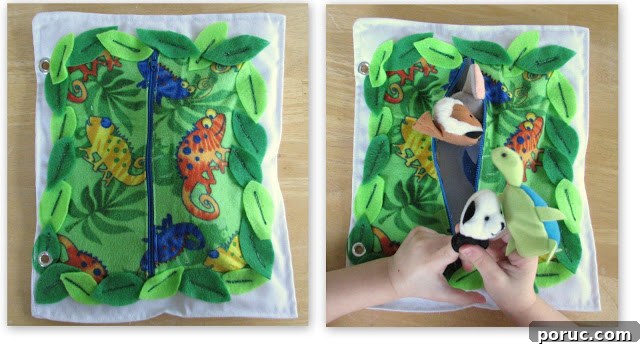
Jungle: A zippered pocket formed from scrap flannel with felt leaves hides finger puppets or small toys. Zippers provide practical practice for dressing skills and fine motor control.
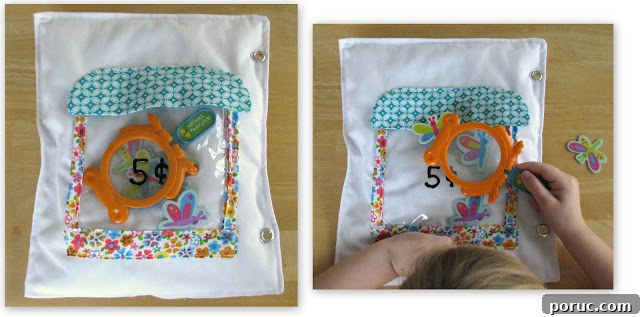
Insect Jar: Scrap vinyl works well for a jar “glass” and wooden bugs fit inside. Add a pretend magnifying glass for exploration and pretend-science play.
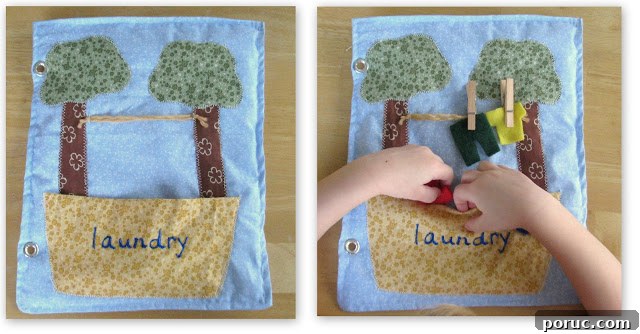
Clothesline: Use mini clothespins and fleece clothing cutouts that hang on a fabric line. Store the pieces in a small fabric laundry basket to practice matching and dressing skills.
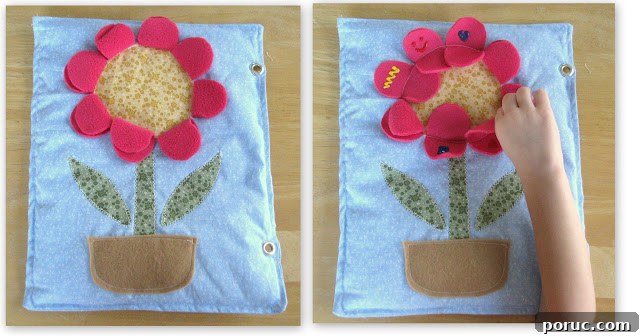
Numbers & Shapes Flower: Each petal folds over to reveal numbers or shapes underneath — a playful way to practice counting and shape recognition.
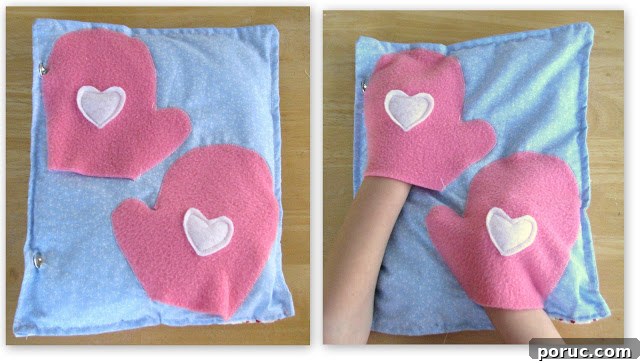
Mittens: Fleece mittens are left open at the bottom so little hands can slide inside. This page is cozy and great for sensory play and practicing hand placement.
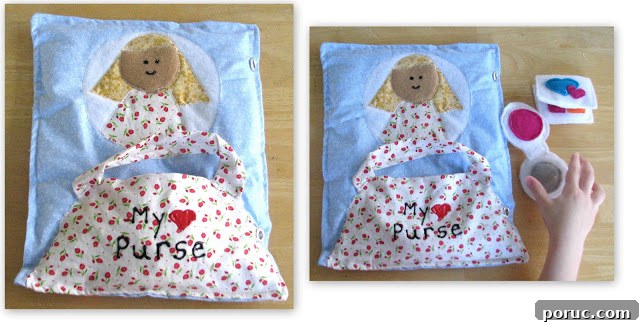
My Purse: A small fabric purse stores pretend play items such as felt makeup or tiny accessories, encouraging role play and organization skills.
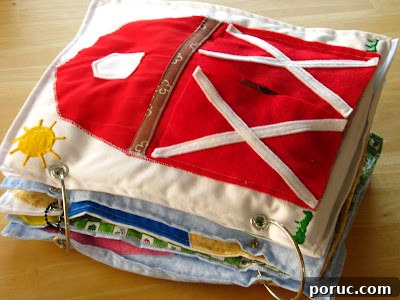
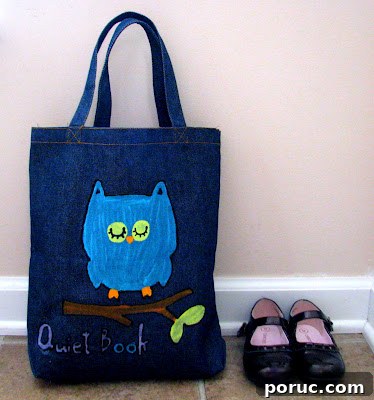
The book is bound with rings and stored in a small tote bag, so it’s easy to take along. It isn’t perfect, but it’s much loved and serves its purpose of encouraging quiet, imaginative play.