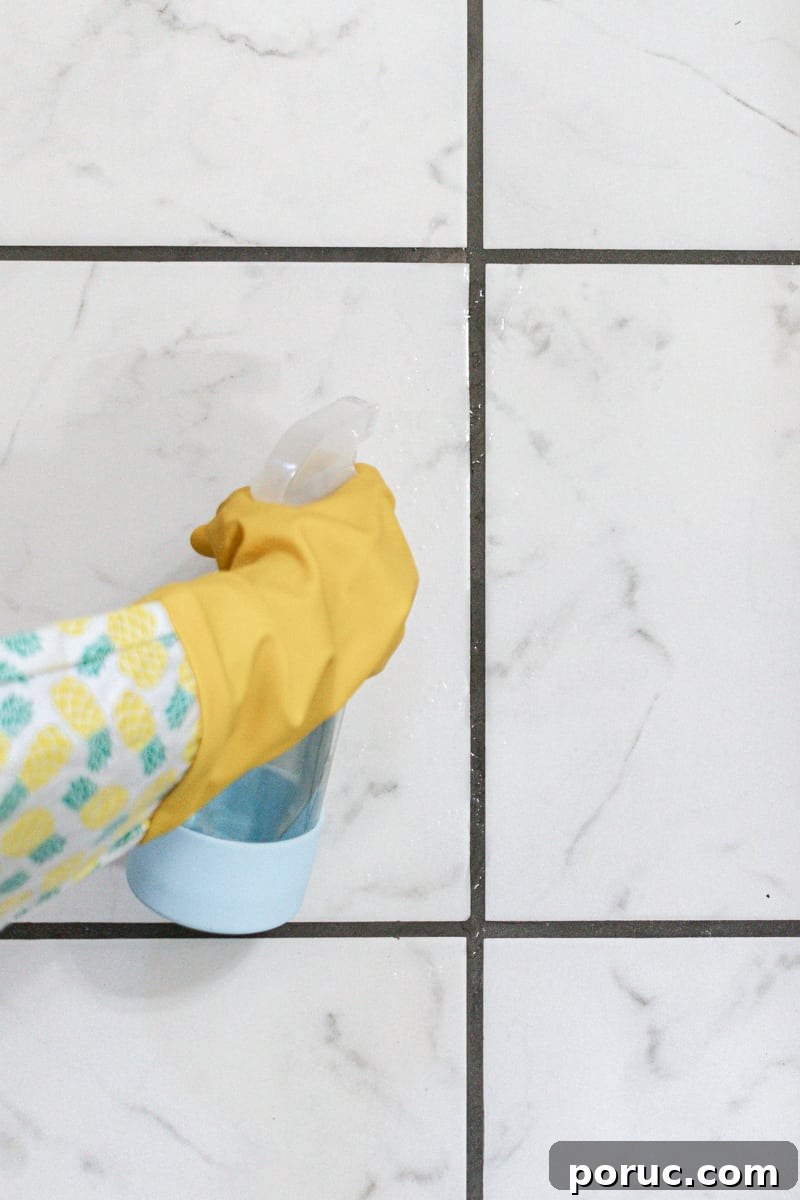
Have you noticed mold forming in your shower grout? Don’t worry — you can restore grout to a fresh, clean appearance using simple household items.
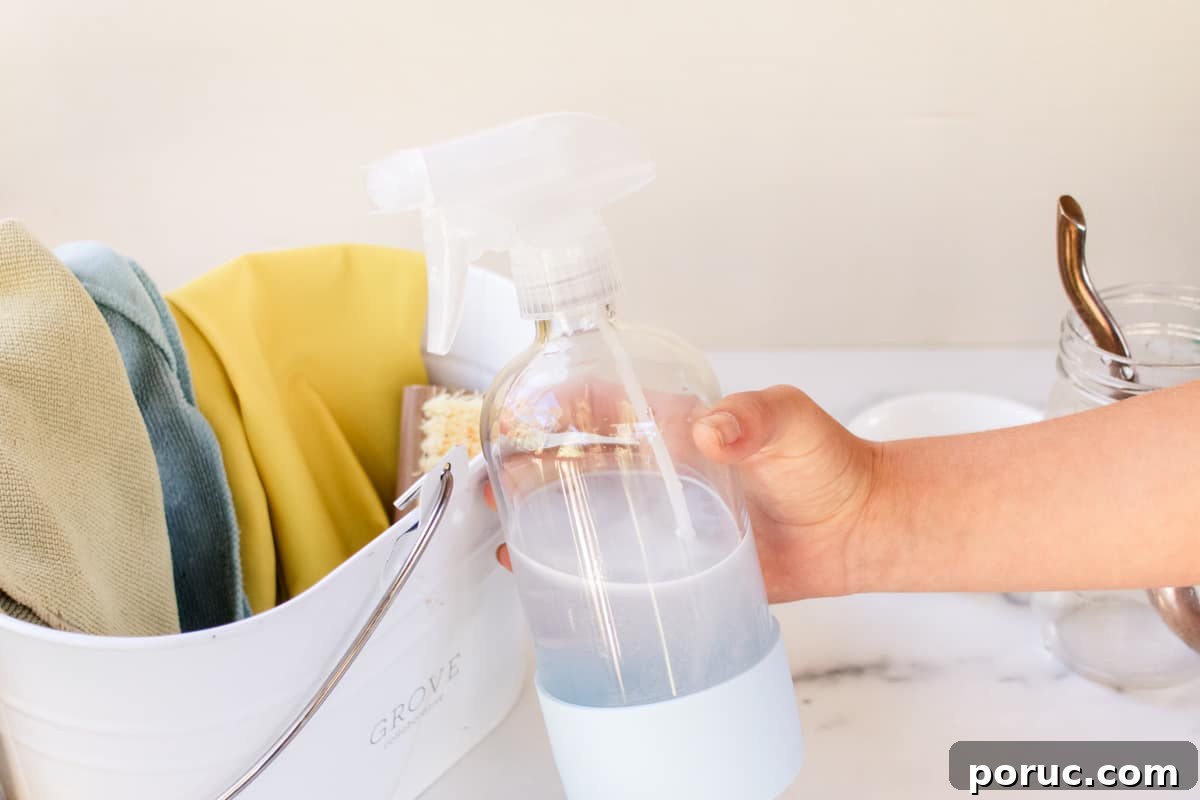
Cleaning mold from grout is one of those chores we tend to avoid, but it’s quick and effective when you use the right approach. This method is demonstrated for shower grout, but it works well on any tile grout, including floor grout and grout in tight corners.
Previously I experimented with vinegar-based sprays, but vinegar isn’t suitable for every surface. The method below uses baking soda, which is gentle on most materials while still effective at tackling mold.
How to remove mold from shower grout
You will need:
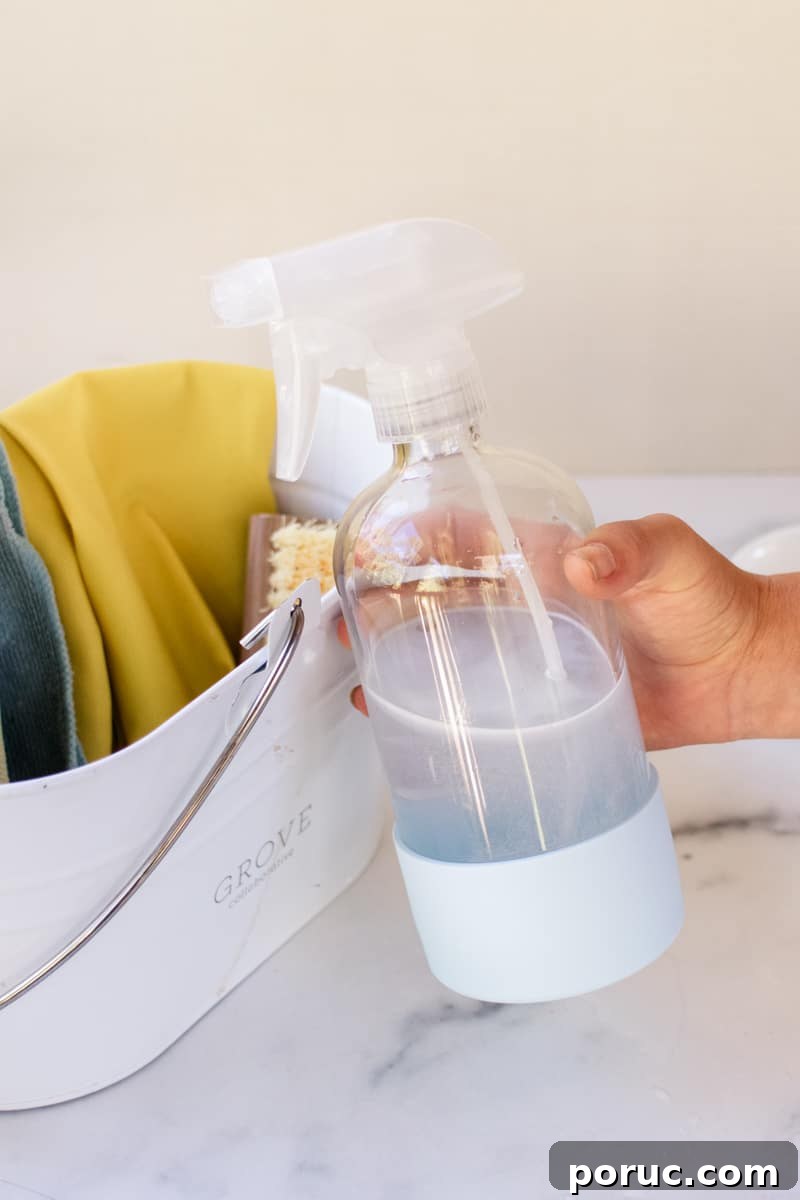
- 8-ounce spray bottle
- 1 tablespoon baking soda
- 6 ounces water
- Scrubbing brush (or an old toothbrush for small areas)
Instructions:
Step 1: Dissolve the baking soda in the water until it’s well mixed.
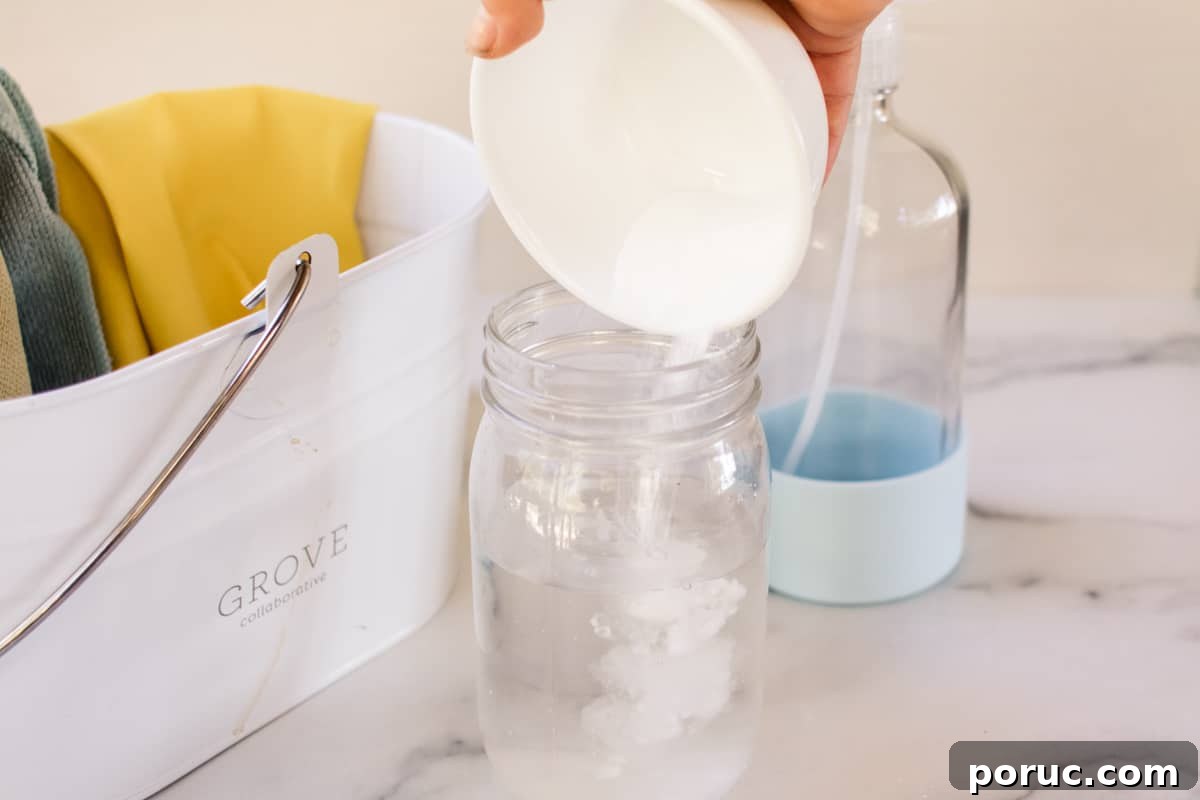
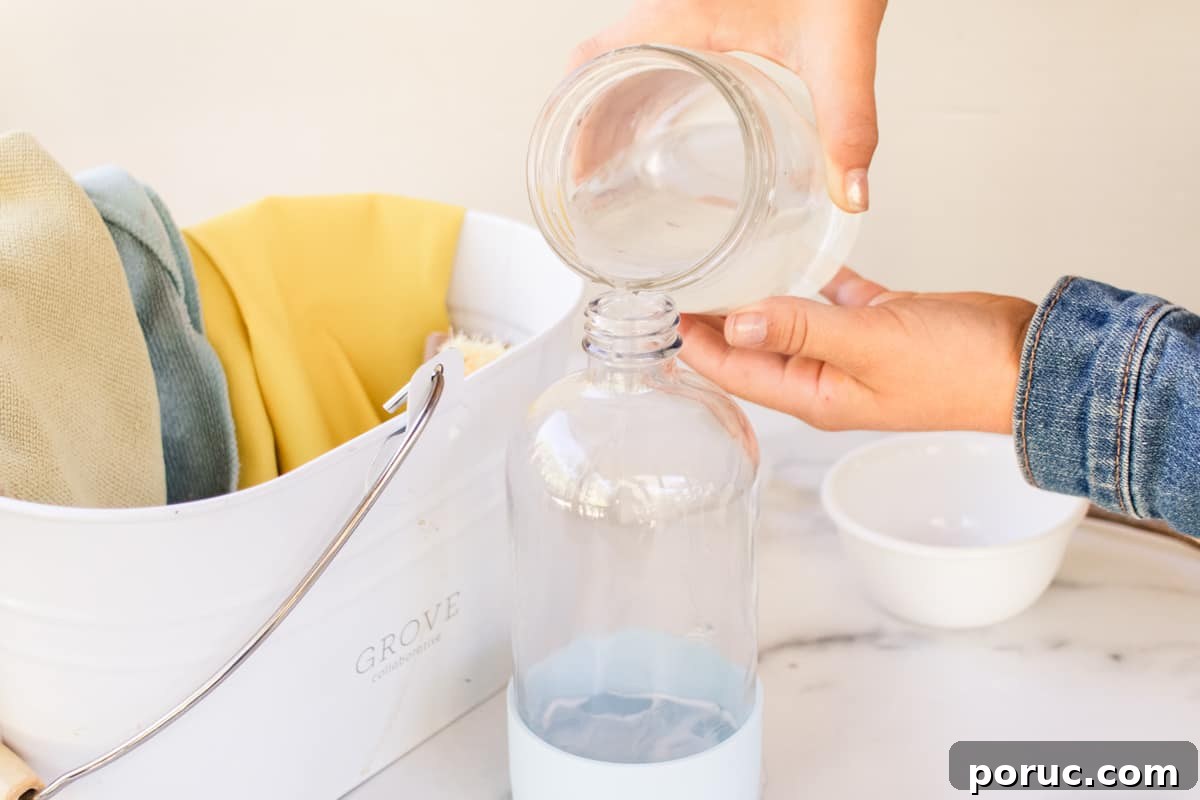
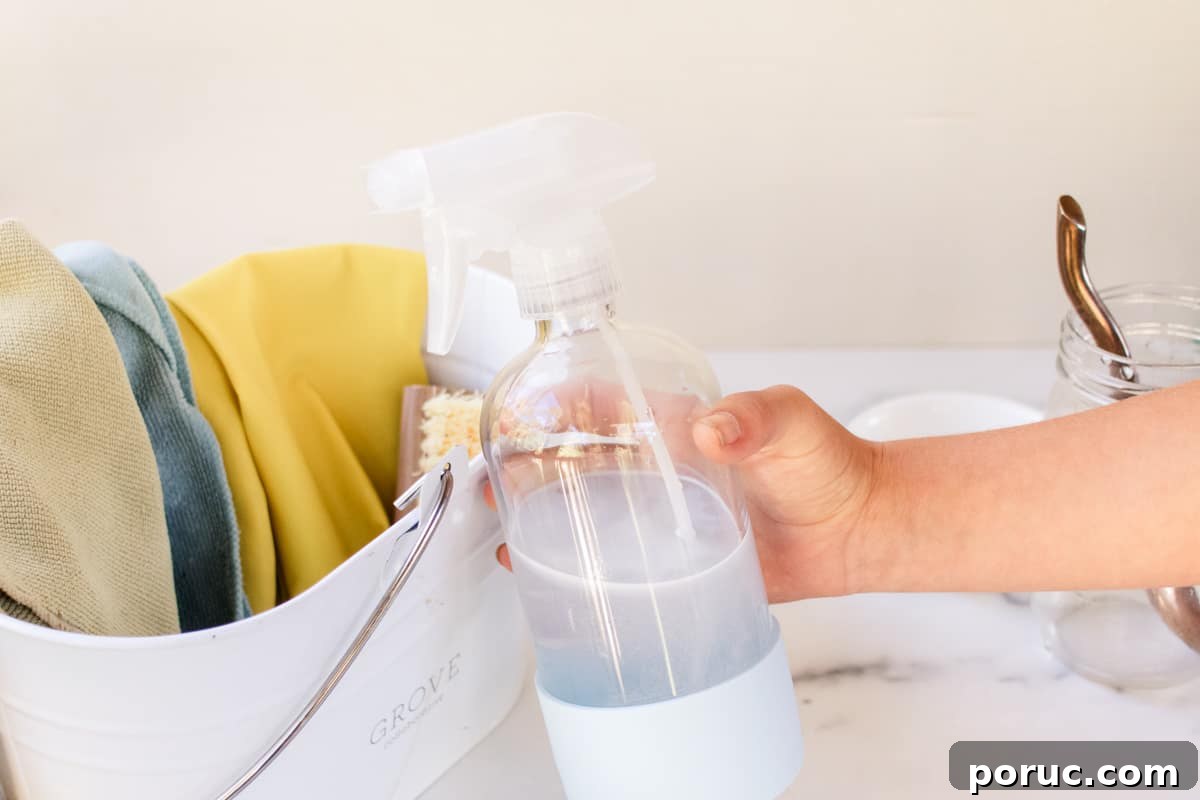
Step 2: Pour the mixture into the spray bottle (use a funnel if helpful) and shake to combine.
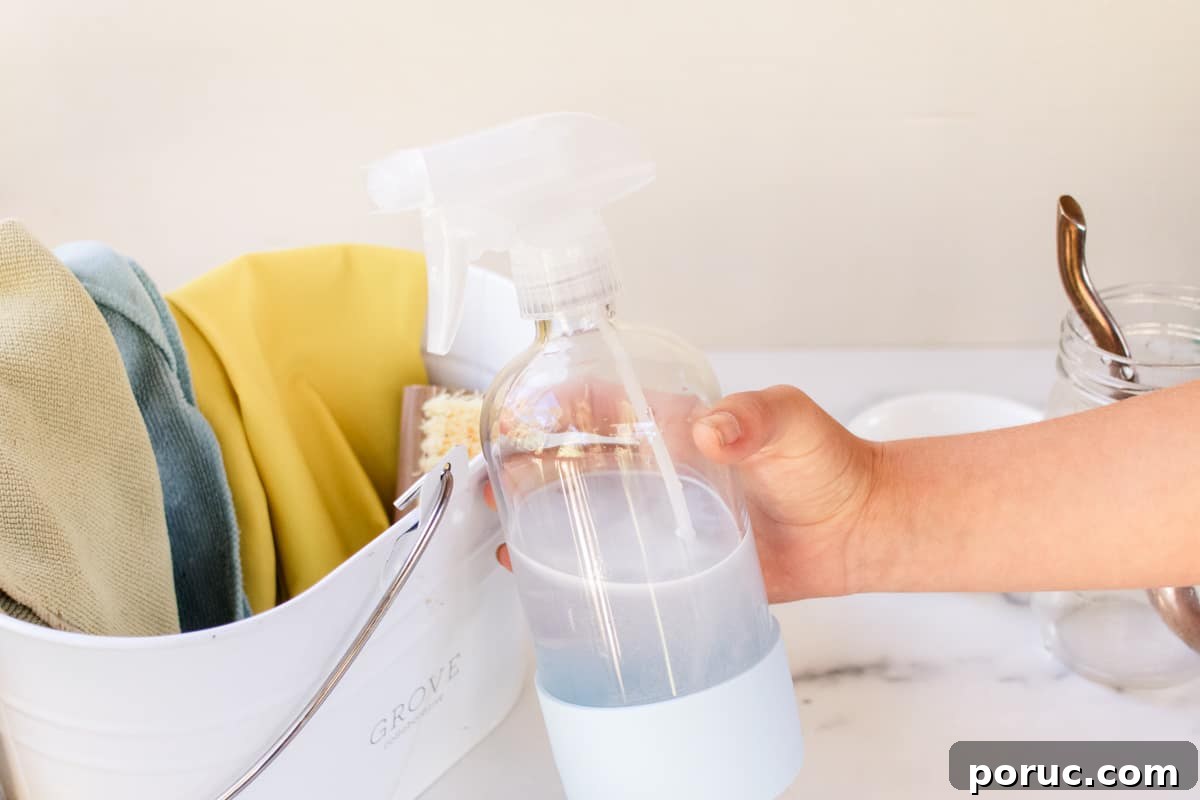
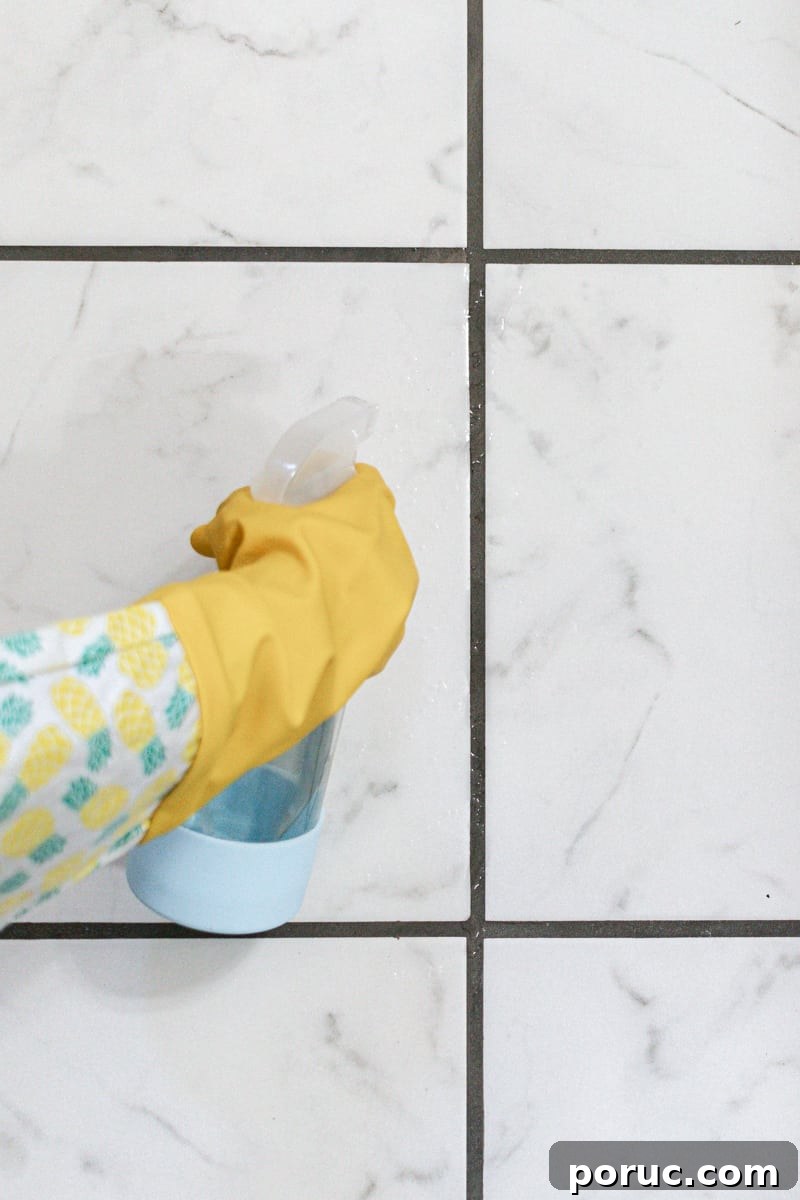
Step 3: Spray the solution generously along the grout lines and let it sit for several minutes so it penetrates the mold.
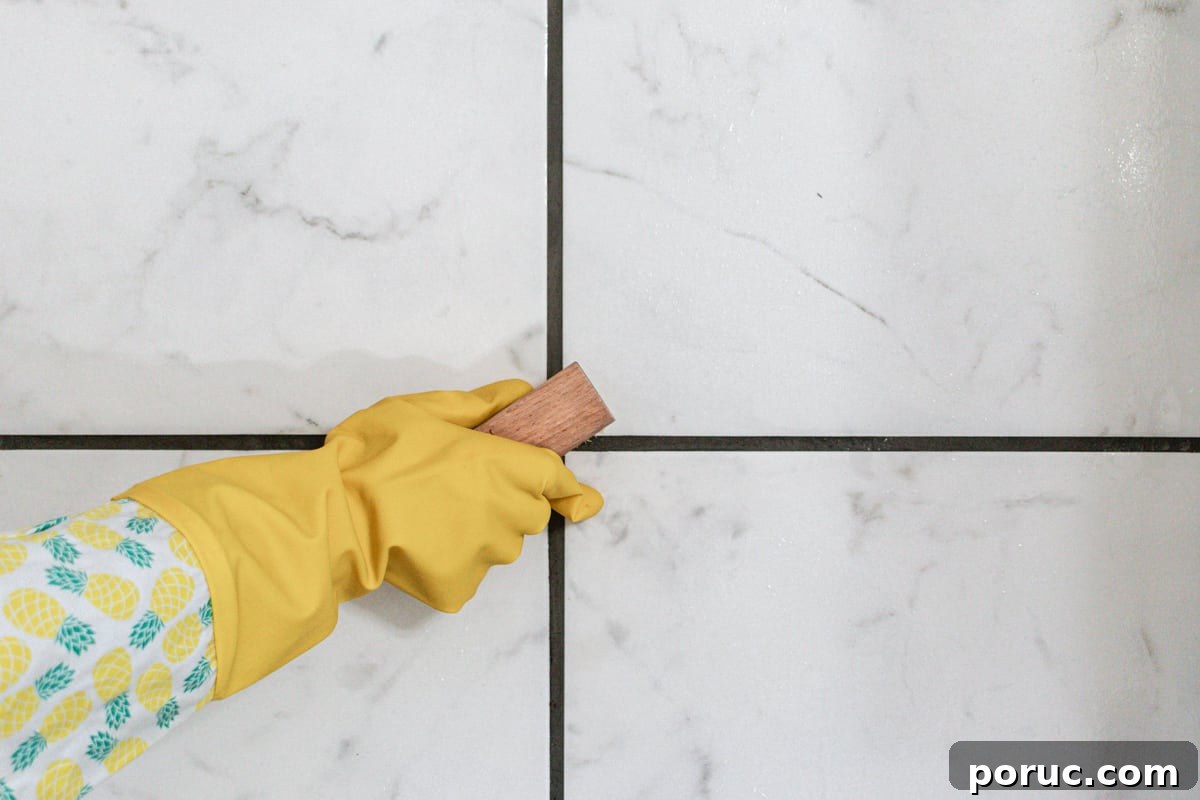
Step 4: Use a scrubbing brush to loosen the mold. Work gently to avoid damaging grout or silicone edges.
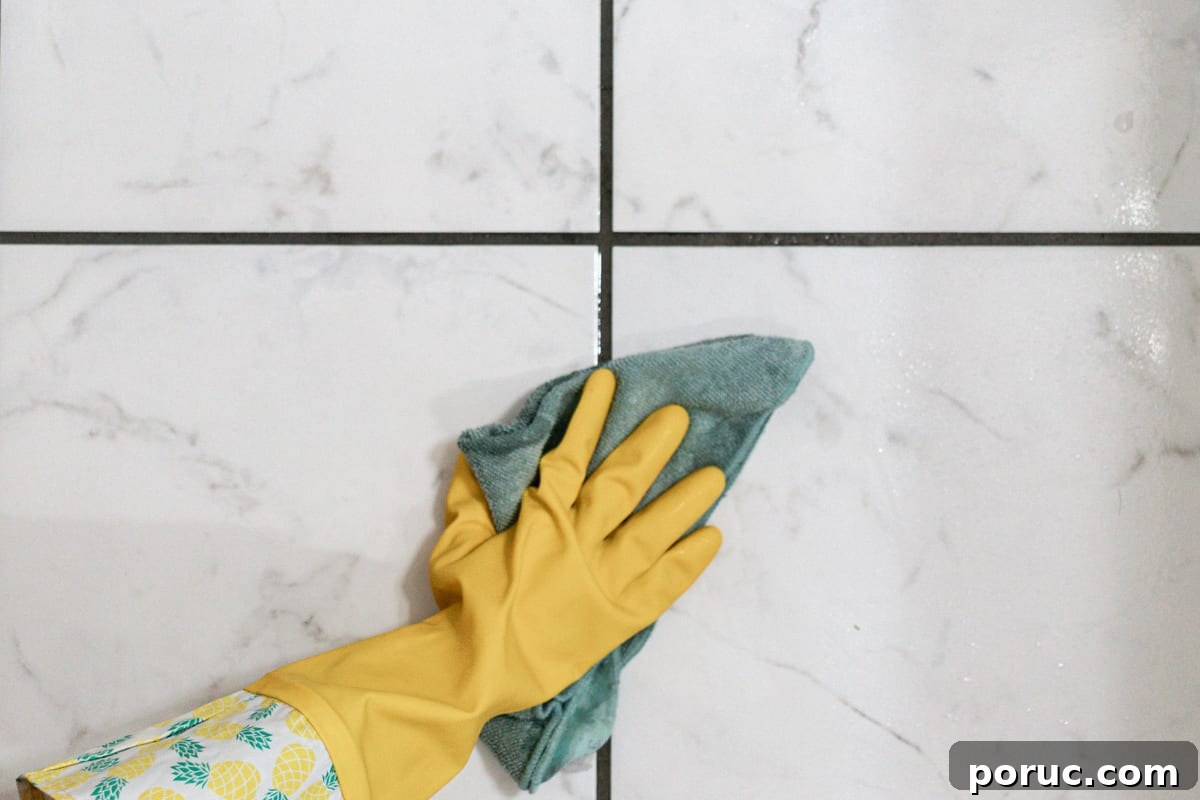
Step 5: Rinse the area thoroughly with water. Wipe the surface dry with a cloth to prevent water spots and reduce dampness.
Step 6: If any mold remains, repeat the spraying and scrubbing steps. Persistent or extensive mold may require multiple treatments, possibly on different days.
Top tip: Use old rags and brushes for this task and discard them when finished. Wear gloves and a mask to limit exposure to mold spores.
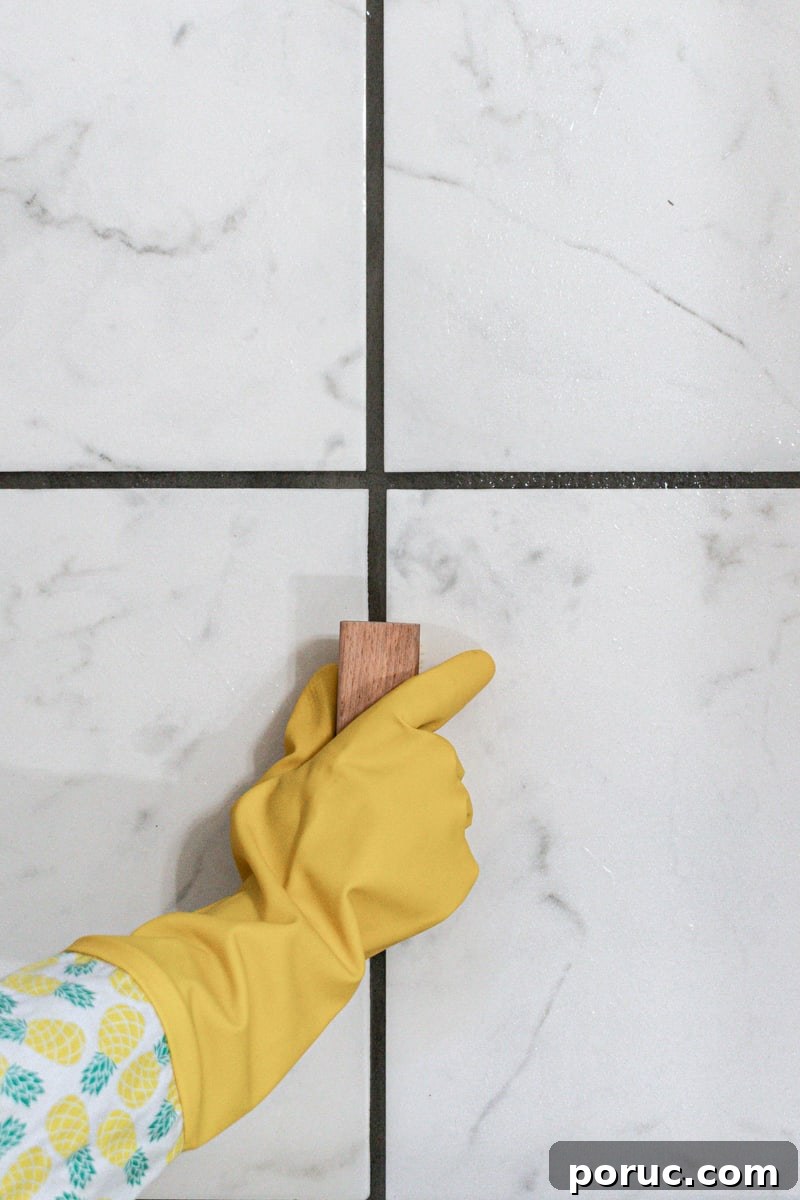
Removing mold from any grout
The same baking soda spray and scrubbing method works for floor grout and other tiled areas. For narrow gaps or crevices, an old toothbrush can reach places a larger brush cannot. Because mold varies in severity, you may need to repeat the treatment until the visible mold is gone.
If grout is heavily stained or damaged, consider professional advice or grout replacement to address deeper contamination.
Keep the mold from coming back
After cleaning and drying the area, apply one more light spray of the baking soda solution and allow the grout to dry. This helps create a less hospitable environment for mold and can reduce recurrence.
Why baking soda?
Baking soda (sodium bicarbonate) is the active cleaning ingredient here. It creates a mildly alkaline environment that inhibits mold growth and absorbs moisture, helping to dry the area. It’s non-toxic, environmentally friendly, and gentler on surfaces than harsh chemicals like bleach, while still being effective against many types of mold.
Why clean moldy grout
Keeping grout clean improves the appearance of your bathroom and helps reduce the potential health impacts associated with mold exposure. Remove mold at the first sign to limit spread and staining.
Preventing mold in the future
A two-part approach works best:
- Keep the shower and bathroom dry and well-ventilated to limit dampness.
- Use the baking soda spray as a regular cleaner — weekly use helps prevent mold from returning.
Cleaning tips
- Scrub gently to avoid damaging grout or silicone seals.
- If desired, a small amount of vinegar can be mixed with baking soda for extra cleaning power on surfaces that tolerate vinegar.
- Don’t use this abrasive method daily; reserve it for periodic deep cleaning or when mold appears.
- For mild daily maintenance, use a gentle no-rinse shower cleaner or a microfiber squeegee to remove excess water after showers.
- Add a few drops of essential oil to the spray if you want a fresh scent, but avoid oils that could stain surfaces.
FAQs
What safety precautions should I take when removing mold from grout?
Wear gloves, long sleeves, and a mask to reduce exposure to mold spores. If you have respiratory issues, consider having someone else do the cleaning or consult a professional for large infestations.
Does vinegar work for cleaning mold?
Vinegar can work on many surfaces and is effective for some mold problems, but it is acidic and not suitable for all materials. Test on a small area first and avoid using it on natural stone and some grout finishes.
Could I just use bleach to kill the mold?
Bleach is effective at surface mold removal, but it can be harsh, release fumes, and may damage some materials. For routine household mold on grout, baking soda offers a safer, more eco-friendly alternative.
Summary
This baking soda spray method is an easy, low-toxicity way to remove mold from shower grout and other tiled areas. Wear basic protective gear, be prepared to repeat the treatment for persistent mold, and keep the area dry afterward to minimize recurrence.
If you have questions about the method or specific surfaces, leave a comment or consult a specialist for extensive mold problems.
What to Read Next:
- How to get mold spots out of clothes
- The solution for cleaning calcium buildup in your shower
- How to make a multi-surface bathroom cleaner
Wear gloves and a mask while working around mold.